
Before Memmo my notes were scattered across PDFs. Now a workspace pulls everything into one place — I see exactly what's still left to study.
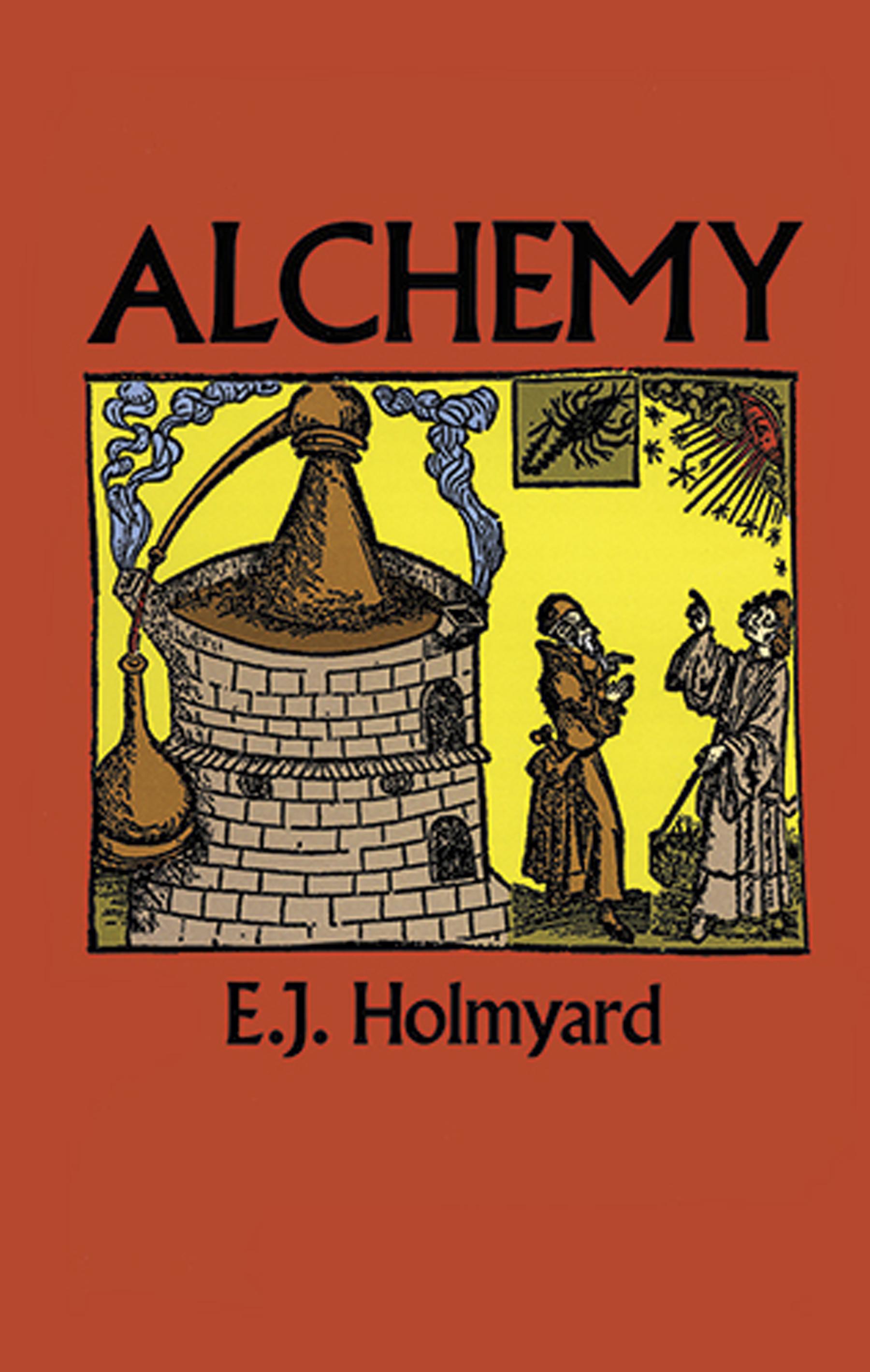
Alchemy is thought to have originated over 2000 years ago in Hellenic Egypt, the result of three converging streams: Greek philosophy, Egyptian technology and the mysticism of Middle Eastern religions. Its heyday was from about 800 A.D. to the middle of the seventeenth century, and its practitioners ranged from kings, popes, and emperors to minor clergy, parish clerks, smiths, dyers, and tinkers. Even such accomplished men as Roger Bacon, Thomas Aquinas, Sir Thomas Browne and Isaac Newton took an interest in alchemical matters.
In its search for the "Philosopher's Stone" that would transmute base metals into silver and gold, alchemy took on many philosophical, religious and mystical overtones. These and many other facets of alchemy are explored with enormous insight and erudition in this classic work. E. J. Holmyard, a noted scholar in the field, begins with the alchemists of ancient Greece and China and goes on to discuss alchemical apparatus, Islamic and early Western alchemy; signs, symbols, and secret terms; Paracelsus; English, Scottish and French alchemists; Helvetius, Price, and Semler, and much more.
Ranging over two millennia of alchemical history, Mr. Holmyard shows how, like astrology and witchcraft, alchemy was an integral part of the pre-scientific moral order, arousing the cupidity of princes, the blind fear of mobs and the intellectual curiosity of learned men. Eventually, however, with the advent and ascension of the scientific method, the hopes and ideas of the alchemists faded to the status of "pseudo-science." That transformation, as well as alchemy's undeniable role as a precursor of modern chemistry, are brilliantly illuminated in this book. Students of alchemy, chemistry, the history of science, and the occult, plus anyone interested in the origin and evolution of one of mankind's most enduring and influential myths, will want to have a copy of this masterly study.
Before Memmo my notes were scattered across PDFs. Now a workspace pulls everything into one place — I see exactly what's still left to study.
Memmo's summaries are gold before exams. I don't have to re-read 800 pages two weeks before — just the important parts.
The AI chat has saved me the night before an exam more than once. I just keep asking until I get it — no waiting on a study group to reply.
The quizzes hit exactly what I need to know. Memmo tracks what I get stuck on — so I only practice what's worth it.
Flashcards with spaced repetition are magic. Memmo knows when I'm about to forget something and brings it back.
The AI podcasts are my favorite. I listen on my way to school and get a recap without sitting at a computer.

Handbok i kvalitativa metoder
281 kr

Hållbar utveckling: en introduktion för ingenjörer och andra problemlösare
334 kr

Brymans Samhällsvetenskapliga metoder
390 kr

Projektledning
491 kr

Den orättvisa hälsan: om socioekonomiska skillnader i hälsa och livslängd
326 kr

Organizational Leadership
429 kr

Vetenskapsteori för nybörjare
196 kr

På väg mot läraryrket
172 kr

Det sociala livet i skolan: Socialpsykologiska perspektiv
253 kr

Betygsättningens didaktik
151 kr

Personality
402 kr

Studying Leadership
404 kr

Managing Innovation
477 kr

Introduktion till samhällsvetenskaplig metod
347 kr

The Psychology of Sex and Gender
698 kr

Evidens och kunskap för socialt arbete
207 kr

Introduction to Leadership
605 kr