
Before Memmo my notes were scattered across PDFs. Now a workspace pulls everything into one place — I see exactly what's still left to study.
"The book is without peer in its field." — American Scientist
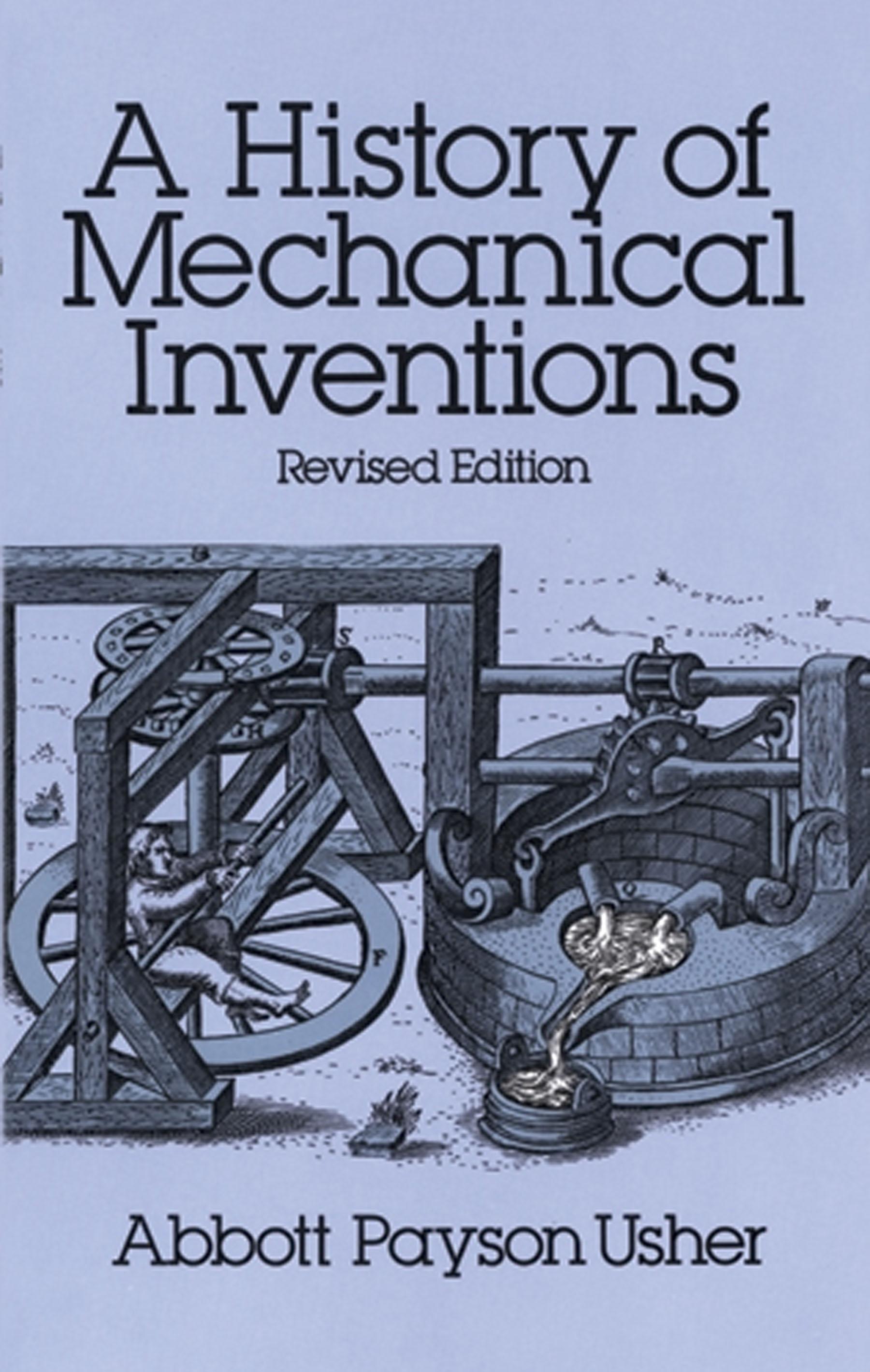
In this completely revised and enlarged edition of a classic work in the history of technology, a noted scholar explores the importance of technological innovation in the cultural and economic history of the West.
Following an introductory discussion of the place of technology in economic history, the author offers a penetrating historical analysis of social change. Within this context he develops a theory of invention based on Gestalt psychology and a concept of social evolution as continuous development from antiquity to the present. Emphasis is placed on the role of economic forces in the development of technology, with scientific concepts also playing an important role in bringing about change.
The latter part of the book focuses on the production and control of power in general, and in particular on a number of important operative mechanisms. Thus we read thought-provoking accounts of the technology of textile manufacture from primitive times, of water wheels and windmills, water clocks, and mechanical clocks, and the work of Leonardo da Vinci. The development of printing is carefully studied, not only for its intrinsic interest, but because of its importance for the history of science. Other topics include the production and application of power (1500–1830), machine tools and quantity production, the production and distribution of power since 1832, and the role of Asia Minor as a source of techniques which dominated the Middle Ages and the modern period as well.
Thoroughly researched and cogently reasoned, A History of Mechanical Inventions belongs in the library of anyone interested in the history of science and invention, as well as the relationship of technology to economic and social history.
"Throughout the book there is constant proof of the author's wide learning and varied intellectual interests." — The New York Times
Before Memmo my notes were scattered across PDFs. Now a workspace pulls everything into one place — I see exactly what's still left to study.
Memmo's summaries are gold before exams. I don't have to re-read 800 pages two weeks before — just the important parts.
The AI chat has saved me the night before an exam more than once. I just keep asking until I get it — no waiting on a study group to reply.
The quizzes hit exactly what I need to know. Memmo tracks what I get stuck on — so I only practice what's worth it.
Flashcards with spaced repetition are magic. Memmo knows when I'm about to forget something and brings it back.
The AI podcasts are my favorite. I listen on my way to school and get a recap without sitting at a computer.

Handbok i kvalitativa metoder
281 kr

Hållbar utveckling: en introduktion för ingenjörer och andra problemlösare
334 kr

Brymans Samhällsvetenskapliga metoder
390 kr

Projektledning
491 kr

Den orättvisa hälsan: om socioekonomiska skillnader i hälsa och livslängd
326 kr

Vetenskapsteori för nybörjare
196 kr

Organizational Leadership
429 kr

På väg mot läraryrket
172 kr

Det sociala livet i skolan: Socialpsykologiska perspektiv
253 kr

Betygsättningens didaktik
151 kr

Personality
402 kr

Studying Leadership
404 kr

Managing Innovation
477 kr

Introduktion till samhällsvetenskaplig metod
347 kr

The Psychology of Sex and Gender
698 kr

Evidens och kunskap för socialt arbete
207 kr

Introduction to Leadership
605 kr