
Before Memmo my notes were scattered across PDFs. Now a workspace pulls everything into one place — I see exactly what's still left to study.
Between the physical world of vibration, as measured by apparatus, and the world of consciously heard music there is a third area of investigation. Our auditory apparatus and/or mind separates different instruments and tones, hears some vibrations but not others, adds tones to fill out the sound spectrum, etc. This middle ground is the province of the psychology of music, a subject about which even many physical scientists know little.
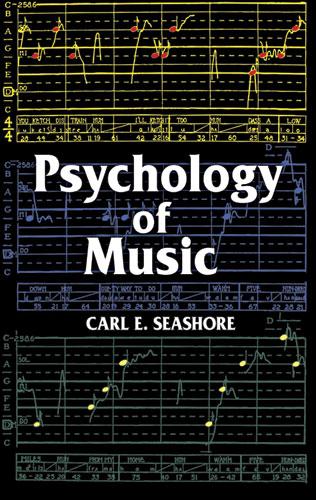
This introduction, by the developer of the Seashore test of musical ability, is a thorough survey of this field, the standard book for psychologists specializing in the area, for the school, and for interested musicologists. It opens with the musical mind and with a series of chapters on music as a medium: vibrato, pitch, loudness, duration, timbre, tone, consonance, volume, and rhythm, dealing with each from the special point of view of the role of psychology. It then moves to such factors as learning, imagining, and thinking in music; the nature of musical feeling; the relative sound patterns of specific instruments and the human voice; measures of musical talent; inheritance of musical ability; primitive music; the development of musical skills; and musical aesthetics.
This wealth of material is supplemented with dozens of oscillograms and other sound-pattern charts recorded from actual play and singing by Jeritza, Caruso, Paderewski, Szigeti, Rethberg, Menuhin, Martinelli, and other artists. An appendix cites two attitudes toward the evaluation of musical talent and over 200 bibliographic references.
Before Memmo my notes were scattered across PDFs. Now a workspace pulls everything into one place — I see exactly what's still left to study.
Memmo's summaries are gold before exams. I don't have to re-read 800 pages two weeks before — just the important parts.
The AI chat has saved me the night before an exam more than once. I just keep asking until I get it — no waiting on a study group to reply.
The quizzes hit exactly what I need to know. Memmo tracks what I get stuck on — so I only practice what's worth it.
Flashcards with spaced repetition are magic. Memmo knows when I'm about to forget something and brings it back.
The AI podcasts are my favorite. I listen on my way to school and get a recap without sitting at a computer.

Handbok i kvalitativa metoder
281 kr

Hållbar utveckling: en introduktion för ingenjörer och andra problemlösare
334 kr

Brymans Samhällsvetenskapliga metoder
390 kr

Projektledning
491 kr

Den orättvisa hälsan: om socioekonomiska skillnader i hälsa och livslängd
326 kr

Vetenskapsteori för nybörjare
196 kr

Organizational Leadership
429 kr

På väg mot läraryrket
172 kr

Det sociala livet i skolan: Socialpsykologiska perspektiv
253 kr

Betygsättningens didaktik
151 kr

Personality
402 kr

Studying Leadership
404 kr

Managing Innovation
477 kr

Introduktion till samhällsvetenskaplig metod
347 kr

The Psychology of Sex and Gender
698 kr

Evidens och kunskap för socialt arbete
207 kr

Introduction to Leadership
605 kr