
Before Memmo my notes were scattered across PDFs. Now a workspace pulls everything into one place — I see exactly what's still left to study.
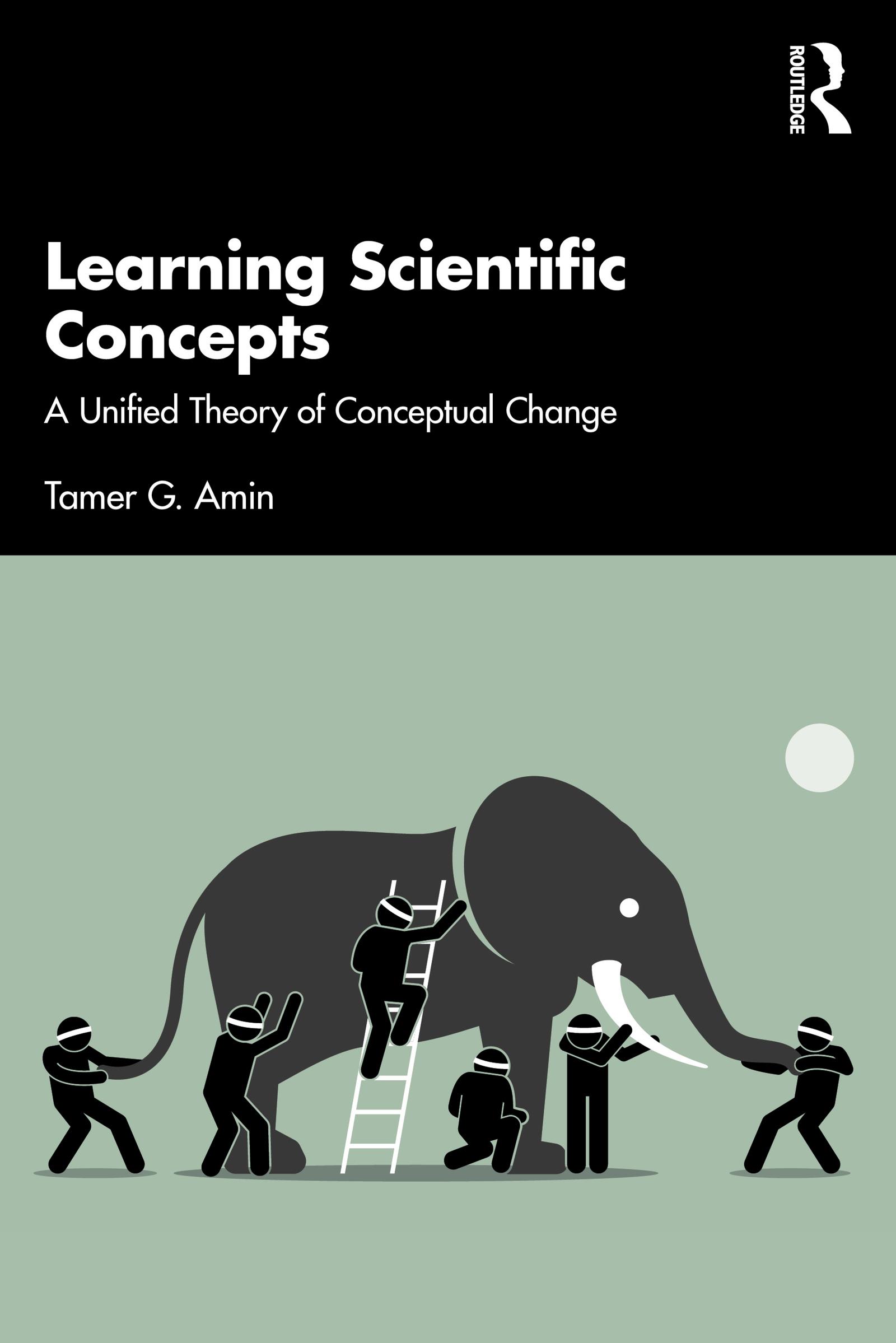
Understanding important scientific concepts like matter, energy, force, and species is central to scientific literacy. But how do we learn scientific concepts? This book explains what research across distinct theoretical perspectives has taught us and then cuts through the diversity to offer a novel integrated account and a unified theory of conceptual change.
Theoretical perspectives from science education, cognitive science, developmental psychology, the learning sciences, and the history and philosophy of science are often seen as competing alternatives and practical pedagogical recommendations diverge, sometimes even contradicting one another. Learning Scientific Concepts responds by explaining and evaluating prominent theoretical perspectives: the nature of concepts and conceptual development, in general, as understood in cognitive and developmental psychology; and theory change, knowledge-in-pieces, and situated/embodied/distributed perspectives on science concept learning, in particular. It then integrates these perspectives and proposes the Unified Theory of Conceptual Change (UTCC), building on Susan Carey’s foundational account of concepts and conceptual development in developmental psychology and Edwin Hutchins’ multilevel approach to analyzing cognitive systems in cognitive anthropology. The UTCC outlines a comprehensive modeling toolkit for making sense of how we learn scientific concepts at different levels of analysis.
This book serves as a comprehensive guide for researchers, advanced students, and practitioners to the most important research on learning scientific concepts. In proposing a novel theoretical synthesis, it also suggests a way forward for researchers and offers practitioners a coherent and comprehensive story of what kind of instruction and curricular design is effective and why.
Before Memmo my notes were scattered across PDFs. Now a workspace pulls everything into one place — I see exactly what's still left to study.
Memmo's summaries are gold before exams. I don't have to re-read 800 pages two weeks before — just the important parts.
The AI chat has saved me the night before an exam more than once. I just keep asking until I get it — no waiting on a study group to reply.
The quizzes hit exactly what I need to know. Memmo tracks what I get stuck on — so I only practice what's worth it.
Flashcards with spaced repetition are magic. Memmo knows when I'm about to forget something and brings it back.
The AI podcasts are my favorite. I listen on my way to school and get a recap without sitting at a computer.

Handbok i kvalitativa metoder
281 kr

Hållbar utveckling: en introduktion för ingenjörer och andra problemlösare
334 kr

Brymans Samhällsvetenskapliga metoder
390 kr

Projektledning
491 kr

Den orättvisa hälsan: om socioekonomiska skillnader i hälsa och livslängd
326 kr

Organizational Leadership
429 kr

Vetenskapsteori för nybörjare
196 kr

På väg mot läraryrket
172 kr

Det sociala livet i skolan: Socialpsykologiska perspektiv
253 kr

Betygsättningens didaktik
151 kr

Personality
402 kr

Studying Leadership
404 kr

Managing Innovation
477 kr

Introduktion till samhällsvetenskaplig metod
347 kr

The Psychology of Sex and Gender
698 kr

Evidens och kunskap för socialt arbete
207 kr

Introduction to Leadership
605 kr