
Before Memmo my notes were scattered across PDFs. Now a workspace pulls everything into one place — I see exactly what's still left to study.
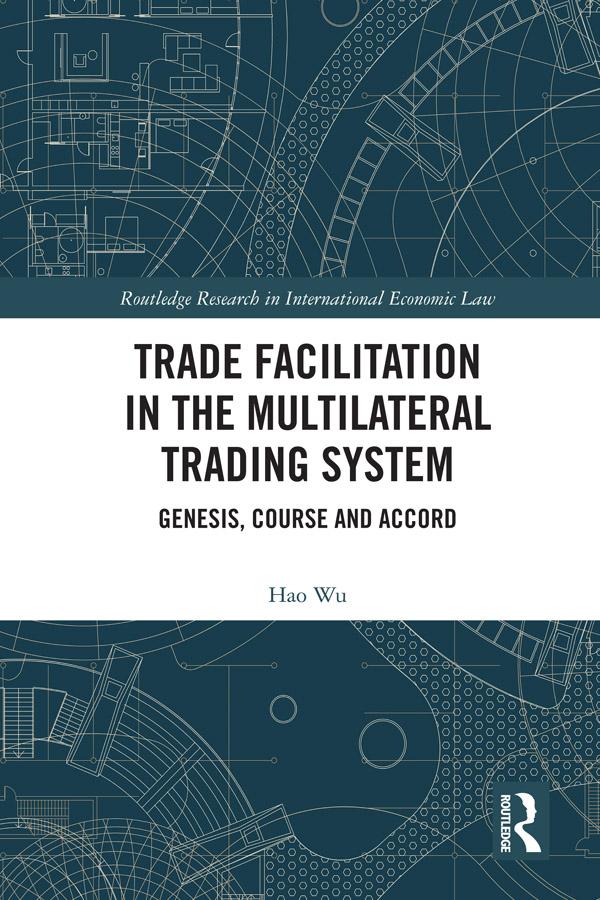
Negotiations on trade facilitation were concluded at the WTO 9th Ministerial Conference in 2013, and the Agreements on Trade Facilitation (TFA), therefore, became the first fully multilateral agreement in WTO history. Since then, trade facilitation has been in the limelight on the stage of the world trading system. During recent years, the TFA has been consistently on the agenda of the summits of G20, G7, and APEC. The Agreement has come into force and shall be implemented on a global scale. As a result, the WTO members shall be prepared to translate the Agreement into their domestic legislation, which will involve a series of reforms in trade laws and policies.
There are extensive voices demanding a comprehensive expatiation on trade facilitation and the TFA. It is essential to systematically delve into the genesis of trade facilitation, revisit the course where the TFA came into being, and analyse the well-turned legalese of the TFA. This book meets this demand.
This book is path-breaking in these aspects: it expounds on the rationales for trade facilitation and the significance of constituting an international accord on trade facilitation; it restores the one-century track of the international community’s talks on trade facilitation, from the times of the League of Nations to the WTO era; it reveals how the WTO negotiating mechanisms enabled the TFA to be nailed down, which would be enlightening for trade diplomats engaged in other WTO negotiations; and it provides an in-depth commentary on the TFA articles, which will help stakeholders more accurately understand and implement the Agreement.
This book will be especially valuable for government officials and policy-makers, trade practitioners, lawyers, advisers, and scholars interested in international economic law, WTO law, international trade, international relations, and international development studies.
Before Memmo my notes were scattered across PDFs. Now a workspace pulls everything into one place — I see exactly what's still left to study.
Memmo's summaries are gold before exams. I don't have to re-read 800 pages two weeks before — just the important parts.
The AI chat has saved me the night before an exam more than once. I just keep asking until I get it — no waiting on a study group to reply.
The quizzes hit exactly what I need to know. Memmo tracks what I get stuck on — so I only practice what's worth it.
Flashcards with spaced repetition are magic. Memmo knows when I'm about to forget something and brings it back.
The AI podcasts are my favorite. I listen on my way to school and get a recap without sitting at a computer.

Handbok i kvalitativa metoder
281 kr

Hållbar utveckling: en introduktion för ingenjörer och andra problemlösare
334 kr

Brymans Samhällsvetenskapliga metoder
390 kr

Projektledning
491 kr

Den orättvisa hälsan: om socioekonomiska skillnader i hälsa och livslängd
326 kr

Vetenskapsteori för nybörjare
196 kr

Organizational Leadership
429 kr

På väg mot läraryrket
172 kr

Det sociala livet i skolan: Socialpsykologiska perspektiv
253 kr

Betygsättningens didaktik
151 kr

Personality
402 kr

Studying Leadership
404 kr

Managing Innovation
477 kr

Introduktion till samhällsvetenskaplig metod
347 kr

The Psychology of Sex and Gender
698 kr

Evidens och kunskap för socialt arbete
207 kr

Introduction to Leadership
605 kr