
Before Memmo my notes were scattered across PDFs. Now a workspace pulls everything into one place — I see exactly what's still left to study.
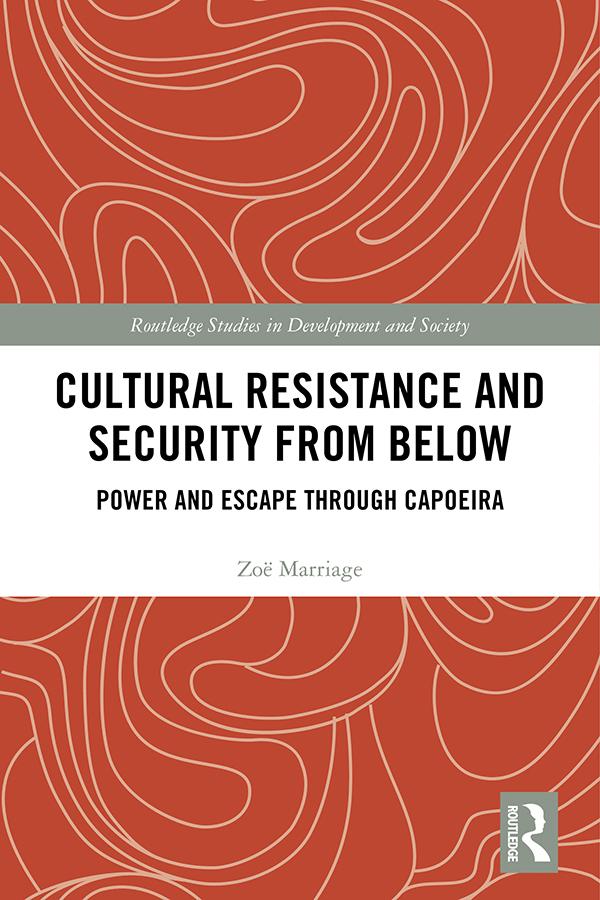
This book uses the Afro-Brazilian art of capoeira to examine how security has been pursued from below and what significance this has for security analysis and policy. Illegal at the beginning of the twentieth century, capoeira is now a cultural institution and export that is protected by the Brazilian state and recognised by UNESCO, with capoeira players protecting and promoting their interests through the practice and development of their art. The book brings the musical and corporeal narrative from capoeira into conversation with debates on security; these have typically been dominated by northern, white, military voices, and as a result, the perspective of the weaker player is routinely overlooked in security literature and policy making.
Bringing the perspective of the weaker party, Cultural Resistance and Security from Below examines the distribution of security from two angles. First, it presents the history of the interaction between capoeira players and the Brazilian society and state that resulted in political and legal acceptance of capoeira. Second, it explores how the practice of capoeira generates knowledge of identities, explanations and values, and how this knowledge empowers communities of players and is communicated to society more broadly. The book then turns to consider how capoeira resists within Brazil's contemporary context of insecurity, and what significance the knowledge and power, along with capoeira's core move of escape, have to security analysis and policy. The book concludes by taking the lessons from capoeira to inform understanding of other cultural activities and ways of life as potential sites and forms of resistance.
Conceptually and methodologically original, this book will be of interest to scholars and students in the fields of security studies, development studies, political science and international studies. It will also be of interest to those scholars interested in the changing interaction between politics and the arts.
Before Memmo my notes were scattered across PDFs. Now a workspace pulls everything into one place — I see exactly what's still left to study.
Memmo's summaries are gold before exams. I don't have to re-read 800 pages two weeks before — just the important parts.
The AI chat has saved me the night before an exam more than once. I just keep asking until I get it — no waiting on a study group to reply.
The quizzes hit exactly what I need to know. Memmo tracks what I get stuck on — so I only practice what's worth it.
Flashcards with spaced repetition are magic. Memmo knows when I'm about to forget something and brings it back.
The AI podcasts are my favorite. I listen on my way to school and get a recap without sitting at a computer.

Handbok i kvalitativa metoder
281 kr

Hållbar utveckling: en introduktion för ingenjörer och andra problemlösare
334 kr

Brymans Samhällsvetenskapliga metoder
390 kr

Projektledning
491 kr

Den orättvisa hälsan: om socioekonomiska skillnader i hälsa och livslängd
326 kr

Vetenskapsteori för nybörjare
196 kr

Organizational Leadership
429 kr

På väg mot läraryrket
172 kr

Det sociala livet i skolan: Socialpsykologiska perspektiv
253 kr

Betygsättningens didaktik
151 kr

Personality
402 kr

Studying Leadership
404 kr

Managing Innovation
477 kr

Introduktion till samhällsvetenskaplig metod
347 kr

The Psychology of Sex and Gender
698 kr

Evidens och kunskap för socialt arbete
207 kr

Introduction to Leadership
605 kr