
Before Memmo my notes were scattered across PDFs. Now a workspace pulls everything into one place — I see exactly what's still left to study.
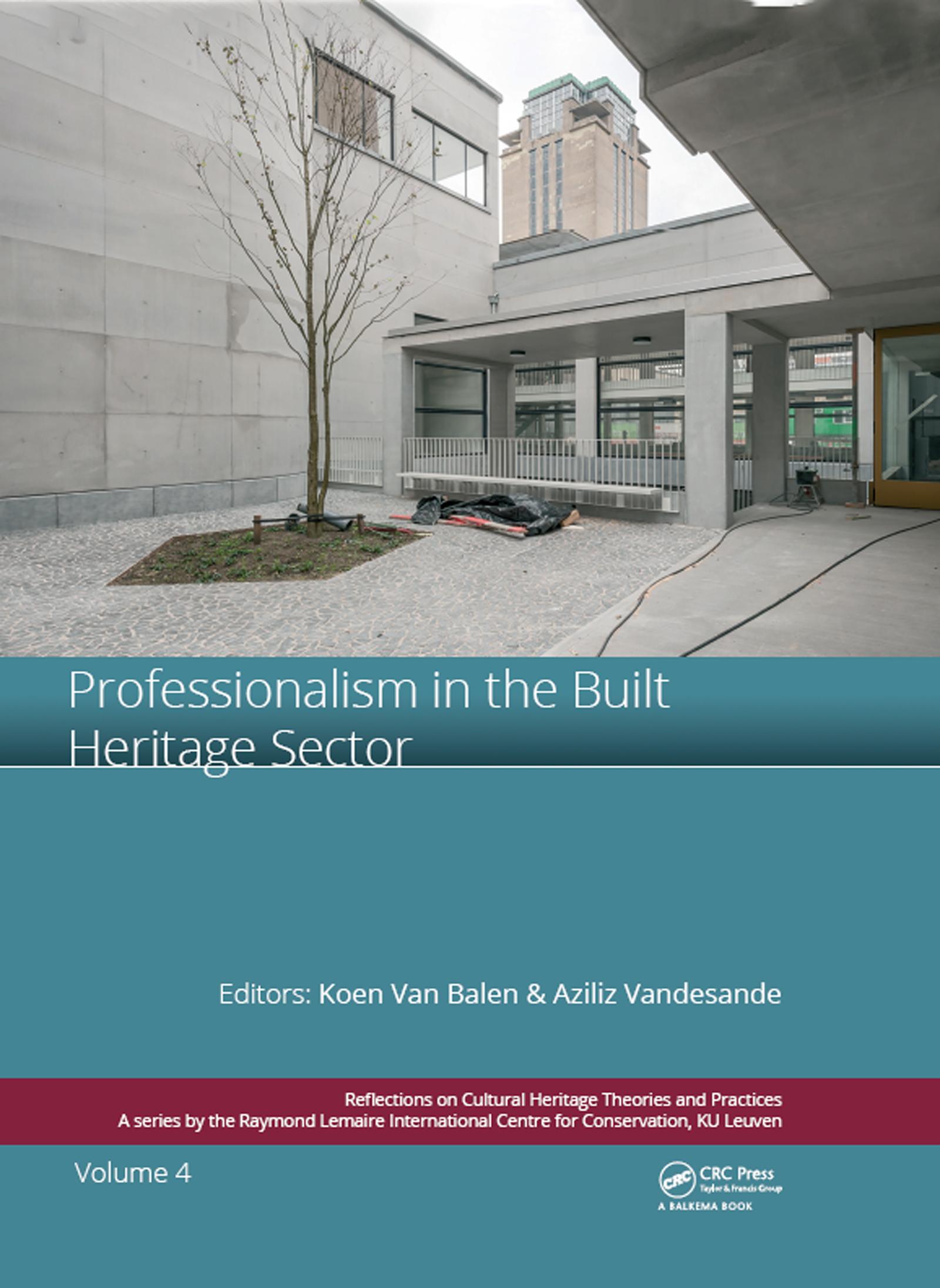
Professionalism entails the conduct, aims and qualities that characterise a profession. The term is also used to describe education and training standards for the knowledge and skills necessary to perform a specific profession. In practice, professional standards of practice and ethics are agreed upon and maintained by recognised associations.
In the past, professionalism has not occupied a central place in built heritage discussions, policy and research. Recent changes in terms of public attitudes and sustainability concerns have had a cumulative impact on the requirements for professionalism in the built heritage sector. The future success of the sector will depend on the availability of adequate professionals and an appropriately skilled workforce.
In practice, the built heritage sector involves much more than interventions to conserve, preserve, rehabilitate or restore a heritage structure. Bringing a project to fruition begins with the formulation of a policy, proceeds to the design and execution of intervention strategies and ends with ongoing maintenance of heritage structures and related future programming. This process requires sufficient interactions between different professionals to obtain a common vision and hold that vision throughout a project. At the same time, the sustainability of the sector is also defined by effective governance, societal support and cultural rationales.
Professionalism in the Built Heritage Sector contains reports on the lectures of the international conference organized by the Raymond Lemaire International Centre for Conservation (Leuven, Belgium, February 5th-8th, 2018). The contributions in this volume meet the increasing demand for shared information to support the transition towards a more sustainable conservation process. The volume consists of three main parts that deal with practice-led research or scientific research: "Profiles and capacities", "Education, training and quality labels", and "Obstacles and changes".
Before Memmo my notes were scattered across PDFs. Now a workspace pulls everything into one place — I see exactly what's still left to study.
Memmo's summaries are gold before exams. I don't have to re-read 800 pages two weeks before — just the important parts.
The AI chat has saved me the night before an exam more than once. I just keep asking until I get it — no waiting on a study group to reply.
The quizzes hit exactly what I need to know. Memmo tracks what I get stuck on — so I only practice what's worth it.
Flashcards with spaced repetition are magic. Memmo knows when I'm about to forget something and brings it back.
The AI podcasts are my favorite. I listen on my way to school and get a recap without sitting at a computer.

Handbok i kvalitativa metoder
281 kr

Hållbar utveckling: en introduktion för ingenjörer och andra problemlösare
334 kr

Brymans Samhällsvetenskapliga metoder
390 kr

Projektledning
491 kr

Den orättvisa hälsan: om socioekonomiska skillnader i hälsa och livslängd
326 kr

Organizational Leadership
429 kr

Vetenskapsteori för nybörjare
196 kr

På väg mot läraryrket
172 kr

Det sociala livet i skolan: Socialpsykologiska perspektiv
253 kr

Betygsättningens didaktik
151 kr

Personality
402 kr

Studying Leadership
404 kr

Managing Innovation
477 kr

Introduktion till samhällsvetenskaplig metod
347 kr

The Psychology of Sex and Gender
698 kr

Evidens och kunskap för socialt arbete
207 kr

Introduction to Leadership
605 kr