
Before Memmo my notes were scattered across PDFs. Now a workspace pulls everything into one place — I see exactly what's still left to study.
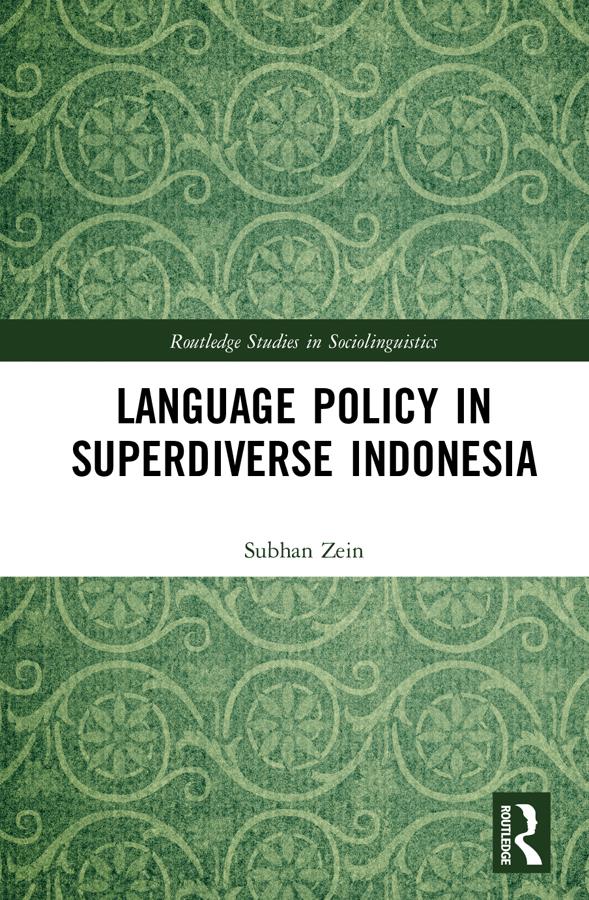
Indonesia has an extreme diversity of linguistic wealth, with 707 languages by one count, or 731 languages and more than 1,100 dialects in another estimate, spoken by more than 600 ethnicities spread across 17,504 islands in the archipelago. Smaller, locally used indigenous languages jostle for survival alongside Indonesian, which is the national language, regional lingua francas, major indigenous languages, heritage languages, sign languages and world languages such as English, Arabic and Mandarin, not to mention emerging linguistic varieties and practices of language mixing. How does the government manage these languages in different domains such as education, the media, the workplace and the public while balancing concerns over language endangerment and the need for participation in the global community?
Subhan Zein asserts that superdiversity is the key to understanding and assessing these intricate issues and their complicated, contested and innovative responses in the complex, dynamic and polycentric sociolinguistic situation in Indonesia that he conceptualises as superglossia. This offers an opportunity for us to delve more deeply into such a context through the language and superdiversity perspective that is in ascendancy.
Zein examines emerging themes that have been dominating language policy discourse including status, prestige, corpus, acquisition, cultivation, language shift and endangerment, revitalisation, linguistic genocide and imperialism, multilingual education, personnel policy, translanguaging, family language policy and global English. These topical areas are critically discussed in an integrated manner against Indonesia’s elaborate socio-cultural, political and religious backdrop as well as the implementation of regional autonomy. In doing so, Zein identifies strategies for language policy to help inform scholarship and policymaking while providing a frame of reference for the adoption of the superdiversity perspective on polity-specific language policy in other parts of the world.
Before Memmo my notes were scattered across PDFs. Now a workspace pulls everything into one place — I see exactly what's still left to study.
Memmo's summaries are gold before exams. I don't have to re-read 800 pages two weeks before — just the important parts.
The AI chat has saved me the night before an exam more than once. I just keep asking until I get it — no waiting on a study group to reply.
The quizzes hit exactly what I need to know. Memmo tracks what I get stuck on — so I only practice what's worth it.
Flashcards with spaced repetition are magic. Memmo knows when I'm about to forget something and brings it back.
The AI podcasts are my favorite. I listen on my way to school and get a recap without sitting at a computer.

Handbok i kvalitativa metoder
281 kr

Hållbar utveckling: en introduktion för ingenjörer och andra problemlösare
334 kr

Brymans Samhällsvetenskapliga metoder
390 kr

Projektledning
491 kr

Den orättvisa hälsan: om socioekonomiska skillnader i hälsa och livslängd
326 kr

Vetenskapsteori för nybörjare
196 kr

Organizational Leadership
429 kr

På väg mot läraryrket
172 kr

Det sociala livet i skolan: Socialpsykologiska perspektiv
253 kr

Betygsättningens didaktik
151 kr

Personality
402 kr

Studying Leadership
404 kr

Managing Innovation
477 kr

Introduktion till samhällsvetenskaplig metod
347 kr

The Psychology of Sex and Gender
698 kr

Evidens och kunskap för socialt arbete
207 kr

Introduction to Leadership
605 kr