
Before Memmo my notes were scattered across PDFs. Now a workspace pulls everything into one place — I see exactly what's still left to study.
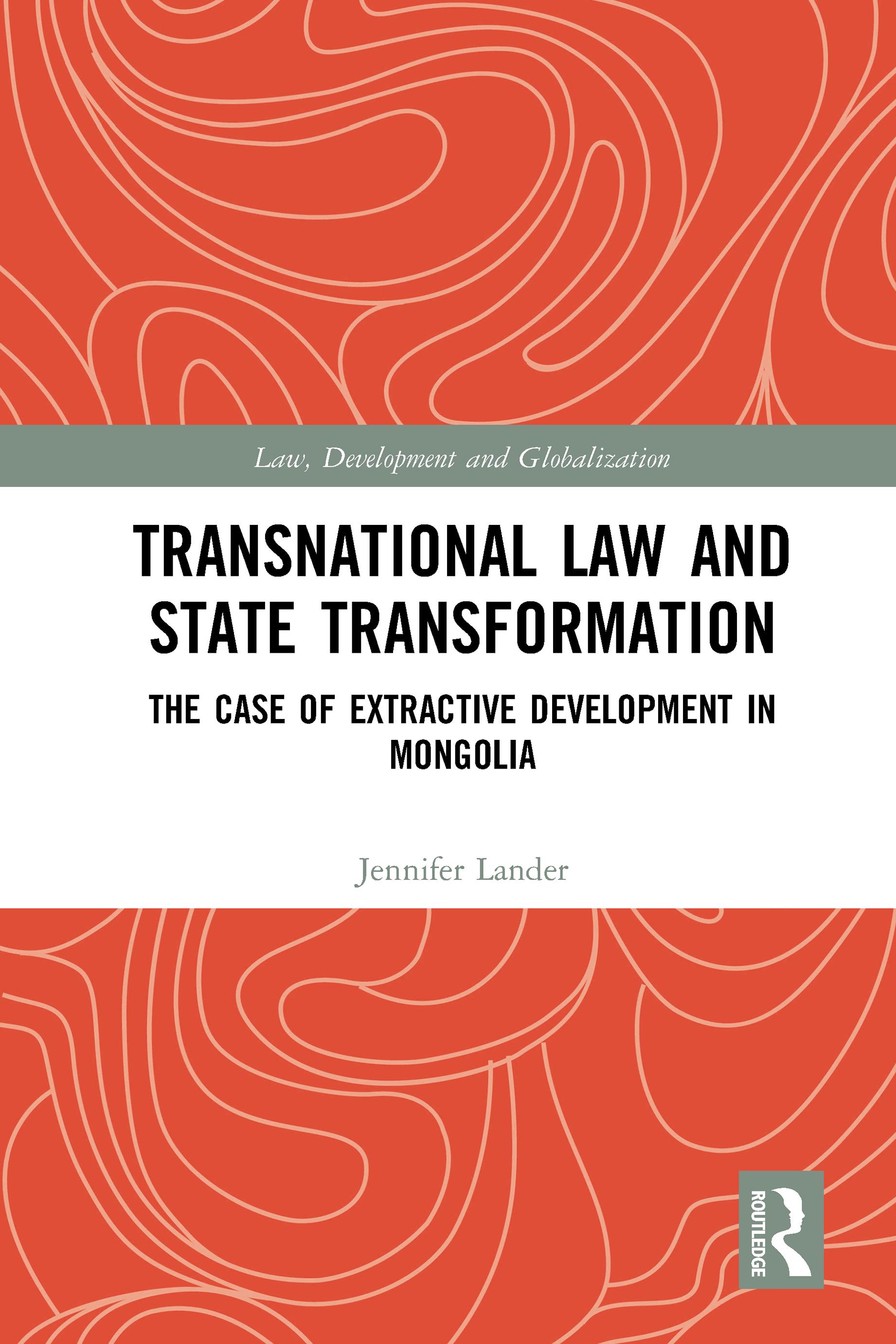
This book contributes new theoretical insight and in-depth empirical analysis about the relationship between transnational legality, state change and the globalisation of markets.
The role of transnational economic law in influencing and reorganising national systems of governance evidences the constitutional dimensions of global capitalism: the power to institute new rules and limits for national states. This form of new constitutionalism does not undermine the state but transforms it by eroding national capacities and implanting global alternatives. While leading scholars in the field have emphasised the much-needed value of case studies, there are no studies available which consider the cumulative impact of multiple axes of transnational legal ordering on the national state or its constitution. This monograph addresses this empirical gap, whilst expanding the theoretical scope of the field. Mongolia’s recent transformation as a mineral-exporting country provides a rare opportunity to witness economic and legal globalisation in process. Based on careful empirical analysis of national law and policy-making, the book traces the way distinctive processes of transnational legal ordering have reorganised and reframed the governance of Mongolia’s mining sector, specifically by redistributing state power in relation to the market, sub-national administrations and civil society. The book investigates the role of international financial institutions, multinational corporations and non-governmental organisations in normative transmission, as well as the critical role of national actors in embedding transnational investment norms within the domestic legal and policy environment. As the book demonstrates, however, the constitutional ramifications of transnational legal ordering extend beyond the mining regime itself into more fundamental questions of the trajectory of state transformation, institutionally and ideologically.
The book will be of interest to scholars of international law, global governance and the political economy of development.
Before Memmo my notes were scattered across PDFs. Now a workspace pulls everything into one place — I see exactly what's still left to study.
Memmo's summaries are gold before exams. I don't have to re-read 800 pages two weeks before — just the important parts.
The AI chat has saved me the night before an exam more than once. I just keep asking until I get it — no waiting on a study group to reply.
The quizzes hit exactly what I need to know. Memmo tracks what I get stuck on — so I only practice what's worth it.
Flashcards with spaced repetition are magic. Memmo knows when I'm about to forget something and brings it back.
The AI podcasts are my favorite. I listen on my way to school and get a recap without sitting at a computer.

Handbok i kvalitativa metoder
281 kr

Hållbar utveckling: en introduktion för ingenjörer och andra problemlösare
334 kr

Brymans Samhällsvetenskapliga metoder
390 kr

Projektledning
491 kr

Den orättvisa hälsan: om socioekonomiska skillnader i hälsa och livslängd
326 kr

Vetenskapsteori för nybörjare
196 kr

Organizational Leadership
429 kr

På väg mot läraryrket
172 kr

Det sociala livet i skolan: Socialpsykologiska perspektiv
253 kr

Betygsättningens didaktik
151 kr

Personality
402 kr

Studying Leadership
404 kr

Managing Innovation
477 kr

Introduktion till samhällsvetenskaplig metod
347 kr

The Psychology of Sex and Gender
698 kr

Evidens och kunskap för socialt arbete
207 kr

Introduction to Leadership
605 kr