
Before Memmo my notes were scattered across PDFs. Now a workspace pulls everything into one place — I see exactly what's still left to study.
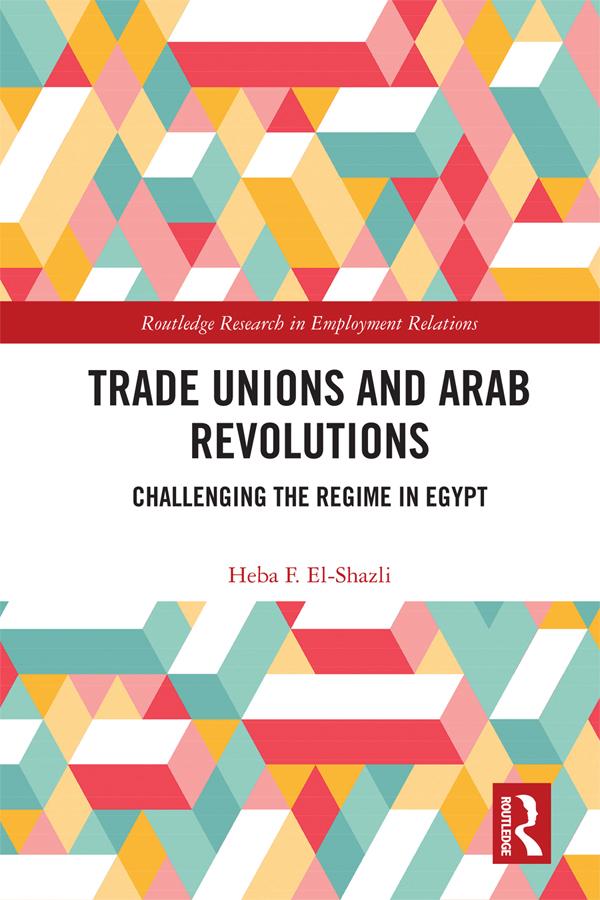
“We started the 2011 revolution and the rest of Egypt followed,” say Egyptian workers with strong conviction and passion. Egyptian independent workers’ continuous claims of contention and protest repertoires were one of several main factors leading to the January 25, 2011, uprising. After thirty-two years of a Mubarak-led authoritarian regime, massive protests began in January 2011 and forced President Mubarak to step down from his position on February 11, 2011. So, how did Egyptian workers challenge the regime and how did they become one of the factors leading to the January 2011 uprising? These workers were organized into loose networks of different independent groups that had been protesting for a decade and longer prior to January 2011. These regular protests for over a decade before 2011 challenged the Egyptian authoritarian regime.
This book examines the combative role of Egyptian independent workers’ formal and informal organizations as a contentious social movement to challenge the regime. It will examine the evolving role of workers as socio-economic actors and then as political actors in very political transitions. Social movement theory (SMT) and its mechanisms and social movement unionism (SMU) will be the lenses through which this research will be presented. The methodology used will be the comparative case studies of two different movements where workers who advocated for their rights for a decade prior to January 2011 experienced significantly differing outcomes. One case study showcases the municipal real estate tax collection workers who were able to establish a successful social movement and then create an independent trade union. The second case study examines an influential group of garment and textile workers, who also developed an effective social movement, yet they were not able to take it to the next step to establish an independent union. I will explore within this research a second question: why one group of workers was able to establish an independent union while the other arguably more influential group of workers, the garment and textile workers, was not able to do so. This had an impact on the overall influence they were able to exercise over the regime in addition to their effectiveness as a social movement for change.
Before Memmo my notes were scattered across PDFs. Now a workspace pulls everything into one place — I see exactly what's still left to study.
Memmo's summaries are gold before exams. I don't have to re-read 800 pages two weeks before — just the important parts.
The AI chat has saved me the night before an exam more than once. I just keep asking until I get it — no waiting on a study group to reply.
The quizzes hit exactly what I need to know. Memmo tracks what I get stuck on — so I only practice what's worth it.
Flashcards with spaced repetition are magic. Memmo knows when I'm about to forget something and brings it back.
The AI podcasts are my favorite. I listen on my way to school and get a recap without sitting at a computer.

Handbok i kvalitativa metoder
281 kr

Hållbar utveckling: en introduktion för ingenjörer och andra problemlösare
334 kr

Brymans Samhällsvetenskapliga metoder
390 kr

Projektledning
491 kr

Den orättvisa hälsan: om socioekonomiska skillnader i hälsa och livslängd
326 kr

Vetenskapsteori för nybörjare
196 kr

Organizational Leadership
429 kr

På väg mot läraryrket
172 kr

Det sociala livet i skolan: Socialpsykologiska perspektiv
253 kr

Betygsättningens didaktik
151 kr

Personality
402 kr

Studying Leadership
404 kr

Managing Innovation
477 kr

Introduktion till samhällsvetenskaplig metod
347 kr

The Psychology of Sex and Gender
698 kr

Evidens och kunskap för socialt arbete
207 kr

Introduction to Leadership
605 kr