
Before Memmo my notes were scattered across PDFs. Now a workspace pulls everything into one place — I see exactly what's still left to study.
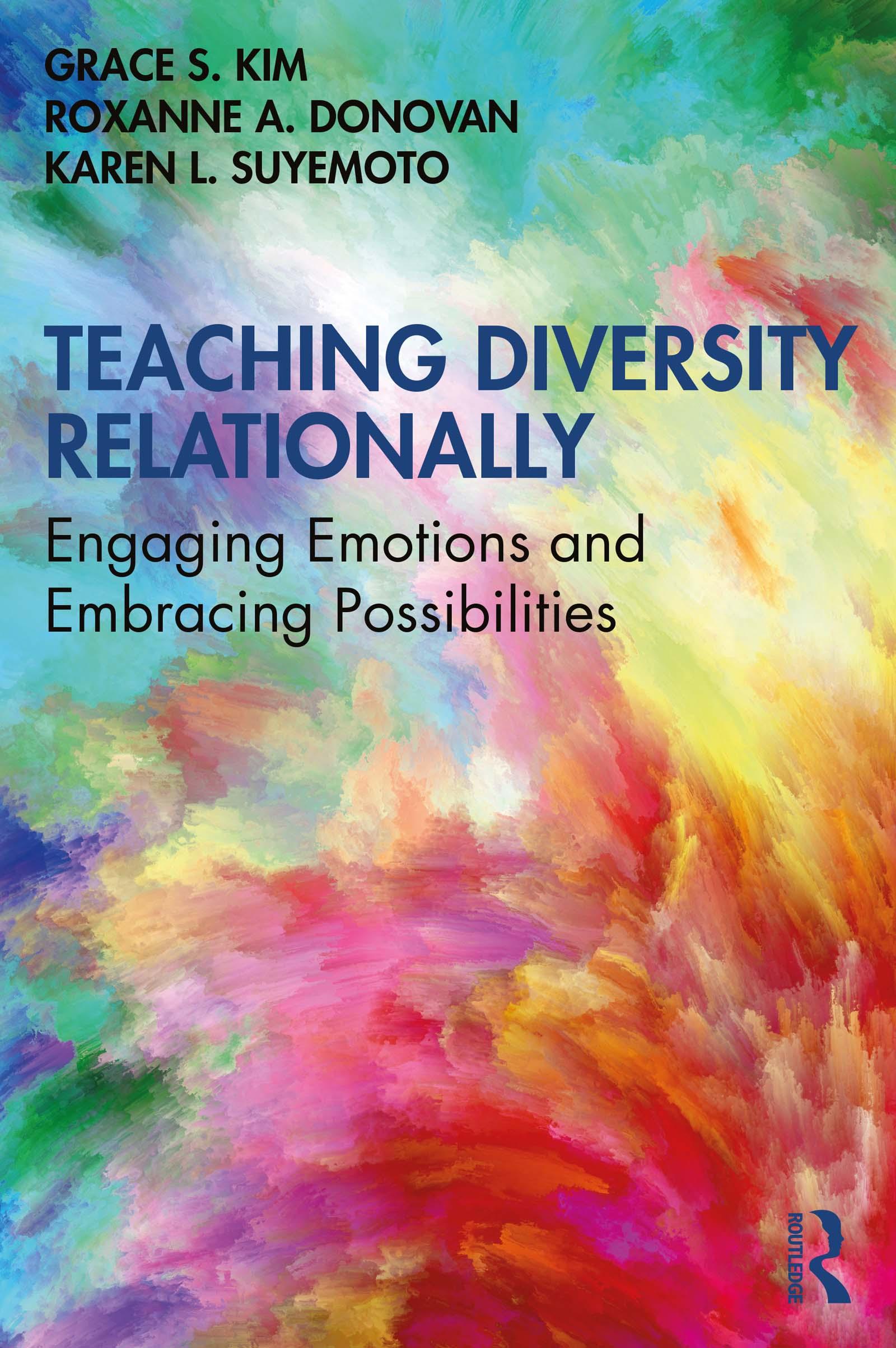
Teaching Diversity Relationally: Engaging Emotions and Embracing Possibilities offers process-oriented guidance for negotiating the psychological and relational challenges inherent in teaching about race, privilege, and oppression. Grounded in the philosophy of Transformative Education and incorporating psychological theories, the authors present concrete strategies for effectively teaching diversity and social justice courses.
The authors develop an intersectional social justice framework for Transformative Education that emphasizes five emotional-relational pillars of successful teaching for diversity: cultivating reflexivity and exploration of positionality; engaging emotions; fostering perspective taking and empathy; promoting community and relational learning; and encouraging agency and responsibility. They provide guidance on how to prepare for social justice education that fosters the growth of learners and educators by addressing intersecting levels of engagement—intrapsychic (within individual students and educators), relational (between students, between faculty and students), and group dynamic.
Teaching Diversity Relationally follows the developmental arc of a diversity course across a semester, exploring how students respond as the course moves into deeper content material and more intense discussions. The authors describe the psychology behind these responses, and offer best practices for different points in the semester to facilitate learning, manage class dynamics, build connections among students, and prevent faculty burnout.
Teaching Diversity Relationally addresses the teaching process in diversity courses. The authors' companion text, Unraveling Assumptions: A Primer for Understanding Oppression and Privilege provides the foundational content for university courses that can be expanded upon with a range of disciplines. Unraveling Assumptions offers an introductory exploration of power, privilege, and oppression as foundations of systems of inequality and examines complexities within meanings and lived experiences of race, ethnicity, gender, sexuality, disability, and social class.
Before Memmo my notes were scattered across PDFs. Now a workspace pulls everything into one place — I see exactly what's still left to study.
Memmo's summaries are gold before exams. I don't have to re-read 800 pages two weeks before — just the important parts.
The AI chat has saved me the night before an exam more than once. I just keep asking until I get it — no waiting on a study group to reply.
The quizzes hit exactly what I need to know. Memmo tracks what I get stuck on — so I only practice what's worth it.
Flashcards with spaced repetition are magic. Memmo knows when I'm about to forget something and brings it back.
The AI podcasts are my favorite. I listen on my way to school and get a recap without sitting at a computer.

Handbok i kvalitativa metoder
281 kr

Hållbar utveckling: en introduktion för ingenjörer och andra problemlösare
334 kr

Brymans Samhällsvetenskapliga metoder
390 kr

Projektledning
491 kr

Den orättvisa hälsan: om socioekonomiska skillnader i hälsa och livslängd
326 kr

Vetenskapsteori för nybörjare
196 kr

Organizational Leadership
429 kr

På väg mot läraryrket
172 kr

Det sociala livet i skolan: Socialpsykologiska perspektiv
253 kr

Betygsättningens didaktik
151 kr

Personality
402 kr

Studying Leadership
404 kr

Managing Innovation
477 kr

Introduktion till samhällsvetenskaplig metod
347 kr

The Psychology of Sex and Gender
698 kr

Evidens och kunskap för socialt arbete
207 kr

Introduction to Leadership
605 kr