
Before Memmo my notes were scattered across PDFs. Now a workspace pulls everything into one place — I see exactly what's still left to study.
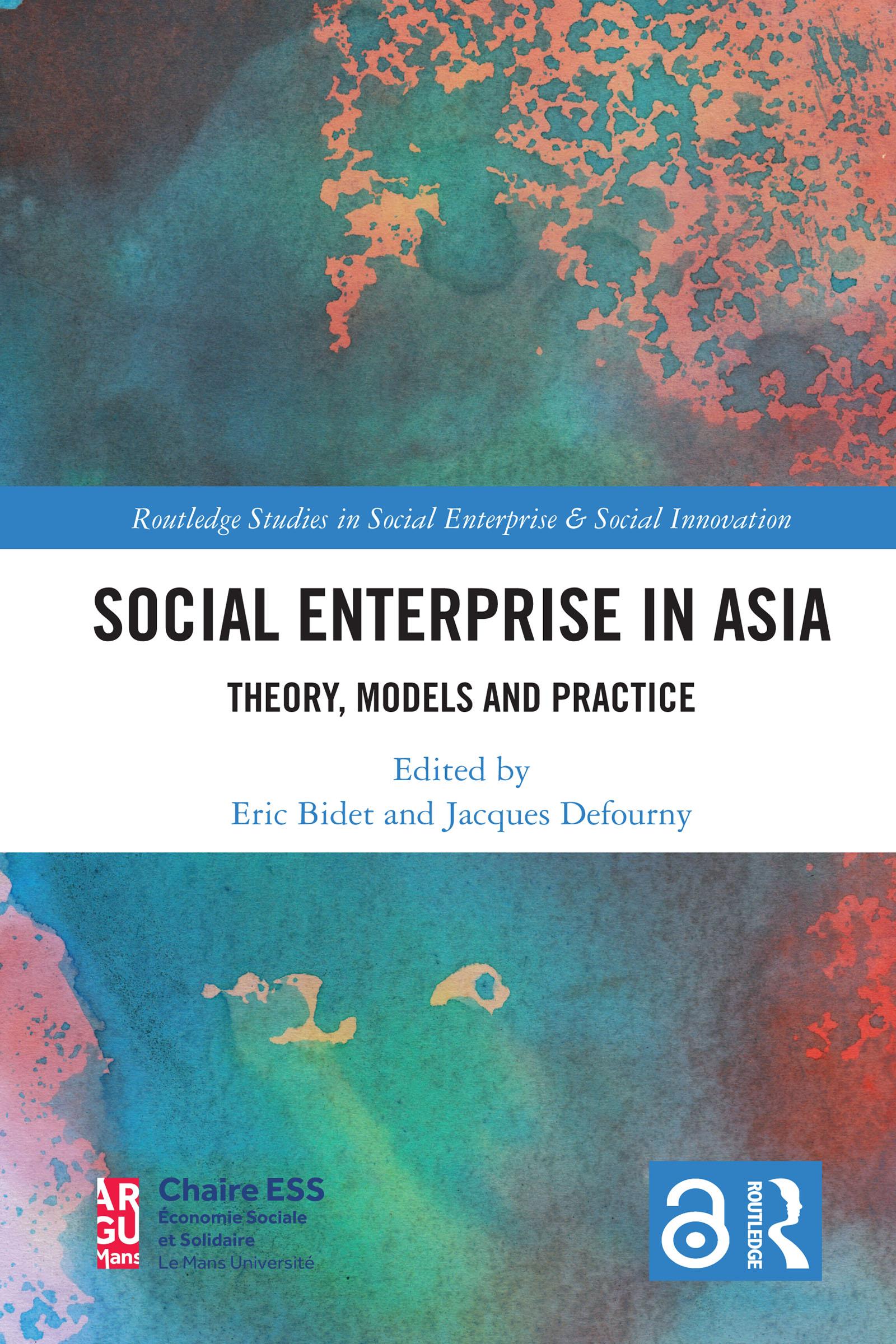
In the absence of a widely accepted and common definition of social enterprise (SE), a large research project, the "International Comparative Social Enterprise Models" (ICSEM) Project, was carried out over a five-year period; it involved more than 200 researchers from 55 countries and relied on bottom-up approaches to capture the SE phenomenon. This strategy made it possible to take into account and give legitimacy to locally embedded approaches, thus resulting in an analysis encompassing a wide diversity of social enterprises, while simultaneously allowing for the identification of major SE models to delineate the field on common grounds at the international level.
These SE models reveal or confirm an overall trend towards new ways of sharing the responsibility for the common good in today’s economies and societies. We tend to consider as good news the fact that social enterprises actually stem from all parts of the economy. Indeed, societies are facing many complex challenges at all levels, from the local to the global level. The diversity and internal variety of SE models are a sign of a broadly shared willingness to develop appropriate—although sometimes embryonic—responses to these challenges, on the basis of innovative economic/business models driven by a social mission. In spite of their weaknesses, social enterprises may be seen as advocates for and vehicles of the general interest across the whole economy. Of course, the debate about privatisation, deregulation and globalised market competition—all factors that may hinder efforts in the search for the common good–has to be addressed as well.
The first of a series of four ICSEM books, Social Enterprise in Asia will serve as a key reference and resource for teachers, researchers, students, experts, policy makers, journalists and other categories of people who want to acquire a broad understanding of the phenomena of social enterprise and social entrepreneurship as they emerge and develop across the world.
Before Memmo my notes were scattered across PDFs. Now a workspace pulls everything into one place — I see exactly what's still left to study.
Memmo's summaries are gold before exams. I don't have to re-read 800 pages two weeks before — just the important parts.
The AI chat has saved me the night before an exam more than once. I just keep asking until I get it — no waiting on a study group to reply.
The quizzes hit exactly what I need to know. Memmo tracks what I get stuck on — so I only practice what's worth it.
Flashcards with spaced repetition are magic. Memmo knows when I'm about to forget something and brings it back.
The AI podcasts are my favorite. I listen on my way to school and get a recap without sitting at a computer.

Handbok i kvalitativa metoder
281 kr

Hållbar utveckling: en introduktion för ingenjörer och andra problemlösare
334 kr

Brymans Samhällsvetenskapliga metoder
390 kr

Projektledning
491 kr

Den orättvisa hälsan: om socioekonomiska skillnader i hälsa och livslängd
326 kr

Vetenskapsteori för nybörjare
196 kr

Organizational Leadership
429 kr

På väg mot läraryrket
172 kr

Det sociala livet i skolan: Socialpsykologiska perspektiv
253 kr

Betygsättningens didaktik
151 kr

Personality
402 kr

Studying Leadership
404 kr

Managing Innovation
477 kr

Introduktion till samhällsvetenskaplig metod
347 kr

The Psychology of Sex and Gender
698 kr

Evidens och kunskap för socialt arbete
207 kr

Introduction to Leadership
605 kr