
Before Memmo my notes were scattered across PDFs. Now a workspace pulls everything into one place — I see exactly what's still left to study.
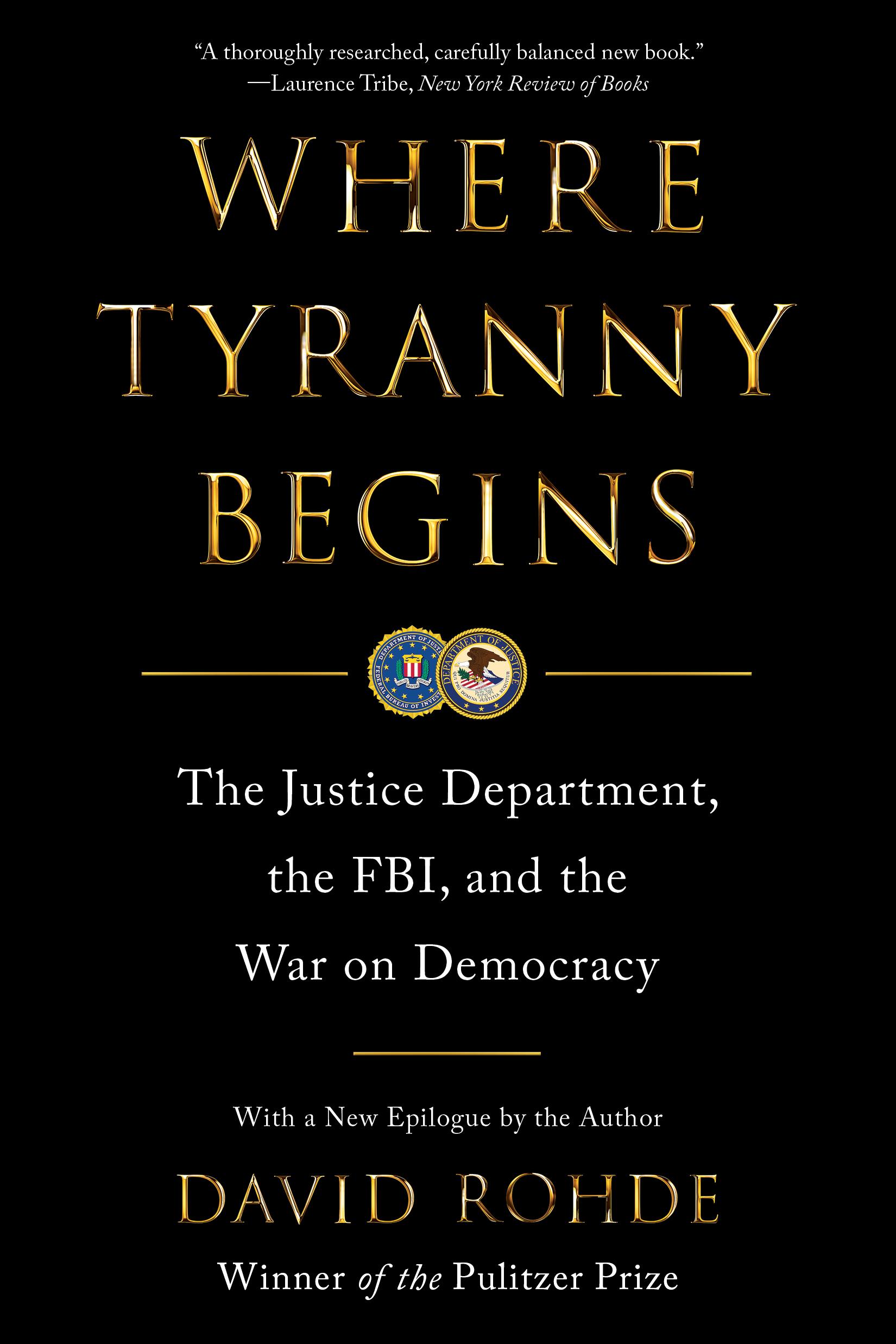
“A thoroughly researched, carefully balanced new book.” —Laurence Tribe, New York Review of Books
How Donald Trump used threats, co-option, and conspiracy theories to bend DOJ and FBI officials to his will to a greater extent than publicly known—and how Merrick Garland, other prosecutors, and judges failed to hold him accountable before the 2024 election.
Over the course of his presidency, Donald Trump intimidated, silenced, and bent to his will Justice Department and FBI officials, from Attorneys General Jeff Sessions and William Barr to career public servants. He sowed public doubt in both agencies so successfully that when he tried to overturn the results of the 2020 election, he paid little political cost and, despite an unprecedented array of criminal indictments, easily won the Republican nomination for the 2024 presidential election.
In Where Tyranny Begins, Pulitzer Prize–winning journalist David Rohde investigates the strategies Trump systematically used to turn the country’s two most powerful law-enforcement agencies into his personal political weapons. Rohde also reveals how, during the Biden years, Justice Department non-partisan 1970s norms that Attorney General Merrick Garland reinforced inadvertently helped Trump, and could fail to deliver a trial and legal accountability by Election Day 2024.
Where Tyranny Begins exposes how ill-suited both the DOJ and FBI are to serve as checks on abuses of presidential power. The rise of hyper-partisanship and the Trump and Biden presidencies have uncovered core flaws in American constitutional democracy that Trump would exploit in a second term. A round of historic reforms equivalent to the post-Watergate reforms that stabilized American democracy in the 1970s are immediately needed. A five-word warning coined by the English philosopher John Locke in 1689 captures the stakes in 2024: “Where-ever law ends, tyranny begins.”
Before Memmo my notes were scattered across PDFs. Now a workspace pulls everything into one place — I see exactly what's still left to study.
Memmo's summaries are gold before exams. I don't have to re-read 800 pages two weeks before — just the important parts.
The AI chat has saved me the night before an exam more than once. I just keep asking until I get it — no waiting on a study group to reply.
The quizzes hit exactly what I need to know. Memmo tracks what I get stuck on — so I only practice what's worth it.
Flashcards with spaced repetition are magic. Memmo knows when I'm about to forget something and brings it back.
The AI podcasts are my favorite. I listen on my way to school and get a recap without sitting at a computer.

Handbok i kvalitativa metoder
281 kr

Hållbar utveckling: en introduktion för ingenjörer och andra problemlösare
334 kr

Brymans Samhällsvetenskapliga metoder
390 kr

Projektledning
491 kr

Den orättvisa hälsan: om socioekonomiska skillnader i hälsa och livslängd
326 kr

Vetenskapsteori för nybörjare
196 kr

Organizational Leadership
429 kr

På väg mot läraryrket
172 kr

Det sociala livet i skolan: Socialpsykologiska perspektiv
253 kr

Betygsättningens didaktik
151 kr

Personality
402 kr

Studying Leadership
404 kr

Managing Innovation
477 kr

Introduktion till samhällsvetenskaplig metod
347 kr

The Psychology of Sex and Gender
698 kr

Evidens och kunskap för socialt arbete
207 kr

Introduction to Leadership
605 kr