
Before Memmo my notes were scattered across PDFs. Now a workspace pulls everything into one place — I see exactly what's still left to study.
Open-access edition: DOI 10.6069/9780295997483
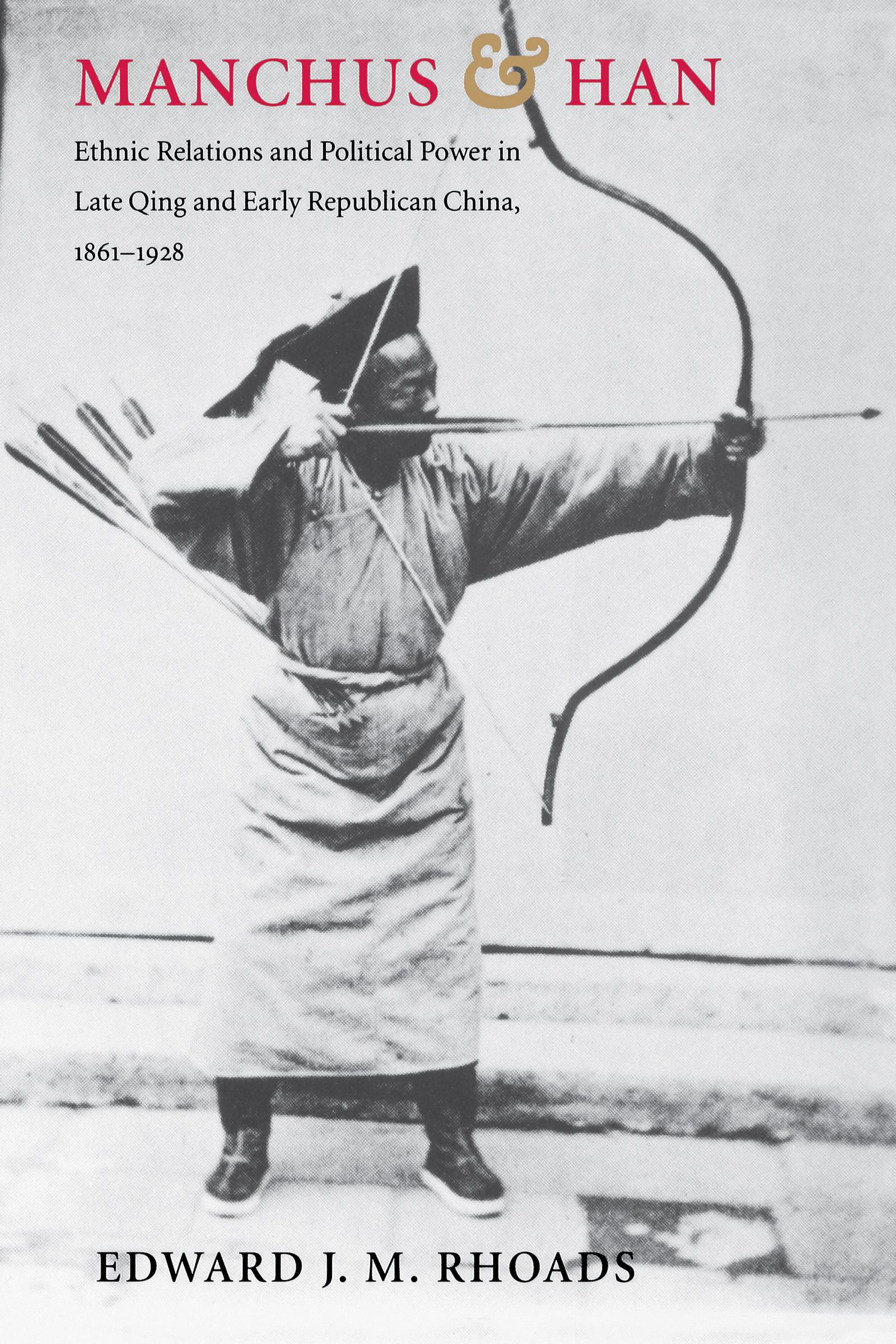
China’s 1911–12 Revolution, which overthrew a 2000-year succession of dynasties, is thought of primarily as a change in governmental style, from imperial to republican, traditional to modern. But given that the dynasty that was overthrown—the Qing—was that of a minority ethnic group that had ruled China’s Han majority for nearly three centuries, and that the revolutionaries were overwhelmingly Han, to what extent was the revolution not only anti-monarchical, but also anti-Manchu?
Edward Rhoads explores this provocative and complicated question in Manchus and Han, analyzing the evolution of the Manchus from a hereditary military caste (the “banner people”) to a distinct ethnic group and then detailing the interplay and dialogue between the Manchu court and Han reformers that culminated in the dramatic changes of the early 20th century.
Until now, many scholars have assumed that the Manchus had been assimilated into Han culture long before the 1911 Revolution and were no longer separate and distinguishable. But Rhoads demonstrates that in many ways Manchus remained an alien, privileged, and distinct group. Manchus and Han is a pathbreaking study that will forever change the way historians of China view the events leading to the fall of the Qing dynasty. Likewise, it will clarify for ethnologists the unique origin of the Manchus as an occupational caste and their shifting relationship with the Han, from border people to rulers to ruled.
Winner of the Joseph Levenson Book Prize for Modern China, sponsored by The China and Inner Asia Council of the Association for Asian Studies
Before Memmo my notes were scattered across PDFs. Now a workspace pulls everything into one place — I see exactly what's still left to study.
Memmo's summaries are gold before exams. I don't have to re-read 800 pages two weeks before — just the important parts.
The AI chat has saved me the night before an exam more than once. I just keep asking until I get it — no waiting on a study group to reply.
The quizzes hit exactly what I need to know. Memmo tracks what I get stuck on — so I only practice what's worth it.
Flashcards with spaced repetition are magic. Memmo knows when I'm about to forget something and brings it back.
The AI podcasts are my favorite. I listen on my way to school and get a recap without sitting at a computer.

Handbok i kvalitativa metoder
281 kr

Hållbar utveckling: en introduktion för ingenjörer och andra problemlösare
334 kr

Brymans Samhällsvetenskapliga metoder
390 kr

Projektledning
491 kr

Den orättvisa hälsan: om socioekonomiska skillnader i hälsa och livslängd
326 kr

Vetenskapsteori för nybörjare
196 kr

Organizational Leadership
429 kr

På väg mot läraryrket
172 kr

Det sociala livet i skolan: Socialpsykologiska perspektiv
253 kr

Betygsättningens didaktik
151 kr

Personality
402 kr

Studying Leadership
404 kr

Managing Innovation
477 kr

Introduktion till samhällsvetenskaplig metod
347 kr

The Psychology of Sex and Gender
698 kr

Evidens och kunskap för socialt arbete
207 kr

Introduction to Leadership
605 kr