
Before Memmo my notes were scattered across PDFs. Now a workspace pulls everything into one place — I see exactly what's still left to study.
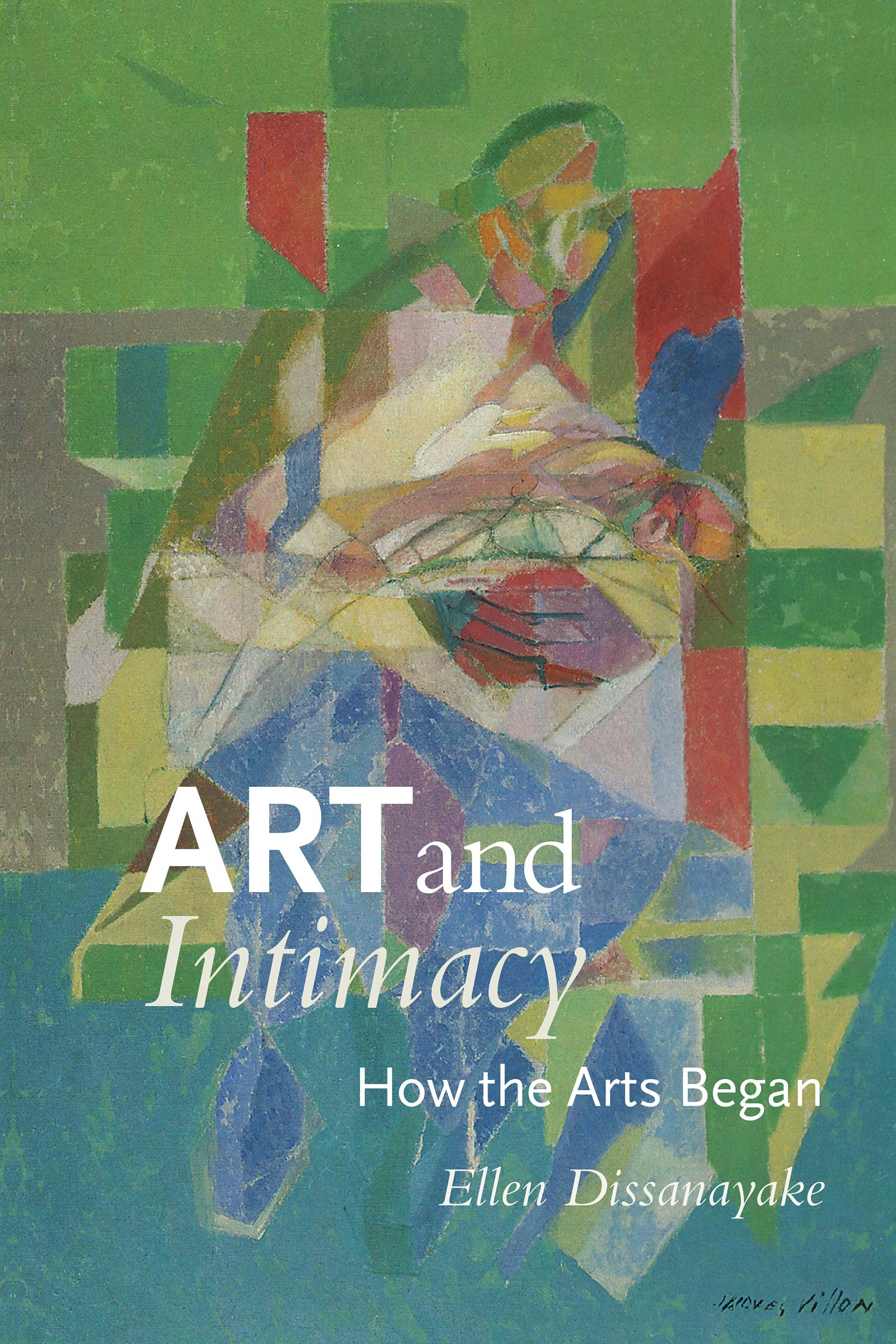
To Ellen Dissanayake, the arts are biologically evolved propensities of human nature: their fundamental features helped early humans adapt to their environment and reproduce themselves successfully over generations. In Art and Intimacy she argues for the joint evolutionary origin of art and intimacy, what we commonly call love.
It all begins with the human trait of birthing immature and helpless infants. To ensure that mothers find their demanding babies worth caring for, humans evolved to be lovable and to attune themselves to others from the moment of birth. The ways in which mother and infant respond to each other are rhythmically patterned vocalizations and exaggerated face and body movements that Dissanayake calls rhythms and sensory modes.
Rhythms and modes also give rise to the arts. Because humans are born predisposed to respond to and use rhythmic-modal signals, societies everywhere have elaborated them further as music, mime, dance, and display, in rituals which instill and reinforce valued cultural beliefs. Just as rhythms and modes coordinate and unify the mother-infant pair, in ceremonies they coordinate and unify members of a group.
Today we humans live in environments very different from those of our ancestors. They used ceremonies (the arts) to address matters of serious concern, such as health, prosperity, and fecundity, that affected their survival. Now we tend to dismiss the arts, to see them as superfluous, only for an elite. But if we are biologically predisposed to participate in artlike behavior, then we actually need the arts. Even -- or perhaps especially -- in our fast-paced, sophisticated modern lives, the arts encourage us to show that we care about important things.
Before Memmo my notes were scattered across PDFs. Now a workspace pulls everything into one place — I see exactly what's still left to study.
Memmo's summaries are gold before exams. I don't have to re-read 800 pages two weeks before — just the important parts.
The AI chat has saved me the night before an exam more than once. I just keep asking until I get it — no waiting on a study group to reply.
The quizzes hit exactly what I need to know. Memmo tracks what I get stuck on — so I only practice what's worth it.
Flashcards with spaced repetition are magic. Memmo knows when I'm about to forget something and brings it back.
The AI podcasts are my favorite. I listen on my way to school and get a recap without sitting at a computer.

Handbok i kvalitativa metoder
281 kr

Hållbar utveckling: en introduktion för ingenjörer och andra problemlösare
334 kr

Brymans Samhällsvetenskapliga metoder
390 kr

Projektledning
491 kr

Den orättvisa hälsan: om socioekonomiska skillnader i hälsa och livslängd
326 kr

Organizational Leadership
429 kr

Vetenskapsteori för nybörjare
196 kr

På väg mot läraryrket
172 kr

Det sociala livet i skolan: Socialpsykologiska perspektiv
253 kr

Betygsättningens didaktik
151 kr

Personality
402 kr

Studying Leadership
404 kr

Managing Innovation
477 kr

Introduktion till samhällsvetenskaplig metod
347 kr

The Psychology of Sex and Gender
698 kr

Evidens och kunskap för socialt arbete
207 kr

Introduction to Leadership
605 kr