
Before Memmo my notes were scattered across PDFs. Now a workspace pulls everything into one place — I see exactly what's still left to study.
Winner of the 2009 International Conference on Romanticism's Jean-Pierre Barricelli Award for the best book in Romanticism studies
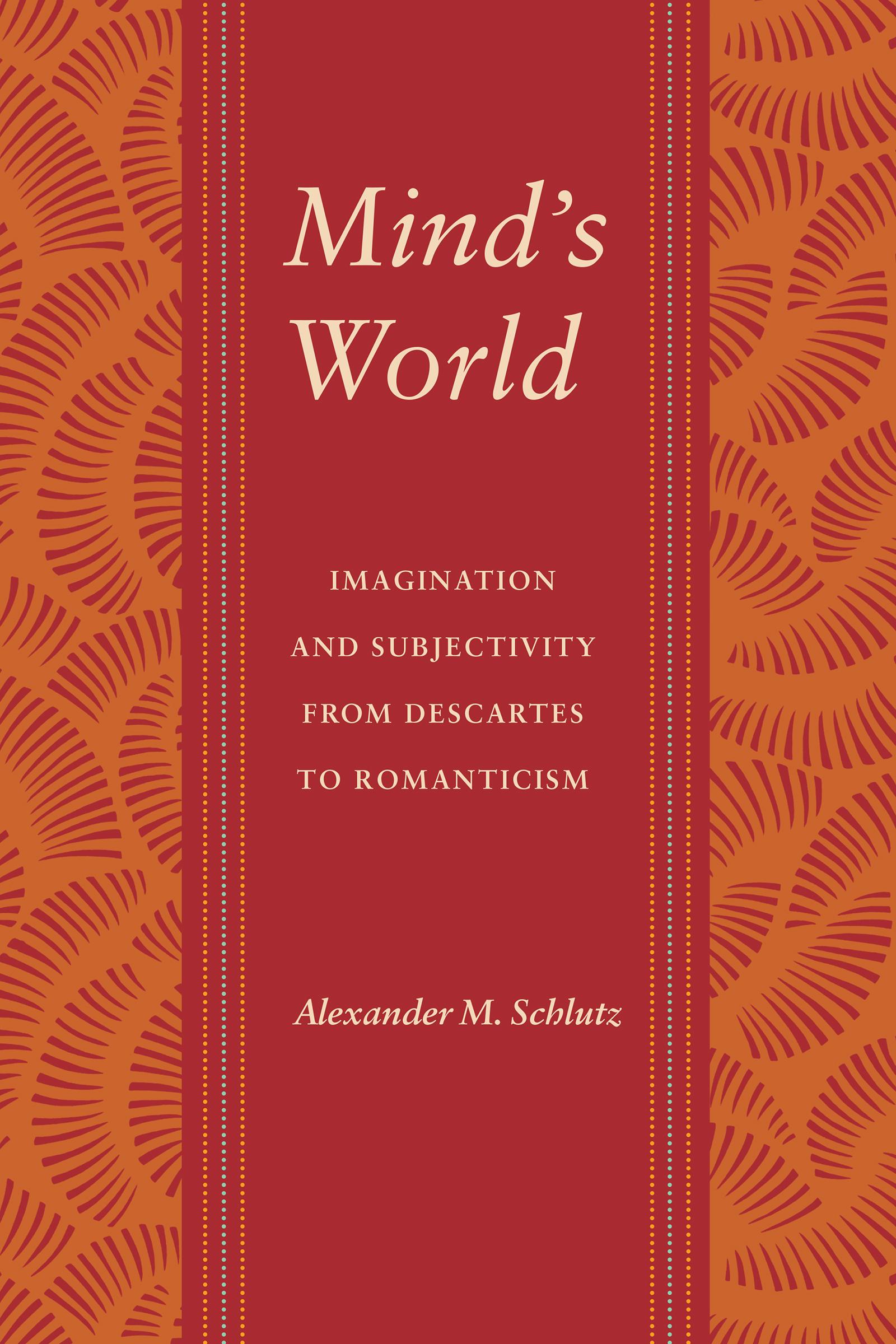
As the mental faculty that mediates between self and world, mind and body, the senses and the intellect, imagination is indispensable for modern models of subjectivity. From René Descartes's Meditations to the aesthetic and philosophical systems of the Romantic period, to think about the subject necessarily means to address the problem of imagination. In close readings of Descartes, Kant, Fichte, Hardenberg (Novalis) and Coleridge, and with a sustained return to the origins of the discourse about imagination in Greek antiquity, Alexander Schlutz demonstrates that neither the unity of the subject itself, nor the unity of the philosophical systems that are based on it, can be conceptualized without recourse to imagination. Yet, philosophers like Descartes and Kant must deny imagination any such foundational role because of its dangerous connection to the body, the senses and the unruly passions, which threatens the desired autonomy of the rational subject. The modern subject is simultaneously dependent upon and constructed in opposition to imagination, and the resulting ambivalence about the faculty is one of the fundamental conditions of modern models of subjectivity.
Schlutz's readings of the Romantic poet-philosophers Coleridge and Hardenberg highlight that also their texts are not free of fears about the faculty's disruptive potential and its connection to the body. While imagination is now openly enlisted to produce the aesthetic unity of subjectivity, it still threatens to unravel and destroy a subject that needs to keep the body and its desires at bay in order to secure its rational and moral autonomy. The dark abyss of a self not in control of its thoughts, feelings, and desires is not overcome by the philosophical glorification of the subject's powers of imagination.
Before Memmo my notes were scattered across PDFs. Now a workspace pulls everything into one place — I see exactly what's still left to study.
Memmo's summaries are gold before exams. I don't have to re-read 800 pages two weeks before — just the important parts.
The AI chat has saved me the night before an exam more than once. I just keep asking until I get it — no waiting on a study group to reply.
The quizzes hit exactly what I need to know. Memmo tracks what I get stuck on — so I only practice what's worth it.
Flashcards with spaced repetition are magic. Memmo knows when I'm about to forget something and brings it back.
The AI podcasts are my favorite. I listen on my way to school and get a recap without sitting at a computer.

Handbok i kvalitativa metoder
281 kr

Hållbar utveckling: en introduktion för ingenjörer och andra problemlösare
334 kr

Brymans Samhällsvetenskapliga metoder
390 kr

Projektledning
491 kr

Den orättvisa hälsan: om socioekonomiska skillnader i hälsa och livslängd
326 kr

Organizational Leadership
429 kr

Vetenskapsteori för nybörjare
196 kr

På väg mot läraryrket
172 kr

Det sociala livet i skolan: Socialpsykologiska perspektiv
253 kr

Betygsättningens didaktik
151 kr

Personality
402 kr

Studying Leadership
404 kr

Managing Innovation
477 kr

Introduktion till samhällsvetenskaplig metod
347 kr

The Psychology of Sex and Gender
698 kr

Evidens och kunskap för socialt arbete
207 kr

Introduction to Leadership
605 kr