
Before Memmo my notes were scattered across PDFs. Now a workspace pulls everything into one place — I see exactly what's still left to study.
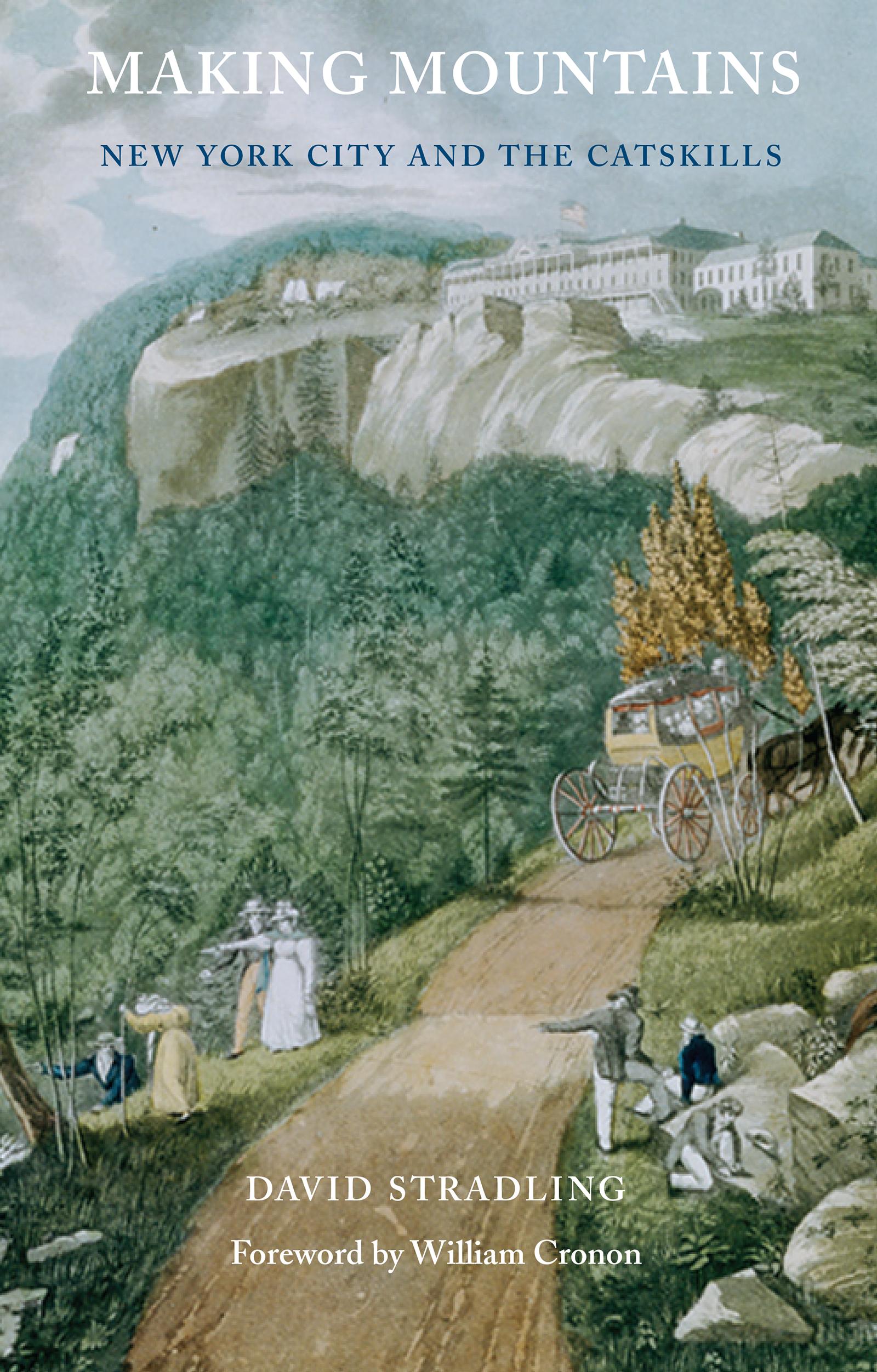
For over two hundred years, the Catskill Mountains have been repeatedly and dramatically transformed by New York City. In Making Mountains, David Stradling shows the transformation of the Catskills landscape as a collaborative process, one in which local and urban hands, capital, and ideas have come together to reshape the mountains and the communities therein. This collaboration has had environmental, economic, and cultural consequences.
Early on, the Catskills were an important source of natural resources. Later, when New York City needed to expand its water supply, engineers helped direct the city toward the Catskills, claiming that the mountains offered the purest and most cost-effective waters. By the 1960s, New York had created the great reservoir and aqueduct system in the mountains that now supplies the city with 90 percent of its water.
The Catskills also served as a critical space in which the nation's ideas about nature evolved. Stradling describes the great influence writers and artists had upon urban residents - especially the painters of the Hudson River School, whose ideal landscapes created expectations about how rural America should appear. By the mid-1800s, urban residents had turned the Catskills into an important vacation ground, and by the late 1800s, the Catskills had become one of the premiere resort regions in the nation.
In the mid-twentieth century, the older Catskill resort region was in steep decline, but the Jewish "Borscht Belt" in the southern Catskills was thriving. The automobile revitalized mountain tourism and residence, and increased the threat of suburbanization of the historic landscape. Throughout each of these significant incarnations, urban and rural residents worked in a rough collaboration, though not without conflict, to reshape the mountains and American ideas about rural landscapes and nature.
Before Memmo my notes were scattered across PDFs. Now a workspace pulls everything into one place — I see exactly what's still left to study.
Memmo's summaries are gold before exams. I don't have to re-read 800 pages two weeks before — just the important parts.
The AI chat has saved me the night before an exam more than once. I just keep asking until I get it — no waiting on a study group to reply.
The quizzes hit exactly what I need to know. Memmo tracks what I get stuck on — so I only practice what's worth it.
Flashcards with spaced repetition are magic. Memmo knows when I'm about to forget something and brings it back.
The AI podcasts are my favorite. I listen on my way to school and get a recap without sitting at a computer.

Handbok i kvalitativa metoder
281 kr

Hållbar utveckling: en introduktion för ingenjörer och andra problemlösare
334 kr

Brymans Samhällsvetenskapliga metoder
390 kr

Projektledning
491 kr

Den orättvisa hälsan: om socioekonomiska skillnader i hälsa och livslängd
326 kr

Organizational Leadership
429 kr

Vetenskapsteori för nybörjare
196 kr

På väg mot läraryrket
172 kr

Det sociala livet i skolan: Socialpsykologiska perspektiv
253 kr

Betygsättningens didaktik
151 kr

Personality
402 kr

Studying Leadership
404 kr

Managing Innovation
477 kr

Introduktion till samhällsvetenskaplig metod
347 kr

The Psychology of Sex and Gender
698 kr

Evidens och kunskap för socialt arbete
207 kr

Introduction to Leadership
605 kr