
Before Memmo my notes were scattered across PDFs. Now a workspace pulls everything into one place — I see exactly what's still left to study.
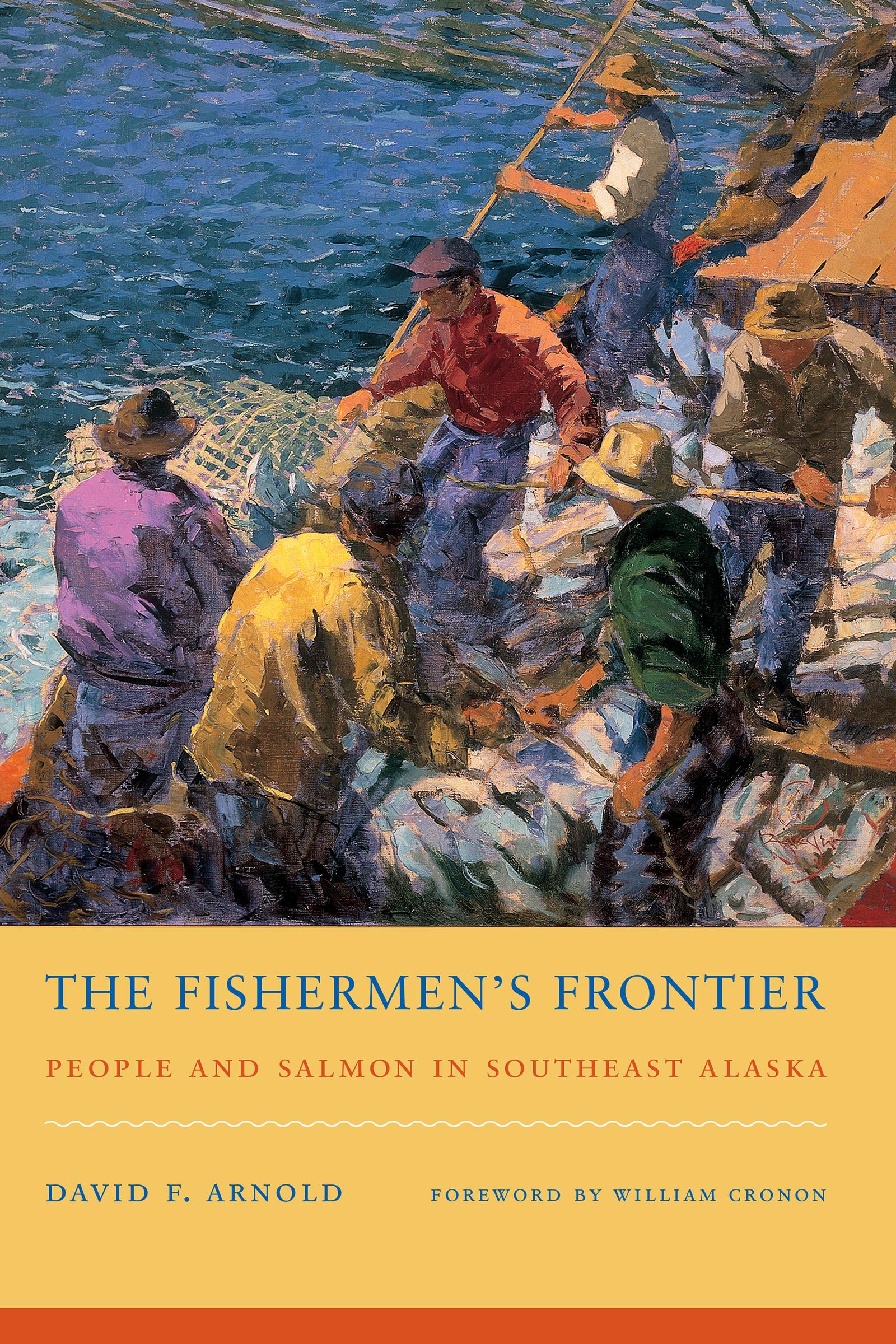
In The Fishermen's Frontier, David Arnold examines the economic, social, cultural, and political context in which salmon have been harvested in southeast Alaska over the past 250 years. He starts with the aboriginal fishery, in which Native fishers lived in close connection with salmon ecosystems and developed rituals and lifeways that reflected their intimacy.
The transformation of the salmon fishery in southeastern Alaska from an aboriginal resource to an industrial commodity has been fraught with historical ironies. Tribal peoples -- usually considered egalitarian and communal in nature -- managed their fisheries with a strict notion of property rights, while Euro-Americans -- so vested in the notion of property and ownership -- established a common-property fishery when they arrived in the late nineteenth century. In the twentieth century, federal conservation officials tried to rationalize the fishery by "improving" upon nature and promoting economic efficiency, but their uncritical embrace of scientific planning and their disregard for local knowledge degraded salmon habitat and encouraged a backlash from small-boat fishermen, who clung to their "irrational" ways. Meanwhile, Indian and white commercial fishermen engaged in identical labors, but established vastly different work cultures and identities based on competing notions of work and nature.
Arnold concludes with a sobering analysis of the threats to present-day fishing cultures by forces beyond their control. However, the salmon fishery in southeastern Alaska is still very much alive, entangling salmon, fishermen, industrialists, scientists, and consumers in a living web of biological and human activity that has continued for thousands of years.
Before Memmo my notes were scattered across PDFs. Now a workspace pulls everything into one place — I see exactly what's still left to study.
Memmo's summaries are gold before exams. I don't have to re-read 800 pages two weeks before — just the important parts.
The AI chat has saved me the night before an exam more than once. I just keep asking until I get it — no waiting on a study group to reply.
The quizzes hit exactly what I need to know. Memmo tracks what I get stuck on — so I only practice what's worth it.
Flashcards with spaced repetition are magic. Memmo knows when I'm about to forget something and brings it back.
The AI podcasts are my favorite. I listen on my way to school and get a recap without sitting at a computer.

Handbok i kvalitativa metoder
281 kr

Hållbar utveckling: en introduktion för ingenjörer och andra problemlösare
334 kr

Brymans Samhällsvetenskapliga metoder
390 kr

Projektledning
491 kr

Den orättvisa hälsan: om socioekonomiska skillnader i hälsa och livslängd
326 kr

Organizational Leadership
429 kr

Vetenskapsteori för nybörjare
196 kr

På väg mot läraryrket
172 kr

Det sociala livet i skolan: Socialpsykologiska perspektiv
253 kr

Betygsättningens didaktik
151 kr

Personality
402 kr

Studying Leadership
404 kr

Managing Innovation
477 kr

Introduktion till samhällsvetenskaplig metod
347 kr

The Psychology of Sex and Gender
698 kr

Evidens och kunskap för socialt arbete
207 kr

Introduction to Leadership
605 kr