
Before Memmo my notes were scattered across PDFs. Now a workspace pulls everything into one place — I see exactly what's still left to study.
Open-access edition: DOI 10.6069/9780295804057
Upon coming to power in 1949, the Chinese Communist government proclaimed that its stance toward ethnic minorities--who comprise approximately eight percent of China’s population--differed from that of previous regimes and that it would help preserve the linguistic and cultural heritage of the fifty-five official "minority nationalities." However, minority culture suffered widespread destruction in the early decades of the People’s Republic of China, and minority areas still lag far behind Han (majority) areas economically.
Since the mid-1990s, both domestic and foreign developments have refocused government attention on the inhabitants of China’s minority regions, their relationship to the Chinese state, and their foreign ties. Intense economic development of and Han settlement in China’s remote minority regions threaten to displace indigenous populations, post-Soviet establishment of independent countries composed mainly of Muslim and Turkic-speaking peoples presents questions for related groups in China, freedom of Mongolia from Soviet control raises the specter of a pan-Mongolian movement encompassing Chinese Mongols, and international groups press for a more autonomous or even independent Tibet.
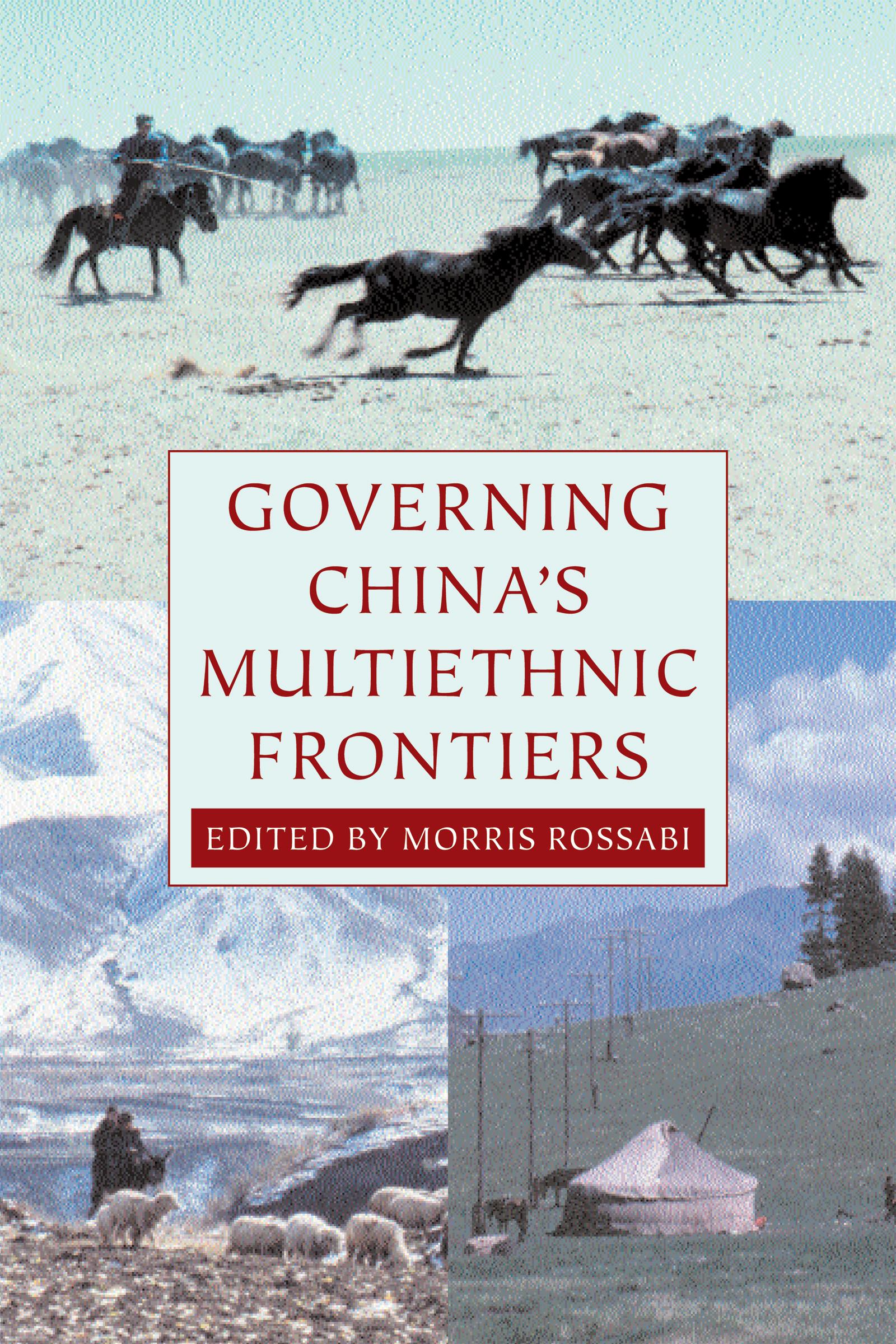
In Governing China’s Multiethnic Frontiers, leading scholars examine the Chinese government’s administration of its ethnic minority regions, particularly border areas where ethnicity is at times a volatile issue and where separatist movements are feared. Seven essays focus on the Muslim Hui, multiethnic southwest China, Inner Mongolia, Xinjiang, and Tibet. Together these studies provide an overview of government relations with key minority populations, against which one can view evolving dialogues and disputes.
Before Memmo my notes were scattered across PDFs. Now a workspace pulls everything into one place — I see exactly what's still left to study.
Memmo's summaries are gold before exams. I don't have to re-read 800 pages two weeks before — just the important parts.
The AI chat has saved me the night before an exam more than once. I just keep asking until I get it — no waiting on a study group to reply.
The quizzes hit exactly what I need to know. Memmo tracks what I get stuck on — so I only practice what's worth it.
Flashcards with spaced repetition are magic. Memmo knows when I'm about to forget something and brings it back.
The AI podcasts are my favorite. I listen on my way to school and get a recap without sitting at a computer.

Handbok i kvalitativa metoder
281 kr

Hållbar utveckling: en introduktion för ingenjörer och andra problemlösare
334 kr

Brymans Samhällsvetenskapliga metoder
390 kr

Projektledning
491 kr

Den orättvisa hälsan: om socioekonomiska skillnader i hälsa och livslängd
326 kr

Vetenskapsteori för nybörjare
196 kr

Organizational Leadership
429 kr

På väg mot läraryrket
172 kr

Det sociala livet i skolan: Socialpsykologiska perspektiv
253 kr

Betygsättningens didaktik
151 kr

Personality
402 kr

Studying Leadership
404 kr

Managing Innovation
477 kr

Introduktion till samhällsvetenskaplig metod
347 kr

The Psychology of Sex and Gender
698 kr

Evidens och kunskap för socialt arbete
207 kr

Introduction to Leadership
605 kr