
Before Memmo my notes were scattered across PDFs. Now a workspace pulls everything into one place — I see exactly what's still left to study.
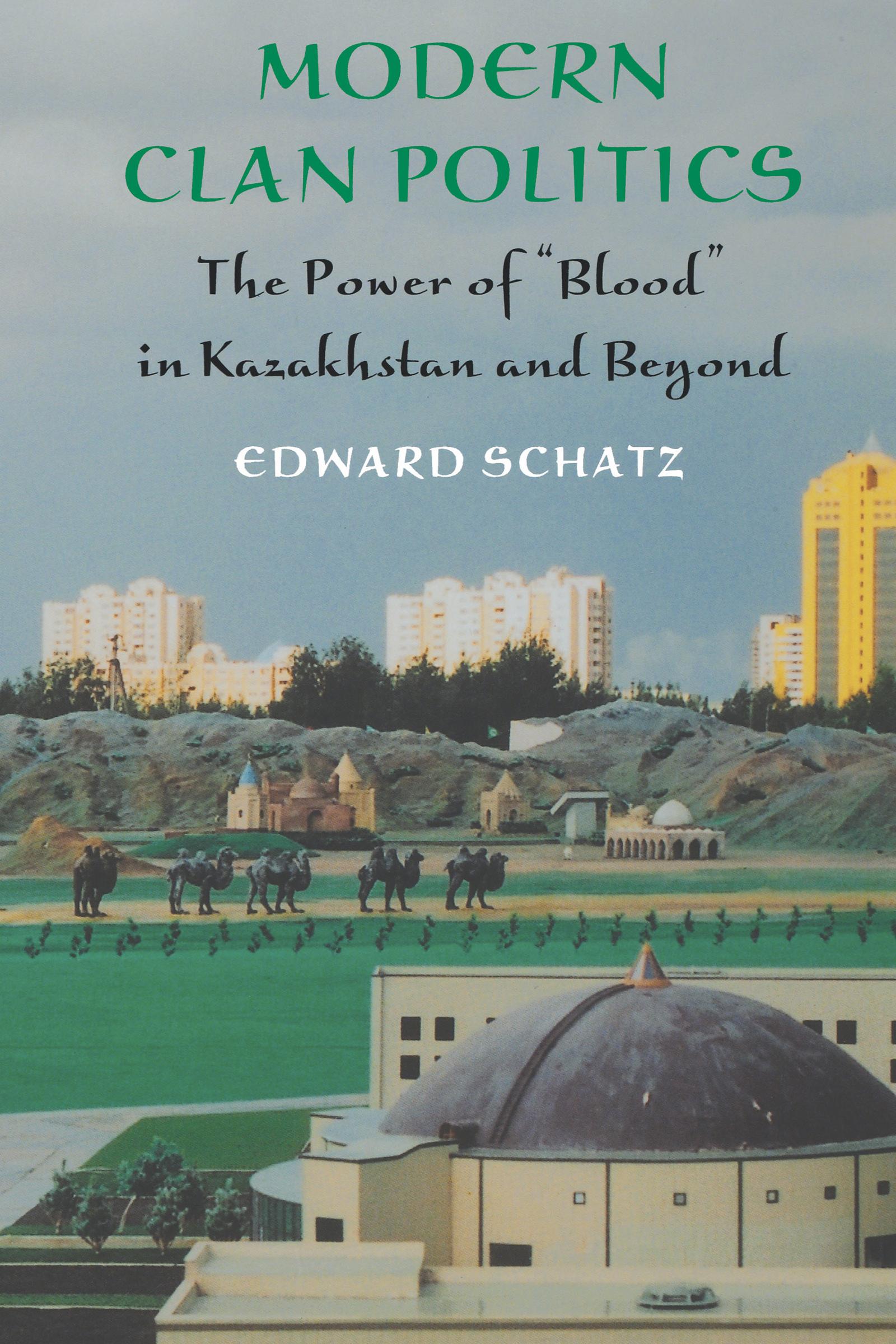
Edward Schatz explores the politics of kin-based clan divisions in the post-Soviet state of Kazakhstan. Drawing from extensive ethnographic and archival research, interviews, and wide-ranging secondary sources, he highlights a politics that poses a two-tiered challenge to current thinking about modernity and Central Asia. First, asking why kinship divisions do not fade from political life with modernization, he shows that the state actually constructs clan relationships by infusing them with practical political and social meaning. By activating the most important quality of clans - their "concealability" - the state is itself responsible for the vibrant politics of these subethnic divisions which has emerged and flourished in post-Soviet Kazakhstan.
Subethnic divisions are crucial to understanding how group solidarities and power relations coexist and where they intersect. But, in a second challenge to current thinking, Schatz argues that clan politics should not be understood simply as competition among primordial groups. Rather, the meanings attributed to clan relationships - both the public stigmas and the publicly proclaimed pride in clans - are part and parcel of this contest.
Drawing parallels with relevant cases from the Middle East, East and North Africa, and other parts of the former USSR, Schatz concludes that a more appropriate policy may be achieved by making clans a legitimate part of political and social life, rendering them less powerful or corrupt by increasing their transparency.
Political scientists, sociologists, anthropologists, policy makers, and others who study state power and identity groups will find a wealth of empirical material and conceptual innovation for discussion and debate.
Before Memmo my notes were scattered across PDFs. Now a workspace pulls everything into one place — I see exactly what's still left to study.
Memmo's summaries are gold before exams. I don't have to re-read 800 pages two weeks before — just the important parts.
The AI chat has saved me the night before an exam more than once. I just keep asking until I get it — no waiting on a study group to reply.
The quizzes hit exactly what I need to know. Memmo tracks what I get stuck on — so I only practice what's worth it.
Flashcards with spaced repetition are magic. Memmo knows when I'm about to forget something and brings it back.
The AI podcasts are my favorite. I listen on my way to school and get a recap without sitting at a computer.

Handbok i kvalitativa metoder
281 kr

Hållbar utveckling: en introduktion för ingenjörer och andra problemlösare
334 kr

Brymans Samhällsvetenskapliga metoder
390 kr

Projektledning
491 kr

Den orättvisa hälsan: om socioekonomiska skillnader i hälsa och livslängd
326 kr

Organizational Leadership
429 kr

Vetenskapsteori för nybörjare
196 kr

På väg mot läraryrket
172 kr

Det sociala livet i skolan: Socialpsykologiska perspektiv
253 kr

Betygsättningens didaktik
151 kr

Personality
402 kr

Studying Leadership
404 kr

Managing Innovation
477 kr

Introduktion till samhällsvetenskaplig metod
347 kr

The Psychology of Sex and Gender
698 kr

Evidens och kunskap för socialt arbete
207 kr

Introduction to Leadership
605 kr