
Before Memmo my notes were scattered across PDFs. Now a workspace pulls everything into one place — I see exactly what's still left to study.
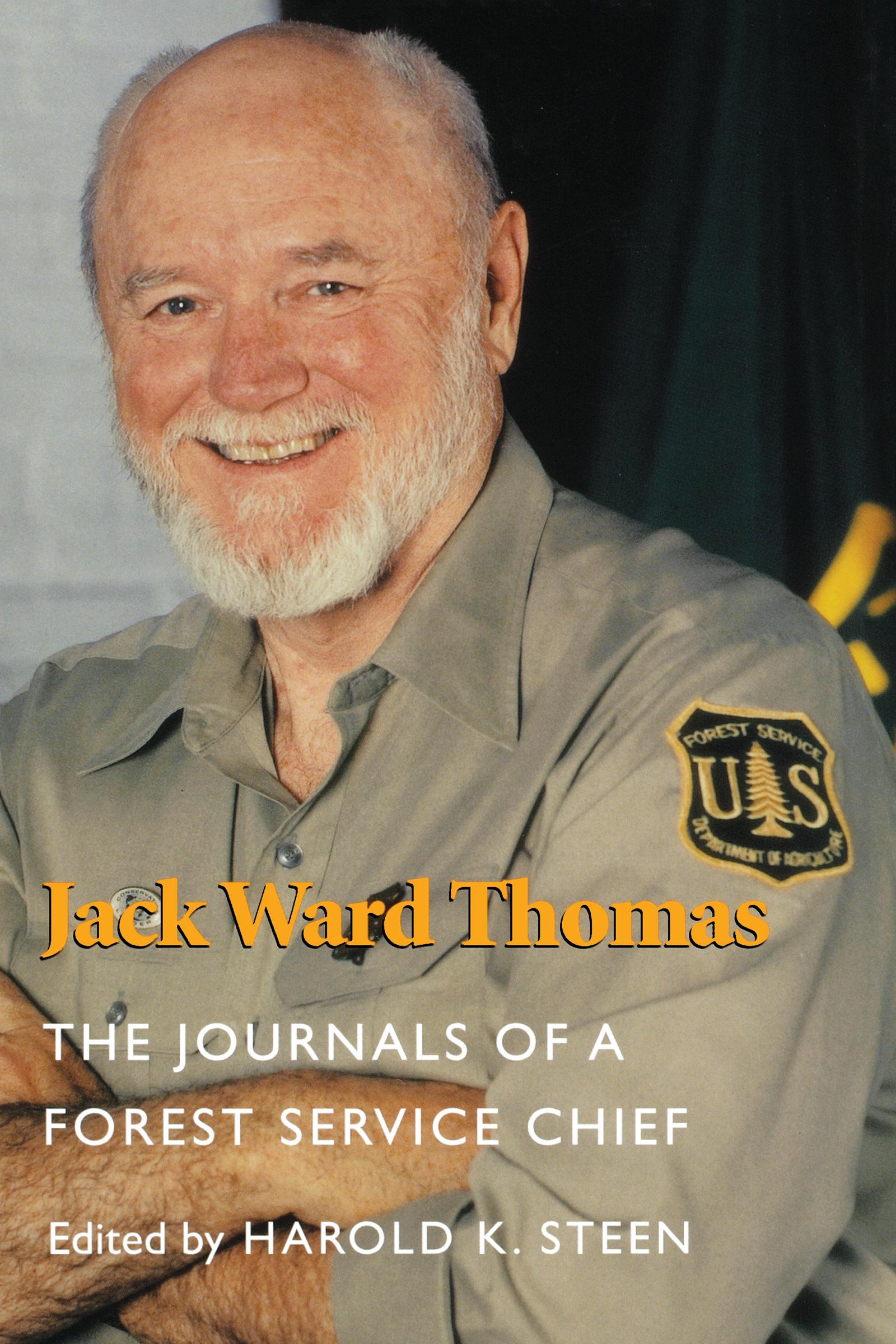
Jack Ward Thomas, an eminent wildlife biologist and U.S. Forest Service career scientist, was drafted in the late 1980s to head teams of scientists developingstrategies for managing the habitat of the northern spotted owl. That assignment led to his selection as Forest Service chief during the early years of the Clinton administration. It is history’s good fortune that Thomas kept journals of his thoughts and daily experiences, and that he is a superb writer able to capture the moment with clarity and grace.
The issues Thomas dealt with in office and noted in his journals lie at the heart of recent Forest Service policy and controversy, starting with President Clinton’s Timber Summit in Portland, Oregon, dealing with the spotted owl issue, and the 1994 loss of fourteen firefighters in the Storm King Mountain fire in Colorado. Against a constant backdrop of partisan politics in the White House and Congress, Thomas discusses issues ranging from grazing in the national forests, long-term pulp timber sales in Alaska, and the Forest Service Law Enforcement Division to the New World Mine near Yellowstone National Park. He considers the timber salvage rider and its linkage to forest health, the Department of Justice and Counsel on Environmental Quality influence on Forest Service policies, and interagency management for the Columbia River Basin.
Woven throughout these excerpts from his diary is Thomas’s conviction that the effective, ethical management of wildlife depends on how the management effort is situated within the broader human context, with all its intransigence and unpredictability. Writing in 1995, Thomas says, "Things simply don’t work the way that students are taught in natural resources policy classes--not even close. . . .There is simply no way that scholars of the subject can understand the ad hoc processes that go on within only loosely defined boundaries.” Wildlife management, he says, is "90 percent about people and 10 percent about animals," and when it comes to learning about people, wildlife managers are on their own. This book is the record of how one man met that challenge.
Before Memmo my notes were scattered across PDFs. Now a workspace pulls everything into one place — I see exactly what's still left to study.
Memmo's summaries are gold before exams. I don't have to re-read 800 pages two weeks before — just the important parts.
The AI chat has saved me the night before an exam more than once. I just keep asking until I get it — no waiting on a study group to reply.
The quizzes hit exactly what I need to know. Memmo tracks what I get stuck on — so I only practice what's worth it.
Flashcards with spaced repetition are magic. Memmo knows when I'm about to forget something and brings it back.
The AI podcasts are my favorite. I listen on my way to school and get a recap without sitting at a computer.

Handbok i kvalitativa metoder
281 kr

Hållbar utveckling: en introduktion för ingenjörer och andra problemlösare
334 kr

Brymans Samhällsvetenskapliga metoder
390 kr

Projektledning
491 kr

Den orättvisa hälsan: om socioekonomiska skillnader i hälsa och livslängd
326 kr

Organizational Leadership
429 kr

Vetenskapsteori för nybörjare
196 kr

På väg mot läraryrket
172 kr

Det sociala livet i skolan: Socialpsykologiska perspektiv
253 kr

Betygsättningens didaktik
151 kr

Personality
402 kr

Studying Leadership
404 kr

Managing Innovation
477 kr

Introduktion till samhällsvetenskaplig metod
347 kr

The Psychology of Sex and Gender
698 kr

Evidens och kunskap för socialt arbete
207 kr

Introduction to Leadership
605 kr