
Before Memmo my notes were scattered across PDFs. Now a workspace pulls everything into one place — I see exactly what's still left to study.
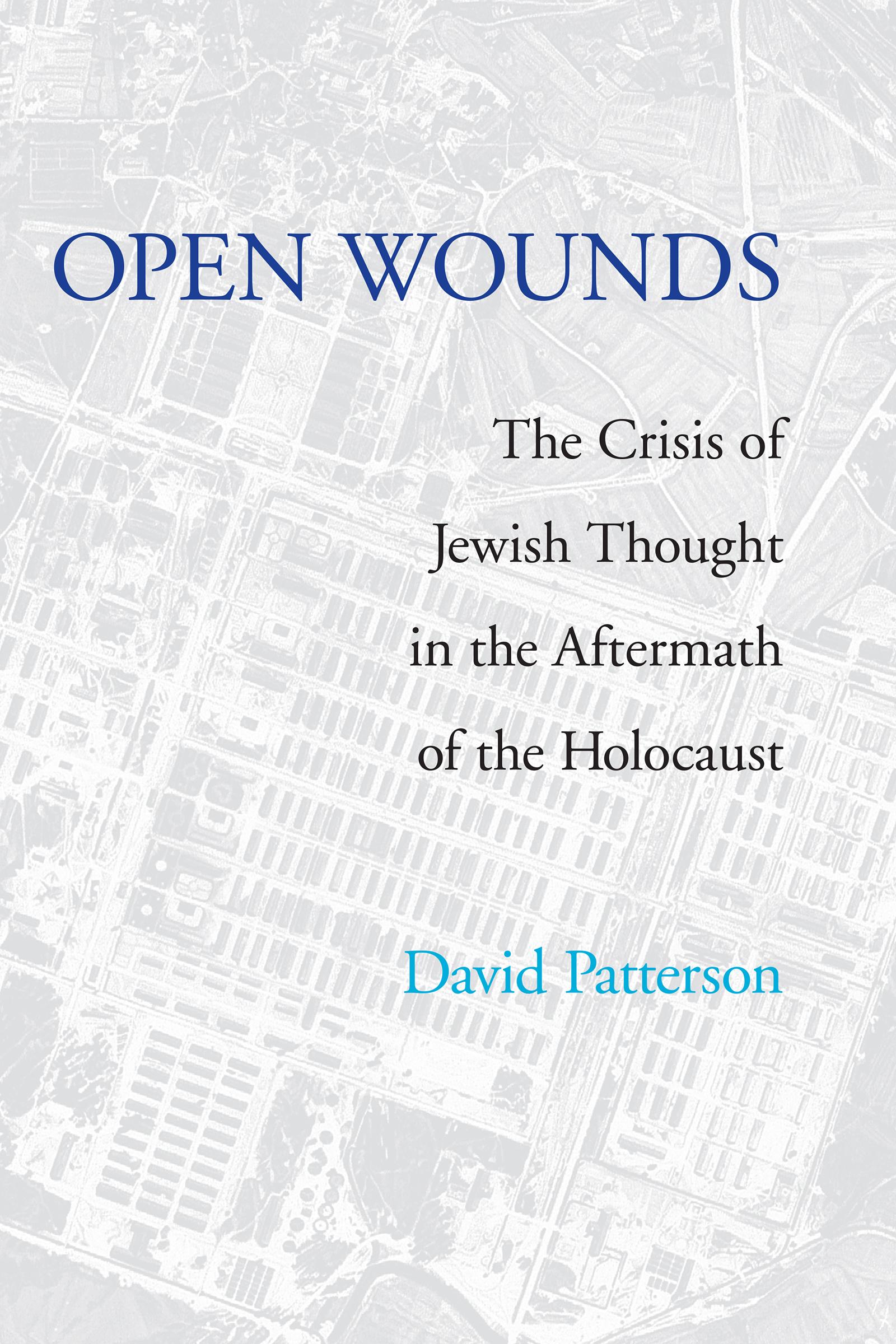
In this book, David Patterson sets out to describe why Jews must live -- but especially think -- in a way that is distinctly Jewish.
For Patterson, the primary responsibility of post-Holocaust Jewish thought is to avoid thinking in the same categories that led to the attempted extermination of the Jewish people. The Nazis, he says, were not anti- Semitic because they were racists; they were racists because they were anti-Semitic, and their anti-Semitism was furthered by a Western ontological tradition that made God irrelevant by placing the thinking ego at the center of being.
If the Jewish people, in their particularity, are "chosen" to attest to the universal "chosenness" of every human being, then each human being is singled out to assume an absolute responsibility to and for all human beings. And that, Patterson says, is why the anti-Semite hates the Jew: because the very presence of the Jew robs him of his ego and serves as a constant reminder that we are all forever in debt, and that redemption is always yet to be. Thus the Nazis, before they killed Jewish bodies, were compelled to murder Jewish souls through the degradations of the Shoah.
But why is the need for a revitalized Jewish thought so urgent today? It is not only because modern Jewish thought, hoping to accommodate itself to rational idealism, is thereby obliged to put itself in league with postmodernists who "preach tolerance for everything except biblically based religion, beginning with Judaism," and who effectively call on Jews, as fellow "citizens of the global village," to disappear. It is also because without the Jewish reality of Jerusalem, there is only the Jewish abstraction of Auschwitz, for in Auschwitz the Jews were murdered not as husbands and wives, parents and children, but as efficiently numbered units. If the Jews, Patterson claims, are not a people set apart by "a Voice that is other than human," then the Holocaust can never be understood as evil rather than simply immoral.
With Open Wounds, Patterson aims to make possible a religious response to the Holocaust. Post-Holocaust Jewish thinking, confronting the work of healing the world -- of tikkun haolam -- must recover not just Jewish tradition but also the category of the holy in human beings' thinking about humanity.
Before Memmo my notes were scattered across PDFs. Now a workspace pulls everything into one place — I see exactly what's still left to study.
Memmo's summaries are gold before exams. I don't have to re-read 800 pages two weeks before — just the important parts.
The AI chat has saved me the night before an exam more than once. I just keep asking until I get it — no waiting on a study group to reply.
The quizzes hit exactly what I need to know. Memmo tracks what I get stuck on — so I only practice what's worth it.
Flashcards with spaced repetition are magic. Memmo knows when I'm about to forget something and brings it back.
The AI podcasts are my favorite. I listen on my way to school and get a recap without sitting at a computer.

Handbok i kvalitativa metoder
281 kr

Hållbar utveckling: en introduktion för ingenjörer och andra problemlösare
334 kr

Brymans Samhällsvetenskapliga metoder
390 kr

Projektledning
491 kr

Den orättvisa hälsan: om socioekonomiska skillnader i hälsa och livslängd
326 kr

Organizational Leadership
429 kr

Vetenskapsteori för nybörjare
196 kr

På väg mot läraryrket
172 kr

Det sociala livet i skolan: Socialpsykologiska perspektiv
253 kr

Betygsättningens didaktik
151 kr

Personality
402 kr

Studying Leadership
404 kr

Managing Innovation
477 kr

Introduktion till samhällsvetenskaplig metod
347 kr

The Psychology of Sex and Gender
698 kr

Evidens och kunskap för socialt arbete
207 kr

Introduction to Leadership
605 kr