
Before Memmo my notes were scattered across PDFs. Now a workspace pulls everything into one place — I see exactly what's still left to study.
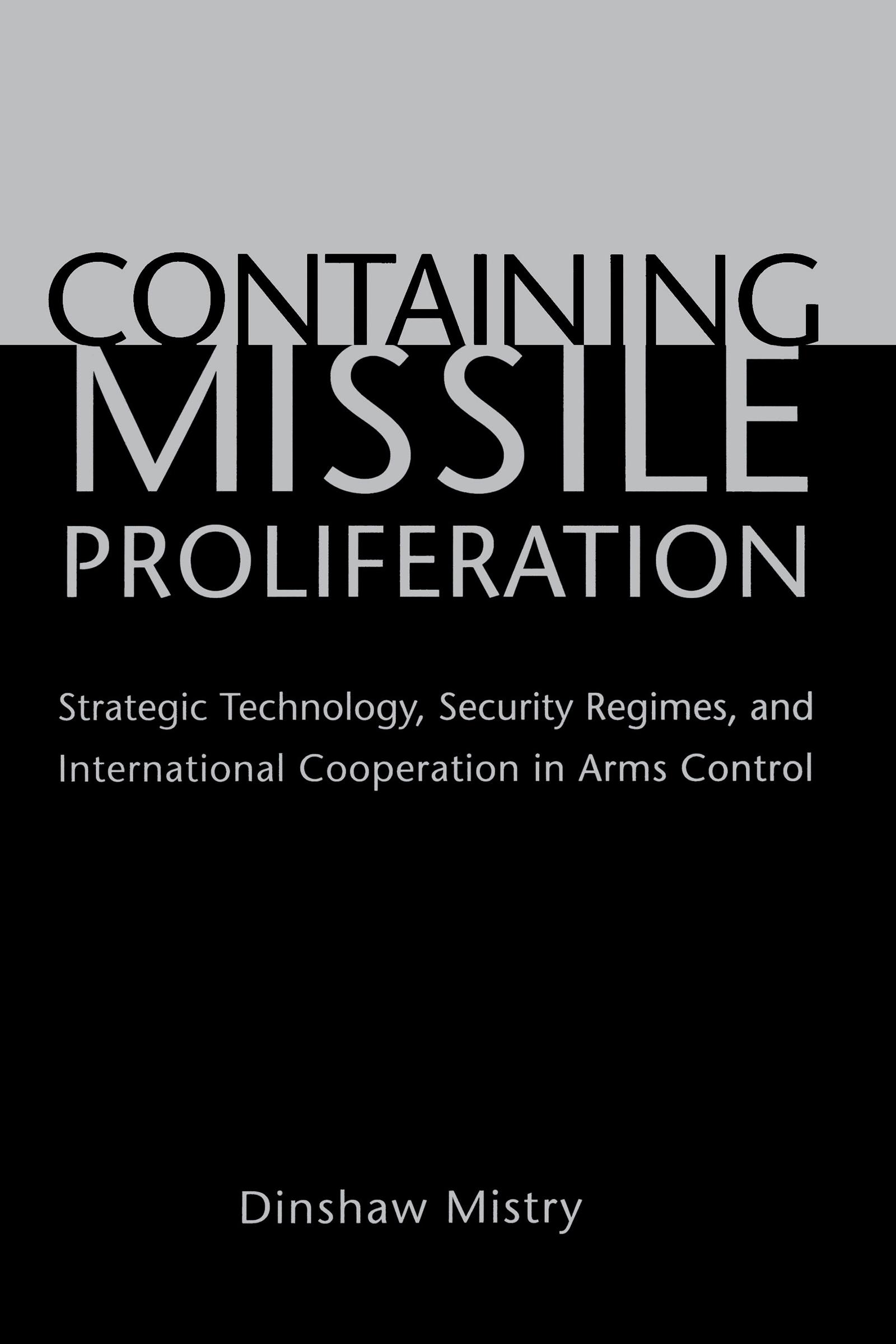
The proliferation of ballistic missiles that can deliver weapons of mass destruction halfway across the world is a matter of growing urgency and concern, as is the fate of agreements limiting the development of such deadly weapons. The Bush administration’s scrapping of the ABM Treaty and pursuit of a huge National Missile Defense initiative are dramatic evidence of this concern. Yet there remains much uncertainty about the viability of missile defense. If defenses fall short, strong security regimes will be necessary to contain missile proliferation.
Since 1987, more than thirty states have agreed to restrict their transfer of missiles and related technologies under the Missile Technology Control Regime (MTCR). During the MTCR’s first decade, several regional powers were thwarted from advancing their missile ambitions. Subsequently, however, states such as North Korea, Iran, Pakistan, India, and Israel have tested medium-range missiles and others have expanded their missile arsenals.
Dinshaw Mistry critically examines the successes and limitations of the MTCR, and suggests five practical ways to strengthen the regime. The author’s exhaustive research offers new and detailed insights on the technology and politics of missile programs in Iran, Iraq, North Korea, Pakistan, India, Israel, Egypt, South Korea, Taiwan, and other countries. Mistry also shows how international cooperation, security regimes, and U.S. foreign policies of engagement and containment with these states can halt their missile programs.
Mistry’s book is the first comprehensive study of the MTCR and of international efforts to contain missile proliferation. Policymakers, scholars, and the general reader will find this book a valuable contribution to the subjects of arms control, ballistic missile proliferation, multilateral cooperation, and international security regimes.
For the author's update, go to http://www.washington.edu/uwpress/books/UpdateApril2009.pdf
Before Memmo my notes were scattered across PDFs. Now a workspace pulls everything into one place — I see exactly what's still left to study.
Memmo's summaries are gold before exams. I don't have to re-read 800 pages two weeks before — just the important parts.
The AI chat has saved me the night before an exam more than once. I just keep asking until I get it — no waiting on a study group to reply.
The quizzes hit exactly what I need to know. Memmo tracks what I get stuck on — so I only practice what's worth it.
Flashcards with spaced repetition are magic. Memmo knows when I'm about to forget something and brings it back.
The AI podcasts are my favorite. I listen on my way to school and get a recap without sitting at a computer.

Handbok i kvalitativa metoder
281 kr

Hållbar utveckling: en introduktion för ingenjörer och andra problemlösare
334 kr

Brymans Samhällsvetenskapliga metoder
390 kr

Projektledning
491 kr

Den orättvisa hälsan: om socioekonomiska skillnader i hälsa och livslängd
326 kr

Organizational Leadership
429 kr

Vetenskapsteori för nybörjare
196 kr

På väg mot läraryrket
172 kr

Det sociala livet i skolan: Socialpsykologiska perspektiv
253 kr

Betygsättningens didaktik
151 kr

Personality
402 kr

Studying Leadership
404 kr

Managing Innovation
477 kr

Introduktion till samhällsvetenskaplig metod
347 kr

The Psychology of Sex and Gender
698 kr

Evidens och kunskap för socialt arbete
207 kr

Introduction to Leadership
605 kr