
Before Memmo my notes were scattered across PDFs. Now a workspace pulls everything into one place — I see exactly what's still left to study.
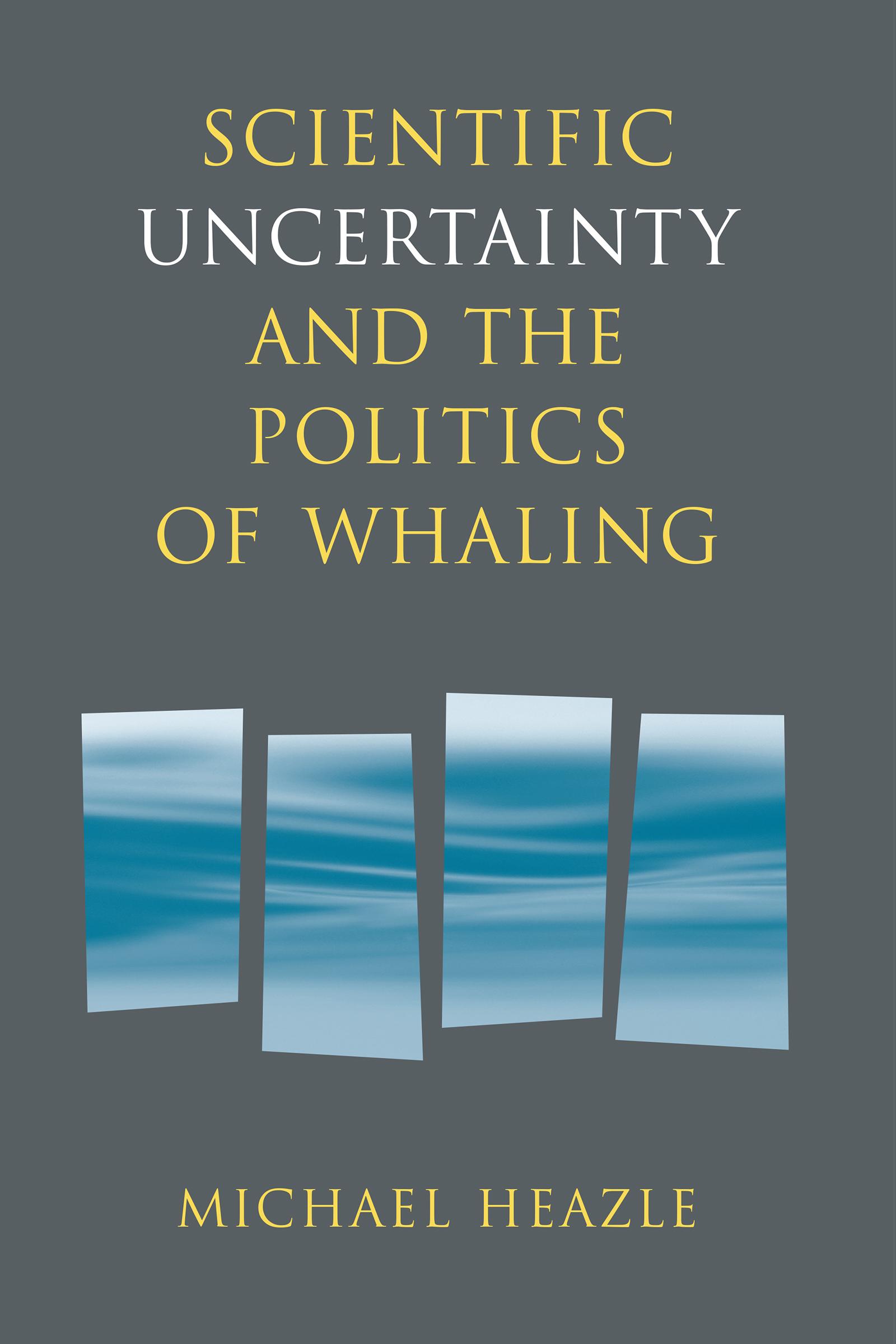
In this intriguing study, Michael Heazle examines how International Whaling Commission (IWC) policy dramatically shifted from furthering the interests of whaling nations to eventually banning all commercial whaling. Focusing on the internal workings of a single organization, Heazle explores the impact of political and economic imperatives on the production and interpretation of scientific research and advice.
Central to his work are the epistemological problems encountered in the production of “truth.” Science does not produce incontestable facts that can be expected to lead to consensus decisions; rather, the problematic nature of knowledge itself allows for various interpretations of data depending on the interests of those at the table. It is precisely the nature of scientific knowledge, Heazle argues, that has made uncertainty a tool in service of political objectives. When scientific advice to whaling nations could not with absolute certainty declare whaling practices a threat to stocks, those IWC members with substantial investments of political and economic capital used this uncertainty to reject a reduction in quotas. As perceptions of whaling changed - with the collapse of Antarctic whaling stocks, further diminishing economic returns, and public opinion turning against commercial whaling -- uncertainty switched sides. Nonwhaling members in the IWC, a majority by the late 1970s, claimed that because scientific data could not prove that commercial whaling was sustainable, hunting should stop. Uncertainty was used to protect the resource rather than the industry.
That science cannot be an impartial determinant in policy-making decisions does not render it useless. But Heazle’s analysis does suggest that without understanding the role of scientific uncertainty - and the political purposes for which it is used - international cooperation on wildlife management and broader issues will continue to become bogged down in arguments over whose science is correct.
Before Memmo my notes were scattered across PDFs. Now a workspace pulls everything into one place — I see exactly what's still left to study.
Memmo's summaries are gold before exams. I don't have to re-read 800 pages two weeks before — just the important parts.
The AI chat has saved me the night before an exam more than once. I just keep asking until I get it — no waiting on a study group to reply.
The quizzes hit exactly what I need to know. Memmo tracks what I get stuck on — so I only practice what's worth it.
Flashcards with spaced repetition are magic. Memmo knows when I'm about to forget something and brings it back.
The AI podcasts are my favorite. I listen on my way to school and get a recap without sitting at a computer.

Handbok i kvalitativa metoder
281 kr

Hållbar utveckling: en introduktion för ingenjörer och andra problemlösare
334 kr

Brymans Samhällsvetenskapliga metoder
390 kr

Projektledning
491 kr

Den orättvisa hälsan: om socioekonomiska skillnader i hälsa och livslängd
326 kr

Vetenskapsteori för nybörjare
196 kr

Organizational Leadership
429 kr

På väg mot läraryrket
172 kr

Det sociala livet i skolan: Socialpsykologiska perspektiv
253 kr

Betygsättningens didaktik
151 kr

Personality
402 kr

Studying Leadership
404 kr

Managing Innovation
477 kr

Introduktion till samhällsvetenskaplig metod
347 kr

The Psychology of Sex and Gender
698 kr

Evidens och kunskap för socialt arbete
207 kr

Introduction to Leadership
605 kr