
Before Memmo my notes were scattered across PDFs. Now a workspace pulls everything into one place — I see exactly what's still left to study.
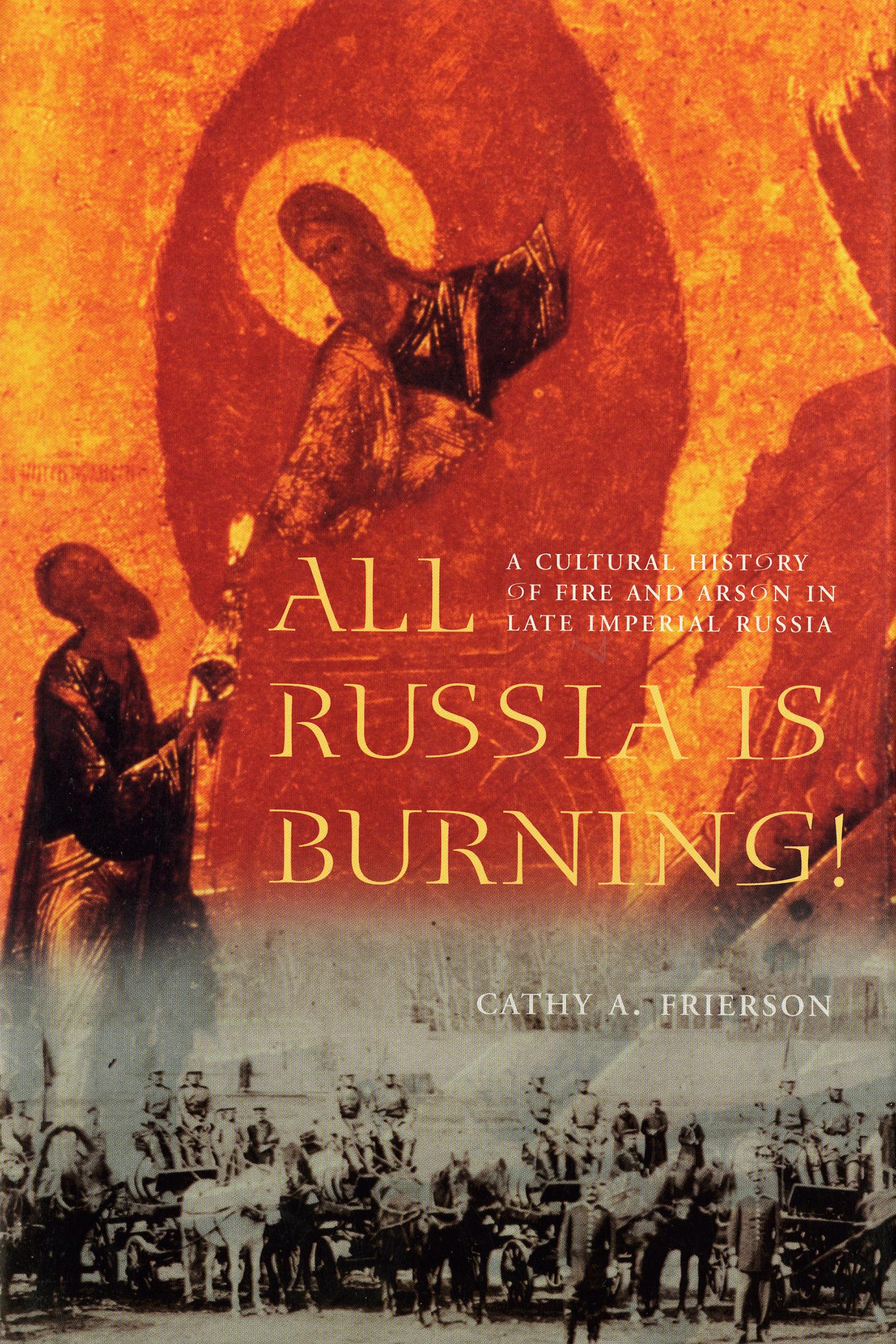
Rural fires were an even more persistent scourge than famine in late imperial Russia, as Cathy Frierson shows in this first comprehensive study. Destroying almost three billion rubles’ worth of property in European Russia between 1860 and 1904, accidental and arson fires acted as a brake on Russia’s economic development while subjecting peasants to perennial shocks to their physical and emotional condition. The fire question captured the attention of educated, progressive Russians, who came to perceived it as a key obstacle to Russia’s becoming a modern society in the European model.
Using sources ranging from literary representations and newspaper articles to statistical tables and court records, Frierson demonstrates the many meanings fire held for both peasants and the educated elite. To peasants, it was an essential source of light and warmth as well as a destructive force that regularly ignited their cramped villages of wooden, thatch-roofed huts. Absent the rule of law, they often used arson to gain justice or revenge, or to exert social control over those who would violate village norms. Frierson shows that the vast majority of arson cases in European Russia were not peasant-against-gentry acts of protest but peasant-against-peasant acts of "self-help" law or plain spite.
Both the state and individual progressives set out to resolve the fire question and to educate, cajole, or coerce the peasantry into the modern world. Fire insurance, building codes, "scientific" village layouts, and volunteer firefighting brigades reduced the average number of buildings consumed in each blaze, but none of these measures succeeded in curbing the number of fires each year.
More than anything else, this history of fire and arson in rural European Russia is a history of their cultural meanings in the late imperial campaign for modernity. Frierson shows the special associations of women with fire in rural life and in elite understanding of fire in the Russian countryside. Her study of the fire question demonstrates both peasant agency in fighting fire and educated Russians' hardening conviction that peasants stood in the way of Russia's advent into the company of prosperous, rational, civilized nations.
Before Memmo my notes were scattered across PDFs. Now a workspace pulls everything into one place — I see exactly what's still left to study.
Memmo's summaries are gold before exams. I don't have to re-read 800 pages two weeks before — just the important parts.
The AI chat has saved me the night before an exam more than once. I just keep asking until I get it — no waiting on a study group to reply.
The quizzes hit exactly what I need to know. Memmo tracks what I get stuck on — so I only practice what's worth it.
Flashcards with spaced repetition are magic. Memmo knows when I'm about to forget something and brings it back.
The AI podcasts are my favorite. I listen on my way to school and get a recap without sitting at a computer.

Handbok i kvalitativa metoder
281 kr

Hållbar utveckling: en introduktion för ingenjörer och andra problemlösare
334 kr

Brymans Samhällsvetenskapliga metoder
390 kr

Projektledning
491 kr

Den orättvisa hälsan: om socioekonomiska skillnader i hälsa och livslängd
326 kr

Vetenskapsteori för nybörjare
196 kr

Organizational Leadership
429 kr

På väg mot läraryrket
172 kr

Det sociala livet i skolan: Socialpsykologiska perspektiv
253 kr

Betygsättningens didaktik
151 kr

Personality
402 kr

Studying Leadership
404 kr

Managing Innovation
477 kr

Introduktion till samhällsvetenskaplig metod
347 kr

The Psychology of Sex and Gender
698 kr

Evidens och kunskap för socialt arbete
207 kr

Introduction to Leadership
605 kr