
Before Memmo my notes were scattered across PDFs. Now a workspace pulls everything into one place — I see exactly what's still left to study.
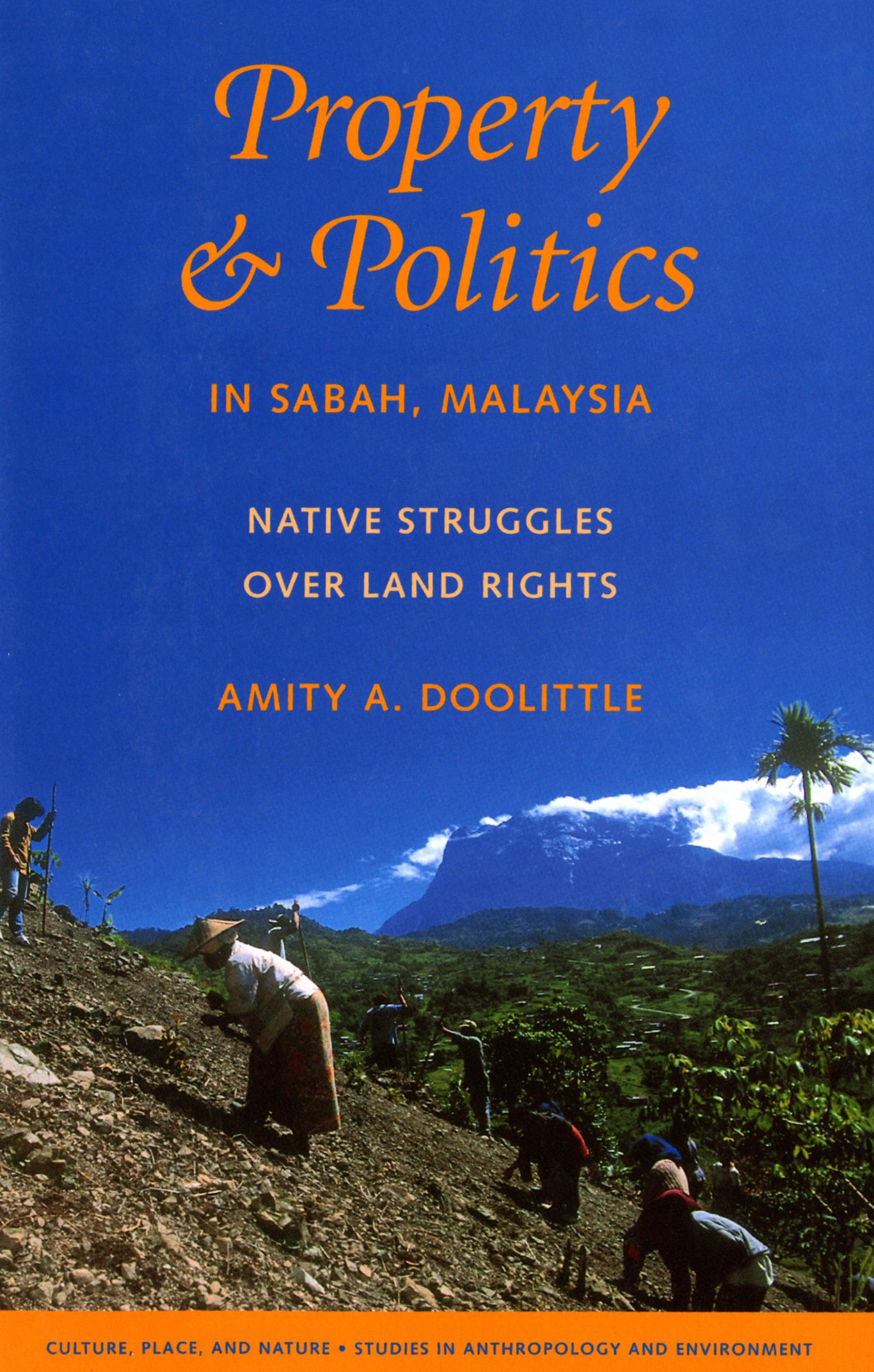
In 1990, shortly after a Malaysian politician announced that the boundaries of Kinabalu Park, a primary tourist destination, were to be expanded to include the species-rich tropical forest known locally as Bukit Hempuen, most of the area was burned to the ground, allegedly by local people. What would motivate the people who had for generations hunted and gathered forest products there to act so destructively?
In this volume, Amity Doolittle illuminates this and other contemporary land-use issues by examining how resources were used historically in Sabah from 1881 to 1996 and what customary rights of access to land and resources were enjoyed by local people. Drawing upon anthropology, political science, environmental history, and political ecology, she looks at how control over and access to resources have been defined, negotiated, and contested by colonial state agents, the postcolonial Malaysian state, and local people.
The study is grounded in methodological and theoretical advances in the field of political ecology, merging the traditions of human ecology and political economy and looking at environmental conflicts in terms of the particulars of place, culture, and history. Doolittle assumes that environmental problems have causes that are complex and changing and that solutions must be specific to time and place. Using a political ecology perspective allows her to focus on the root causes of environmental degradation, exposing the underlying political, economic, and social forces at work. The challenge in the twenty-first century, she writes, is to move beyond blaming local people for resource degradation and to find ways to achieve equitable access to natural resources and more sustainable land use practices.
Property and Politics in Sabah, Malaysia has great relevance to development studies, political ecology, environmental planning, anthropology, and legal studies in natural resource management.
Before Memmo my notes were scattered across PDFs. Now a workspace pulls everything into one place — I see exactly what's still left to study.
Memmo's summaries are gold before exams. I don't have to re-read 800 pages two weeks before — just the important parts.
The AI chat has saved me the night before an exam more than once. I just keep asking until I get it — no waiting on a study group to reply.
The quizzes hit exactly what I need to know. Memmo tracks what I get stuck on — so I only practice what's worth it.
Flashcards with spaced repetition are magic. Memmo knows when I'm about to forget something and brings it back.
The AI podcasts are my favorite. I listen on my way to school and get a recap without sitting at a computer.

Handbok i kvalitativa metoder
281 kr

Hållbar utveckling: en introduktion för ingenjörer och andra problemlösare
334 kr

Brymans Samhällsvetenskapliga metoder
390 kr

Projektledning
491 kr

Den orättvisa hälsan: om socioekonomiska skillnader i hälsa och livslängd
326 kr

Vetenskapsteori för nybörjare
196 kr

Organizational Leadership
429 kr

På väg mot läraryrket
172 kr

Det sociala livet i skolan: Socialpsykologiska perspektiv
253 kr

Betygsättningens didaktik
151 kr

Personality
402 kr

Studying Leadership
404 kr

Managing Innovation
477 kr

Introduktion till samhällsvetenskaplig metod
347 kr

The Psychology of Sex and Gender
698 kr

Evidens och kunskap för socialt arbete
207 kr

Introduction to Leadership
605 kr