
Before Memmo my notes were scattered across PDFs. Now a workspace pulls everything into one place — I see exactly what's still left to study.
Winner of the 2025 Robert M. Utley Award, Western History Association
Winner of the 2025 John C. Ewers Award, Western History Association
Winner of the 2025 Robert G. Athearn Award, Western History Association
Winner of the 2025 Caroline Bancroft History Prize, Denver Public Library’s Special Collection and Archives
Finalist for the 2025 Shapiro Book Prize, Huntington Library
Honorable Mentionn for the 2025 Erminie Wheeler-Voegelin Prize, American Society for Ethnohistory
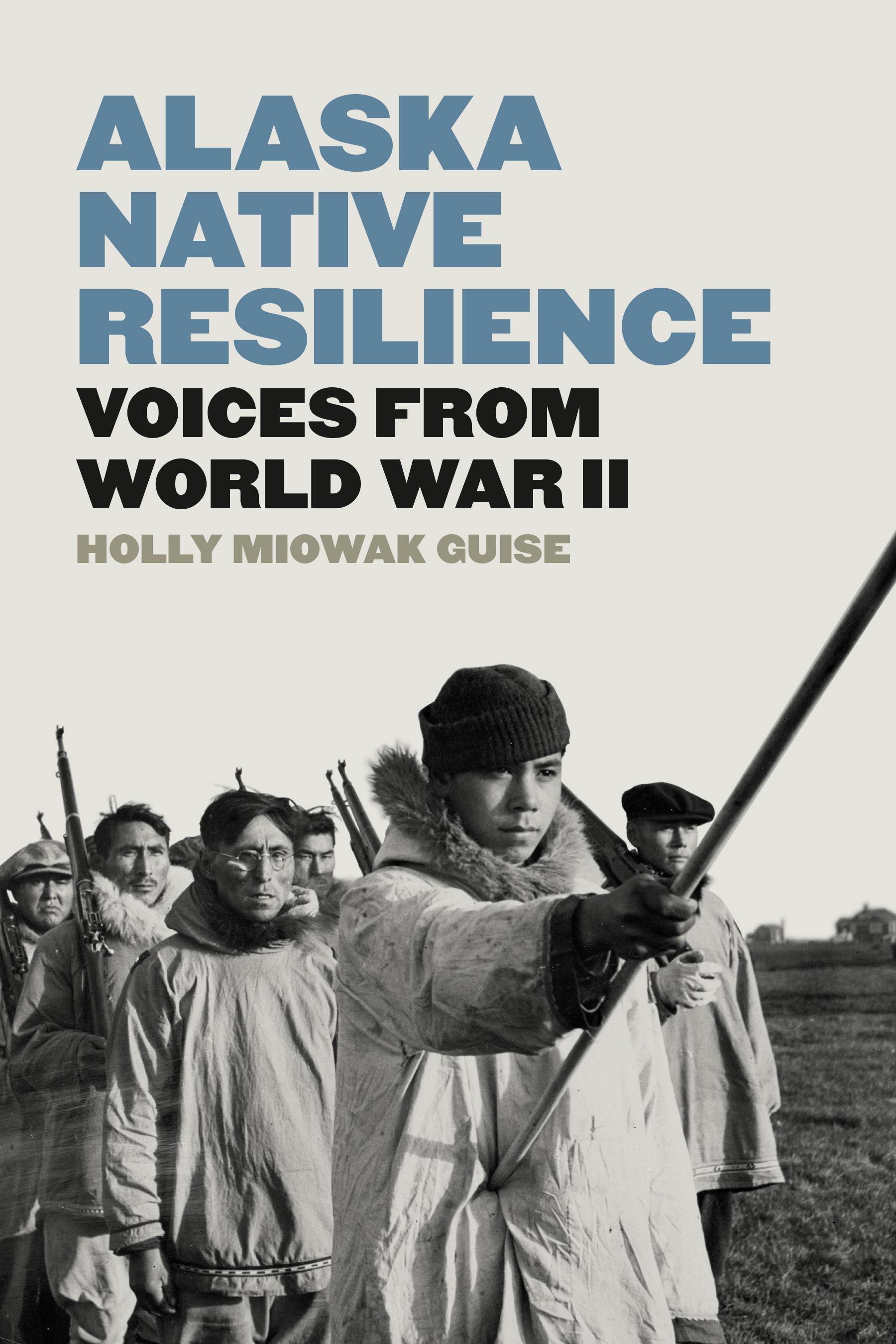
Alaska Native elders remember wartime invasion, relocation, and land reclamation
The US government justified its World War II occupation of Alaska as a defense against Japan’s invasion of the Aleutian Islands, but it equally served to advance colonial expansion in relation to the geographically and culturally diverse Indigenous communities affected. Offering important Alaska Native experiences of this history, Holly Miowak Guise draws on a wealth of oral histories and interviews with Indigenous elders to explore the multidimensional relationship between Alaska Natives and the US military during the Pacific War.
The forced relocation and internment of Unangax̂ in 1942 proved a harbinger of Indigenous loss and suffering in World War II Alaska. Violence against Native women, assimilation and Jim Crow segregation, and discrimination against Native servicemen followed the colonial blueprint. Yet Alaska Native peoples took steps to enact their sovereignty and restore equilibrium to their lives by resisting violence and disrupting attempts at US control. Their subversive actions altered the colonial structures imposed upon them by maintaining Indigenous spaces and asserting sovereignty over their homelands.
A multifaceted challenge to conventional histories, Alaska Native Resilience shares the experiences of Indigenous peoples from across Alaska to reveal long-overlooked demonstrations of Native opposition to colonialism.
Before Memmo my notes were scattered across PDFs. Now a workspace pulls everything into one place — I see exactly what's still left to study.
Memmo's summaries are gold before exams. I don't have to re-read 800 pages two weeks before — just the important parts.
The AI chat has saved me the night before an exam more than once. I just keep asking until I get it — no waiting on a study group to reply.
The quizzes hit exactly what I need to know. Memmo tracks what I get stuck on — so I only practice what's worth it.
Flashcards with spaced repetition are magic. Memmo knows when I'm about to forget something and brings it back.
The AI podcasts are my favorite. I listen on my way to school and get a recap without sitting at a computer.

Handbok i kvalitativa metoder
281 kr

Hållbar utveckling: en introduktion för ingenjörer och andra problemlösare
334 kr

Brymans Samhällsvetenskapliga metoder
390 kr

Projektledning
491 kr

Den orättvisa hälsan: om socioekonomiska skillnader i hälsa och livslängd
326 kr

Vetenskapsteori för nybörjare
196 kr

Organizational Leadership
429 kr

På väg mot läraryrket
172 kr

Det sociala livet i skolan: Socialpsykologiska perspektiv
253 kr

Betygsättningens didaktik
151 kr

Personality
402 kr

Studying Leadership
404 kr

Managing Innovation
477 kr

Introduktion till samhällsvetenskaplig metod
347 kr

The Psychology of Sex and Gender
698 kr

Evidens och kunskap för socialt arbete
207 kr

Introduction to Leadership
605 kr