
Before Memmo my notes were scattered across PDFs. Now a workspace pulls everything into one place — I see exactly what's still left to study.
A CHOICE OUTSTANDING ACADEMIC TITLE
Restores China’s place in forest history
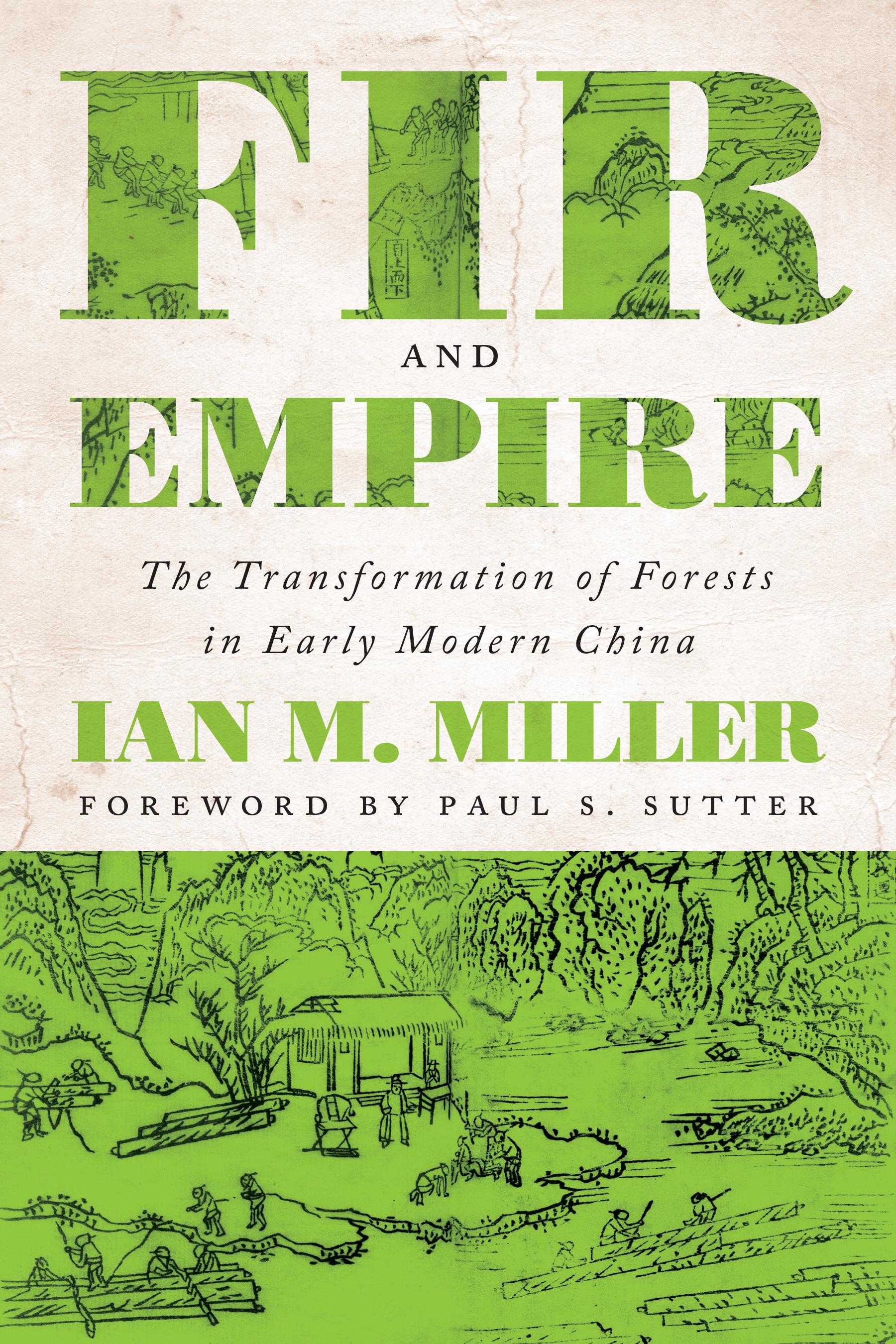
The disappearance of China’s naturally occurring forests is one of the most significant environmental shifts in the country’s history, one often blamed on imperial demand for lumber. China’s early modern forest history is typically viewed as a centuries-long process of environmental decline, culminating in a nineteenth-century social and ecological crisis. Pushing back against this narrative of deforestation, Ian Miller charts the rise of timber plantations between about 1000 and 1700, when natural forests were replaced with anthropogenic ones. Miller demonstrates that this form of forest management generally rested on private ownership under relatively distant state oversight and taxation. He further draws on in-depth case studies of shipbuilding and imperial logging to argue that this novel landscape was not created through simple extractive pressures, but by attempts to incorporate institutional and ecological complexity into a unified imperial state.
Miller uses the emergence of anthropogenic forests in south China to rethink both temporal and spatial frameworks for Chinese history and the nature of Chinese empire. Because dominant European forestry models do not neatly overlap with the non-Western world, China’s history is often left out of global conversations about them; Miller’s work rectifies this omission and suggests that in some ways, China’s forest system may have worked better than the more familiar European institutions.
The open access publication of this book was made possible by a grant from the James P. Geiss and Margaret Y. Hsu Foundation.
Before Memmo my notes were scattered across PDFs. Now a workspace pulls everything into one place — I see exactly what's still left to study.
Memmo's summaries are gold before exams. I don't have to re-read 800 pages two weeks before — just the important parts.
The AI chat has saved me the night before an exam more than once. I just keep asking until I get it — no waiting on a study group to reply.
The quizzes hit exactly what I need to know. Memmo tracks what I get stuck on — so I only practice what's worth it.
Flashcards with spaced repetition are magic. Memmo knows when I'm about to forget something and brings it back.
The AI podcasts are my favorite. I listen on my way to school and get a recap without sitting at a computer.

Handbok i kvalitativa metoder
281 kr

Hållbar utveckling: en introduktion för ingenjörer och andra problemlösare
334 kr

Brymans Samhällsvetenskapliga metoder
390 kr

Projektledning
491 kr

Den orättvisa hälsan: om socioekonomiska skillnader i hälsa och livslängd
326 kr

Vetenskapsteori för nybörjare
196 kr

Organizational Leadership
429 kr

På väg mot läraryrket
172 kr

Det sociala livet i skolan: Socialpsykologiska perspektiv
253 kr

Betygsättningens didaktik
151 kr

Personality
402 kr

Studying Leadership
404 kr

Managing Innovation
477 kr

Introduktion till samhällsvetenskaplig metod
347 kr

The Psychology of Sex and Gender
698 kr

Evidens och kunskap för socialt arbete
207 kr

Introduction to Leadership
605 kr