
Before Memmo my notes were scattered across PDFs. Now a workspace pulls everything into one place — I see exactly what's still left to study.
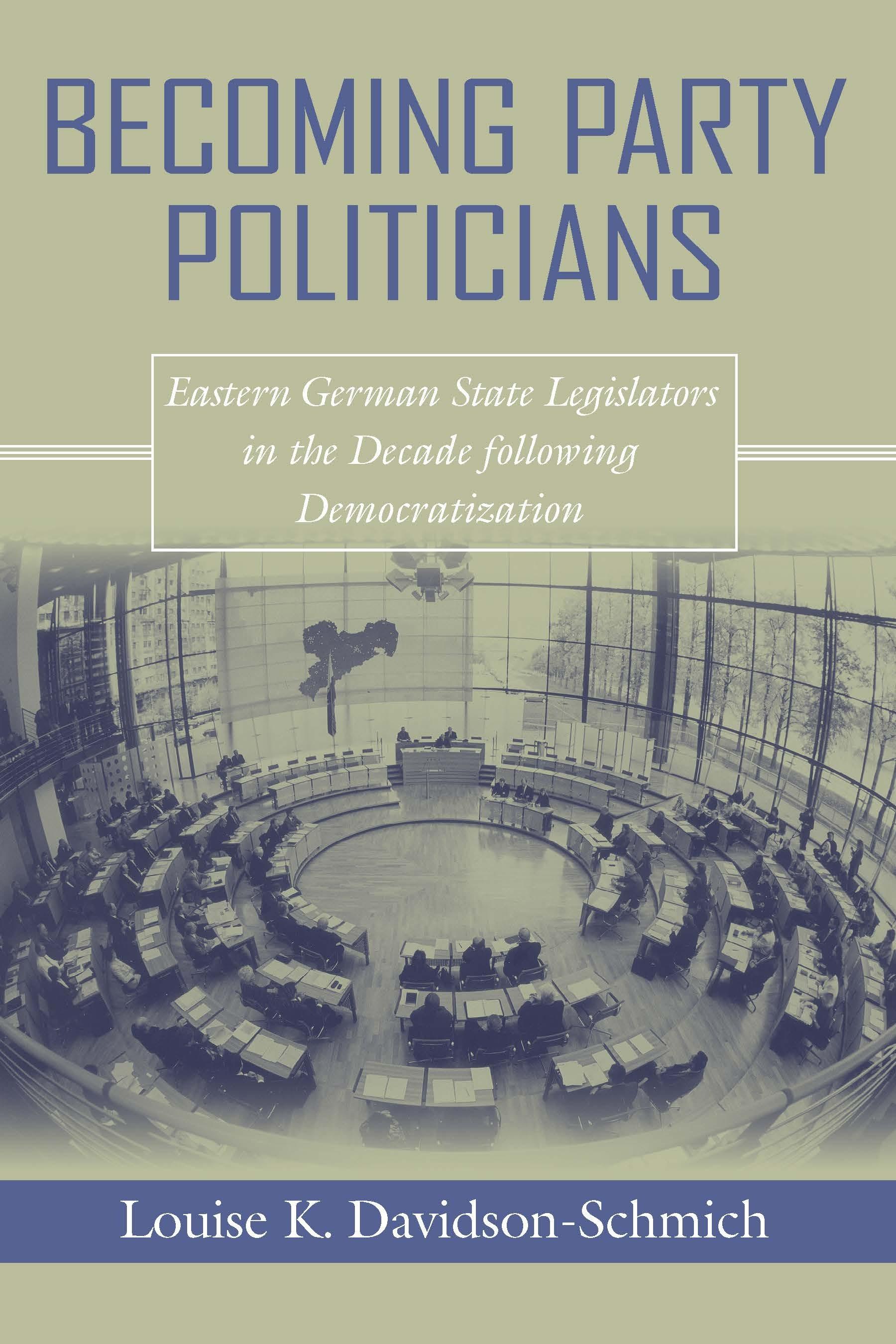
After the Berlin Wall fell, scholars flocked to eastern Europe to conduct extensive opinion research on citizens' political attitudes and values. In eastern Germany, post-communist political elites were found to differ from western German politicians, exhibiting greater distrust of both political parties and party discipline, more political intolerance, a preference for economic equality over political freedom, and support for direct rather than representative democracy. These attitudes were expected to be hurdles to democratization.
Yet only limited research has been done to determine whether eastern German politicians' attitudes and values actually influenced their actions. Becoming Party Politicians fills this empirical void by comparing eastern and western German state legislators in the decade following unification. While the two groups hold contrasting attitudes, they serve in virtually identical political institutions. The book finds little evidence to suggest that the political attitudes and values of eastern parliamentarians have hindered their adaptation to united Germany's political system.
Instead, Germany's parliamentary and electoral institutions—together known as the party state—have created disciplined eastern parliamentarians. Placed in these identical parliamentary institutions, both eastern and western German legislators have responded similarly. Legislative voting on issues surrounding political tolerance, direct democracy, and economic equality can now be predicted on the basis of parliamentarians' partisan affiliation rather than their eastern or western origin.
Davidson-Schmich's conclusions, based on personal interviews with state legislators and analysis of parliamentary debates between 1990 and 2002, not only shed light on German politics and the sources of legislator behavior; they also contribute to broader debates involving both the ability of western European political institutions to survive societal change and the influence of political institutions on the consolidation of democracy in post-communist settings.
Before Memmo my notes were scattered across PDFs. Now a workspace pulls everything into one place — I see exactly what's still left to study.
Memmo's summaries are gold before exams. I don't have to re-read 800 pages two weeks before — just the important parts.
The AI chat has saved me the night before an exam more than once. I just keep asking until I get it — no waiting on a study group to reply.
The quizzes hit exactly what I need to know. Memmo tracks what I get stuck on — so I only practice what's worth it.
Flashcards with spaced repetition are magic. Memmo knows when I'm about to forget something and brings it back.
The AI podcasts are my favorite. I listen on my way to school and get a recap without sitting at a computer.

Handbok i kvalitativa metoder
281 kr

Hållbar utveckling: en introduktion för ingenjörer och andra problemlösare
334 kr

Brymans Samhällsvetenskapliga metoder
390 kr

Projektledning
491 kr

Den orättvisa hälsan: om socioekonomiska skillnader i hälsa och livslängd
326 kr

Organizational Leadership
429 kr

Vetenskapsteori för nybörjare
196 kr

På väg mot läraryrket
172 kr

Det sociala livet i skolan: Socialpsykologiska perspektiv
253 kr

Betygsättningens didaktik
151 kr

Personality
402 kr

Studying Leadership
404 kr

Managing Innovation
477 kr

Introduktion till samhällsvetenskaplig metod
347 kr

The Psychology of Sex and Gender
698 kr

Evidens och kunskap för socialt arbete
207 kr

Introduction to Leadership
605 kr