
Before Memmo my notes were scattered across PDFs. Now a workspace pulls everything into one place — I see exactly what's still left to study.
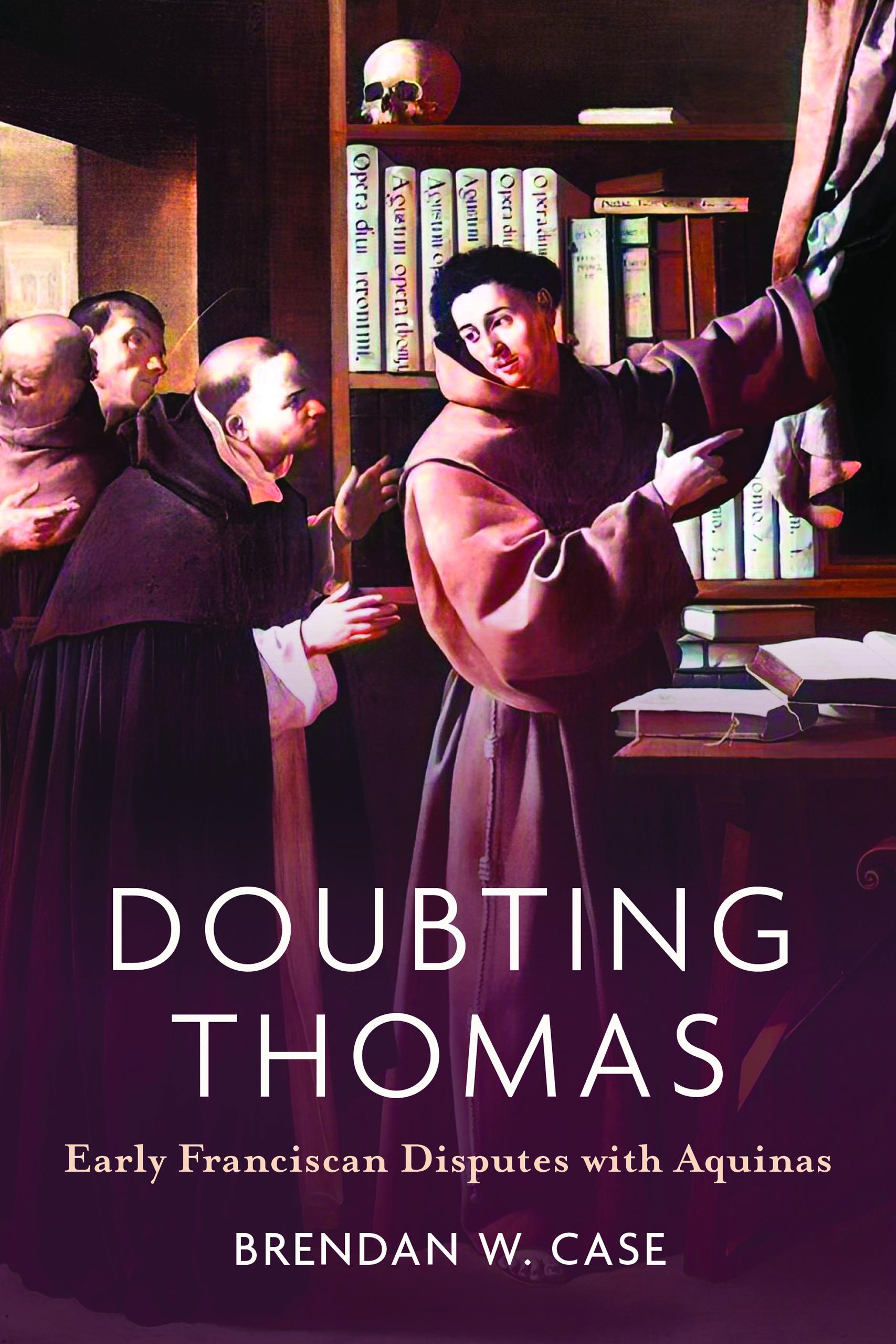
The universities were the center of one of the most exciting developments of all in this period, namely the attempt to interpret and assimilate the works of Aristotle, which had re-entered the Latin-speaking world by way of the Moors in Spain at the end of the twelfth century, after being lost, with the exception of a few logical works, for centuries. The Aristotelian corpus posed a particular challenge for the Church, because – at least as it was interpreted by the Arabic commentators, and notably Ibn Rushd (Averroës), who transmitted it to the West – it seemed to offer a complete and tightly-integrated conception of reality which was in many ways inconsistent with Christianity. This Arabized Aristotelianism was so jarring, and so immediately influential, particularly within the Liberal Arts faculty at the University of Paris, that the Church sought to suppress it, first restricting public lectures on Aristotle in Paris, and later, even after the University integrated Aristotle into its Arts curriculum in 1255, repeatedly condemning as heretical teachings associated with Aristotelianism.
However friendly Bonaventure and Aquinas might have been in their professional encounters, their works, both from the 1250’s and following, reflect a number of deep disagreements. They parted ways over how to receive and interpret the prior theological tradition, notably the “Augustinian” inheritance that descended through Anselm and the Victorines. They also disagreed about how to respond to the day’s most important intellectual developments, particularly the rise during the 1260’s of the “Latin Averroists” at the University of Paris who maintained that God has no knowledge of particulars, that the world had existed eternally, and that all humans share a single intellect. This group seems to have clustered around a young Arts master named Siger of Brabant, who was likely the principal target of thirteen propositions condemned by Bishop Tempier of Paris in 1270. In this period, Aquinas developed extensive critiques of the Arabic commentators’ theories of creation, and especially of the human soul and intellect, both in major works such as Summa contra Gentiles II, and in opuscula such as On the Unity of the Intellect and On Spiritual Creatures. Nonetheless, he remained a far easier-going Aristotelian than Bonaventure would ever be, and sought to salvage as much of Aristotle’s philosophy as possible from its Averroist wreck: we’ll see Aquinas’s Aristotelianism on full display below in his accounts of intellectual abstraction, hylomorphism and the nature of spiritual creatures, his denial of reason’s competence to demonstrate the finitude of time, and his “single-source” eudaimonism.
Although Bonaventure’s election as Minister-General in 1257 had taken him away from daily life at the University, his base of operations remained the Franciscan chapter house in Paris, which allowed him to follow the rise of the Averroists in the Arts faculty with keen interest and increasing anxiety. As Jules Albi has shown, Bonaventure almost certainly helped to bring about their condemnation in 1270, through a series of increasingly direct and acerbic attacks on the Arts masters beginning in Lent of 1267. That spring, Bonaventure began to give voice to his concerns about the growing and largely negative influence of Aristotelianism at the University in a series of conferences or public lectures at the Franciscan church in Paris, which were attended by students and faculty. The first two of these, on the Ten Commandments and the gifts of the Spirit, included some sharply worded rebukes to the radical Aristotelians in the Arts Faculty, but Bonaventure saved his true fury for his third set of conferences “on the six days,” begun in Eastertide 1273 and loosely organized around the six days of creation.
While it is true that only the rise of this radical Aristotelianism finally convinced Bonaventure to launch an open attack on philosophical error at the University, he also had a difficult relationship with Aristotle at every stage of his career. On the one hand, Aristotle was “the Philosopher” for Bonaventure as much as for Aquinas; his intellectual tools are thoroughly Aristotelian (e.g., the ever-useful act/potency or form/matter distinctions) even when he deals with theological questions with no counterpart in the Stagirite’s thought. And throughout his career, Bonaventure made substantial and favorable use of the many “Neoplatonic” moments in Aristotle’s thought, and indeed arguably viewed him as a fundamentally complementary if subordinate figure to Plato (for further discussion of both issues, cf. p. 42-47 below). But on the other hand, the “Aristotelians” were always other people, and not particularly likeable ones; and this (pace Joseph Ratzinger) at the beginning of his career as much as at the end. Ratzinger writes, “Bonaventure’s anti-Aristotelianism begins in 1267, with the Lenten conferences held that year on the Ten Commandments. Two theses were opposed: the eternity of world and the teaching of the unity of the intellect in all men.” Consider, however, a comment from what is likely Bonaventure’s earliest surviving work, the Commentary on Luke: “Suits and altercation does not befit evangelical disciples, but rather Aristotelians.” While Ratzinger is right that the intensity of Bonaventure’s anti-Aristotelian rhetoric increases sharply in the Collationes de decem praeceptis (1267), he’s wrong to see this as a departure from Bonaventure’s earlier attitude to Aristotelians, if not Aristotle himself.
(excerpted from the introduction)
Before Memmo my notes were scattered across PDFs. Now a workspace pulls everything into one place — I see exactly what's still left to study.
Memmo's summaries are gold before exams. I don't have to re-read 800 pages two weeks before — just the important parts.
The AI chat has saved me the night before an exam more than once. I just keep asking until I get it — no waiting on a study group to reply.
The quizzes hit exactly what I need to know. Memmo tracks what I get stuck on — so I only practice what's worth it.
Flashcards with spaced repetition are magic. Memmo knows when I'm about to forget something and brings it back.
The AI podcasts are my favorite. I listen on my way to school and get a recap without sitting at a computer.

Handbok i kvalitativa metoder
281 kr

Hållbar utveckling: en introduktion för ingenjörer och andra problemlösare
334 kr

Brymans Samhällsvetenskapliga metoder
390 kr

Projektledning
491 kr

Den orättvisa hälsan: om socioekonomiska skillnader i hälsa och livslängd
326 kr

Organizational Leadership
429 kr

Vetenskapsteori för nybörjare
196 kr

På väg mot läraryrket
172 kr

Det sociala livet i skolan: Socialpsykologiska perspektiv
253 kr

Betygsättningens didaktik
151 kr

Personality
402 kr

Studying Leadership
404 kr

Managing Innovation
477 kr

Introduktion till samhällsvetenskaplig metod
347 kr

The Psychology of Sex and Gender
698 kr

Evidens och kunskap för socialt arbete
207 kr

Introduction to Leadership
605 kr