
Before Memmo my notes were scattered across PDFs. Now a workspace pulls everything into one place — I see exactly what's still left to study.
This book considers how the modern concept of “conscience” turns the historic commitment on its head, in a way that underlies the decadence of modern society.
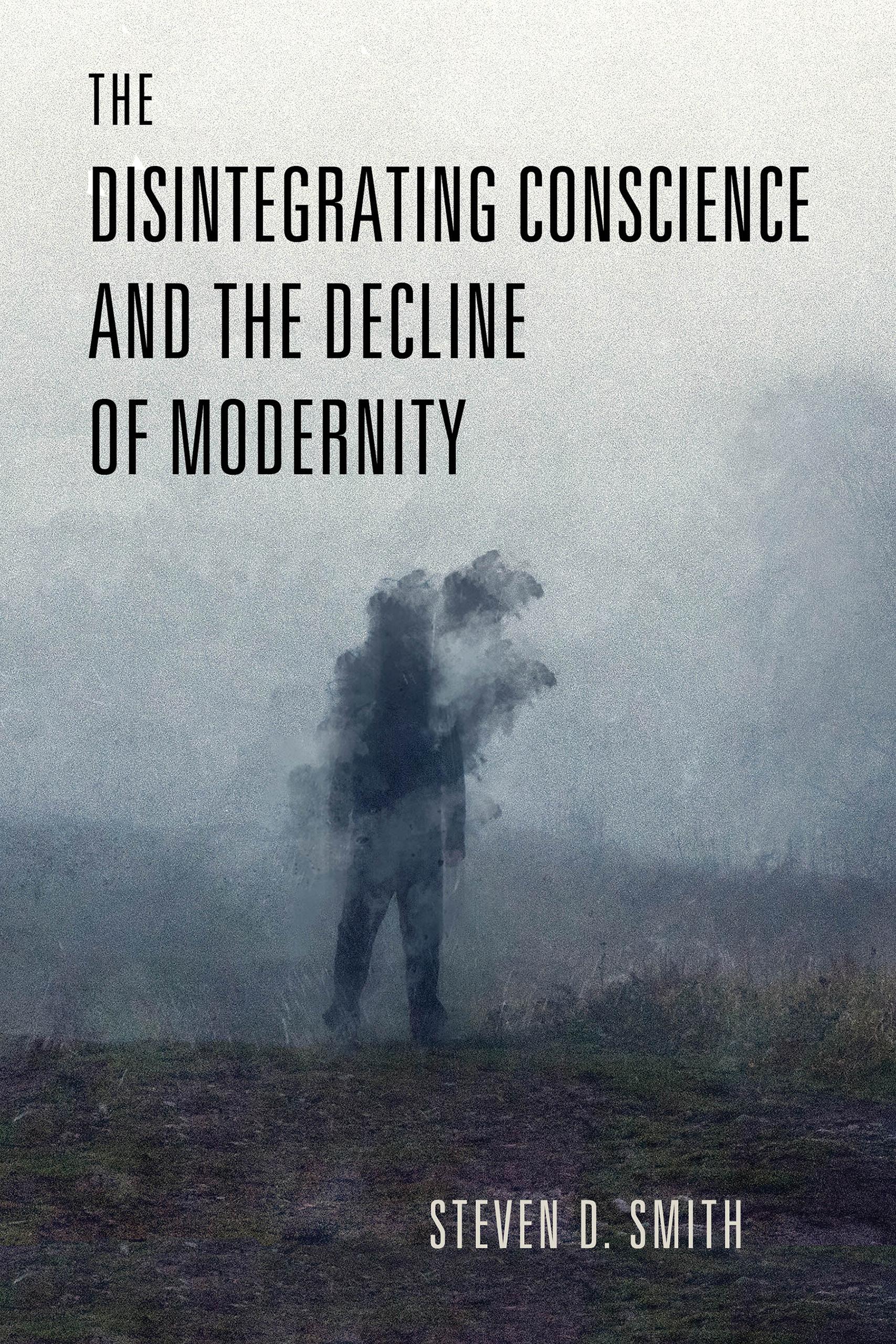
Steven D. Smith’s books are always anticipated with great interest by scholars, jurists, and citizens who see his work on foundational questions surrounding law and religion as shaping the debate in profound ways. Now, in The Disintegrating Conscience and the Decline of Modernity, Smith takes as his starting point Jacques Barzun’s provocative assertion that “the modern era” is coming to an end. Smith considers the question of decline by focusing on a single theme—conscience—that has been central to much of what has happened in Western politics, law, and religion over the past half-millennium. Rather than attempting to follow that theme step-by-step through five hundred years, the book adopts an episodic and dramatic approach by focusing on three main figures and particularly portentous episodes: first, Thomas More’s execution for his conscientious refusal to take an oath mandated by Henry VIII; second, James Madison’s contribution to Virginia law in removing the proposed requirement of religious toleration in favor of freedom of conscience; and, third, William Brennan’s pledge to separate his religious faith from his performance as a Supreme Court justice. These three episodes, Smith suggests, reflect in microcosm decisive turning points at which Western civilization changed from what it had been in premodern times to what it is today.
A commitment to conscience, Smith argues, has been a central and in some ways defining feature of modern Western civilization, and yet in a crucial sense conscience in the time of Brennan and today has come to mean almost the opposite of what it meant to Thomas More. By scrutinizing these men and episodes, the book seeks to illuminate subtle but transformative changes in the commitment to conscience—changes that helped to bring Thomas More’s world to an end and that may also be contributing to the disintegration of (per Barzun) “the modern era.”
Before Memmo my notes were scattered across PDFs. Now a workspace pulls everything into one place — I see exactly what's still left to study.
Memmo's summaries are gold before exams. I don't have to re-read 800 pages two weeks before — just the important parts.
The AI chat has saved me the night before an exam more than once. I just keep asking until I get it — no waiting on a study group to reply.
The quizzes hit exactly what I need to know. Memmo tracks what I get stuck on — so I only practice what's worth it.
Flashcards with spaced repetition are magic. Memmo knows when I'm about to forget something and brings it back.
The AI podcasts are my favorite. I listen on my way to school and get a recap without sitting at a computer.

Handbok i kvalitativa metoder
281 kr

Hållbar utveckling: en introduktion för ingenjörer och andra problemlösare
334 kr

Brymans Samhällsvetenskapliga metoder
390 kr

Projektledning
491 kr

Den orättvisa hälsan: om socioekonomiska skillnader i hälsa och livslängd
326 kr

Vetenskapsteori för nybörjare
196 kr

Organizational Leadership
429 kr

På väg mot läraryrket
172 kr

Det sociala livet i skolan: Socialpsykologiska perspektiv
253 kr

Betygsättningens didaktik
151 kr

Personality
402 kr

Studying Leadership
404 kr

Managing Innovation
477 kr

Introduktion till samhällsvetenskaplig metod
347 kr

The Psychology of Sex and Gender
698 kr

Evidens och kunskap för socialt arbete
207 kr

Introduction to Leadership
605 kr