
Before Memmo my notes were scattered across PDFs. Now a workspace pulls everything into one place — I see exactly what's still left to study.
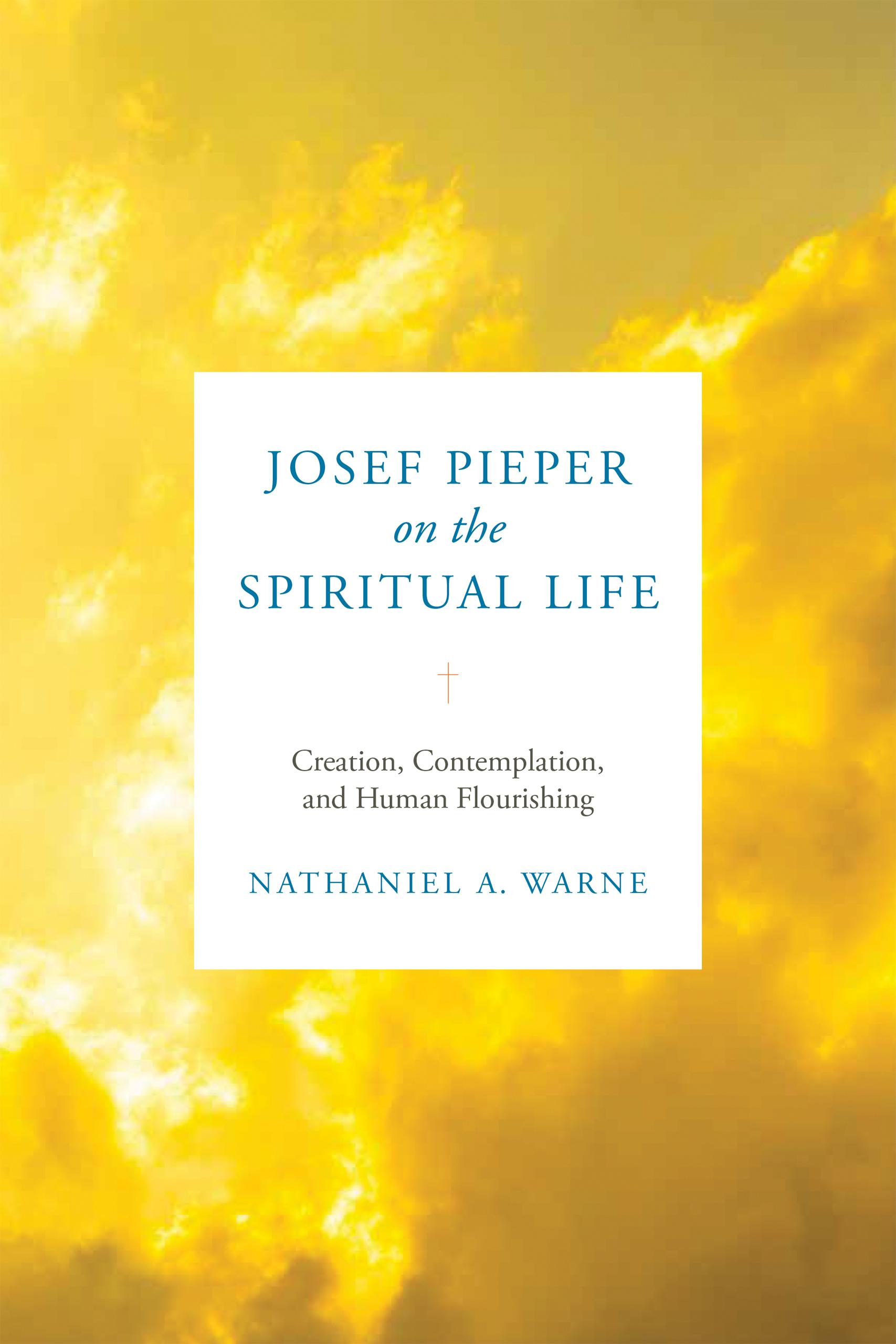
Warne’s original study provides an insightful analysis of the role of contemplation and creation in the thought of Josef Pieper, illustrating the importance of this practice to earthly happiness and human flourishing.
What is the relationship between creation, contemplation, human flourishing, and moral development? Nathaniel Warne’s Josef Pieper on the Spiritual Life offers a sophisticated answer to this question through a systematic analysis of philosopher Josef Pieper’s (1904–1997) thought. Warne’s examination centers on the role of contemplation and creation in Pieper’s thinking, arguing that contemplation of the created order is a key feature of earthly happiness. By emphasizing the importance of contemplation, Pieper illustrates the deep interconnections between ethics, creation, and spirituality. For Warne, to posit a binary between the contemplative life and active life creates a false dichotomy. Following Pieper, Warne claims that theology and spirituality cannot be bracketed from ethics and social action—indeed, our lived experience in the world blurs the lines between these practices. Contemplation and action are closer together than are typically assumed, and they have important implications for both our spiritual development and our engagement with the world around us. Ultimately, Warne’s emphasis on creation and contemplation represents an attempt to resist a view of ethics and the spiritual life that is divorced from our environment. In response to this view, Warne argues that we need a renewed sense that creation and place are important for self-understanding. Contemplation of creation is, fundamentally, a form of communion with God—we thus need a more robust sense of how ethics and politics are rooted in God’s creative action. Taking Pieper as a guide, Warne’s study helps to deepen our thinking about these connections.
Before Memmo my notes were scattered across PDFs. Now a workspace pulls everything into one place — I see exactly what's still left to study.
Memmo's summaries are gold before exams. I don't have to re-read 800 pages two weeks before — just the important parts.
The AI chat has saved me the night before an exam more than once. I just keep asking until I get it — no waiting on a study group to reply.
The quizzes hit exactly what I need to know. Memmo tracks what I get stuck on — so I only practice what's worth it.
Flashcards with spaced repetition are magic. Memmo knows when I'm about to forget something and brings it back.
The AI podcasts are my favorite. I listen on my way to school and get a recap without sitting at a computer.

Handbok i kvalitativa metoder
281 kr

Hållbar utveckling: en introduktion för ingenjörer och andra problemlösare
334 kr

Brymans Samhällsvetenskapliga metoder
390 kr

Projektledning
491 kr

Den orättvisa hälsan: om socioekonomiska skillnader i hälsa och livslängd
326 kr

Vetenskapsteori för nybörjare
196 kr

Organizational Leadership
429 kr

På väg mot läraryrket
172 kr

Det sociala livet i skolan: Socialpsykologiska perspektiv
253 kr

Betygsättningens didaktik
151 kr

Personality
402 kr

Studying Leadership
404 kr

Managing Innovation
477 kr

Introduktion till samhällsvetenskaplig metod
347 kr

The Psychology of Sex and Gender
698 kr

Evidens och kunskap för socialt arbete
207 kr

Introduction to Leadership
605 kr