
Before Memmo my notes were scattered across PDFs. Now a workspace pulls everything into one place — I see exactly what's still left to study.
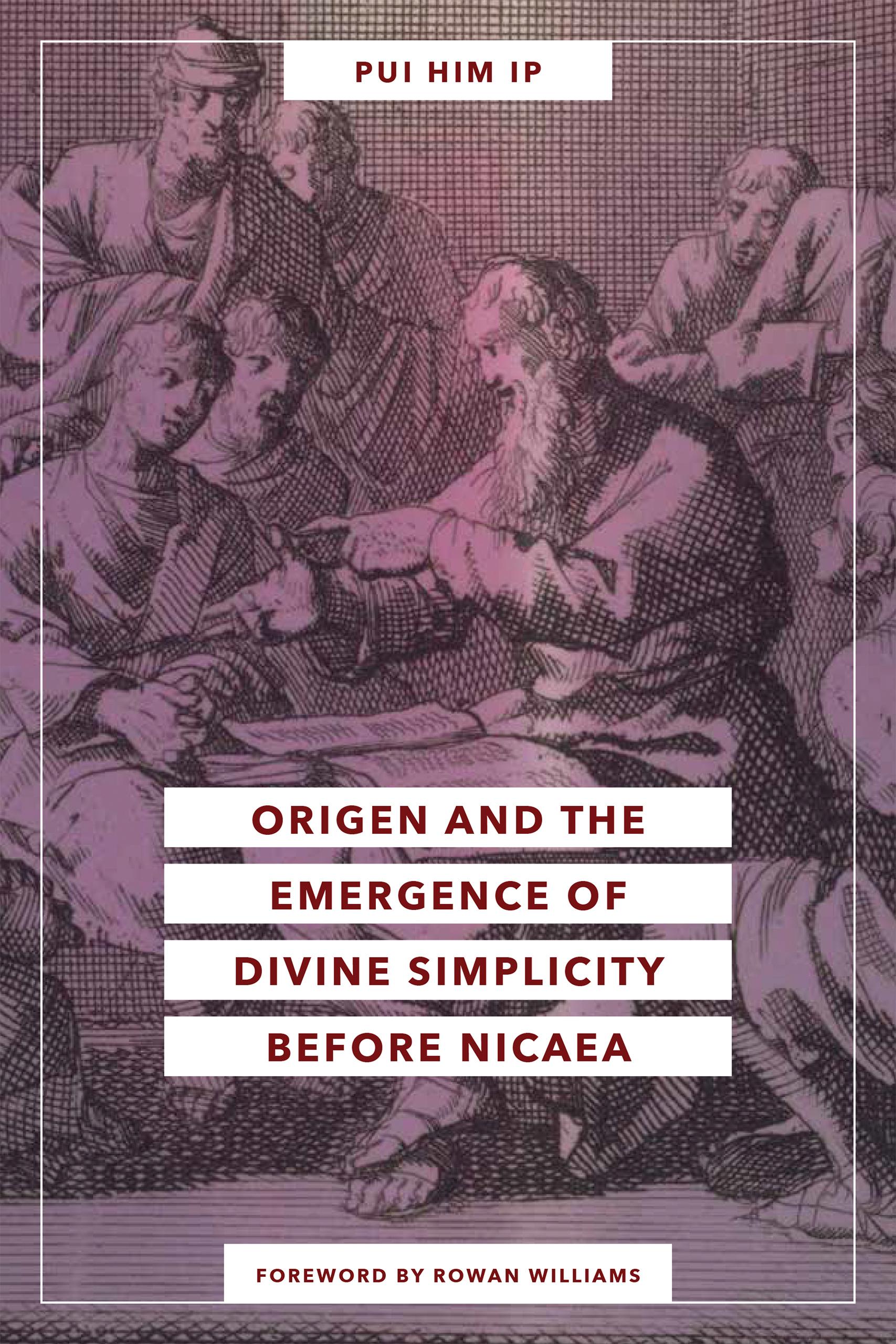
This book establishes how the doctrine of divine simplicity was interwoven with the formation of a Christian Trinitarian understanding of God before Nicaea.
For centuries, Christian theology affirmed God as simple (haplous) and Triune. But the doctrine of the simple Trinity has been challenged by modern critics of classical theism. How can God, conceived as purely one without multiplicity, be a Trinity? This book sets a new historical foundation for addressing this question by tracing how divine simplicity emerged as a key notion in early Christianity. Pui Him Ip argues that only in light of the Platonic synthesis between the Good and the First Principle (archē) can we make sense of divine simplicity as a refusal to associate any kind of plurality that brings about contraries in the divine life. This philosophical doctrine, according to Ip, was integral to how early Christians began to speak of the divine life in terms of a relationship between Father and Son.
Through detailed historical exploration of Irenaeus, sources from the Monarchian controversy, and especially Origen’s oeuvre, Ip contends that the key contribution from ante-Nicene theology is the realization that it is nontrivial to speak of the begetting of a distinct person (Son) from a simple source (Father). This question became the central problematic in Trinitarian theology before Nicaea and remained crucial for understanding the emergence of rival accounts of the Trinity (“pro-Nicene” and “anti-Nicene” theologies) in the fourth century. Origen and the Emergence of Divine Simplicity before Nicaea suggests a new revisional historiography of theological developments after Origen and will be necessary reading for serious students both of patristics and of the wider history of Christian thought.
Before Memmo my notes were scattered across PDFs. Now a workspace pulls everything into one place — I see exactly what's still left to study.
Memmo's summaries are gold before exams. I don't have to re-read 800 pages two weeks before — just the important parts.
The AI chat has saved me the night before an exam more than once. I just keep asking until I get it — no waiting on a study group to reply.
The quizzes hit exactly what I need to know. Memmo tracks what I get stuck on — so I only practice what's worth it.
Flashcards with spaced repetition are magic. Memmo knows when I'm about to forget something and brings it back.
The AI podcasts are my favorite. I listen on my way to school and get a recap without sitting at a computer.

Handbok i kvalitativa metoder
281 kr

Hållbar utveckling: en introduktion för ingenjörer och andra problemlösare
334 kr

Brymans Samhällsvetenskapliga metoder
390 kr

Projektledning
491 kr

Den orättvisa hälsan: om socioekonomiska skillnader i hälsa och livslängd
326 kr

Vetenskapsteori för nybörjare
196 kr

Organizational Leadership
429 kr

På väg mot läraryrket
172 kr

Det sociala livet i skolan: Socialpsykologiska perspektiv
253 kr

Betygsättningens didaktik
151 kr

Personality
402 kr

Studying Leadership
404 kr

Managing Innovation
477 kr

Introduktion till samhällsvetenskaplig metod
347 kr

The Psychology of Sex and Gender
698 kr

Evidens och kunskap för socialt arbete
207 kr

Introduction to Leadership
605 kr