
Before Memmo my notes were scattered across PDFs. Now a workspace pulls everything into one place — I see exactly what's still left to study.
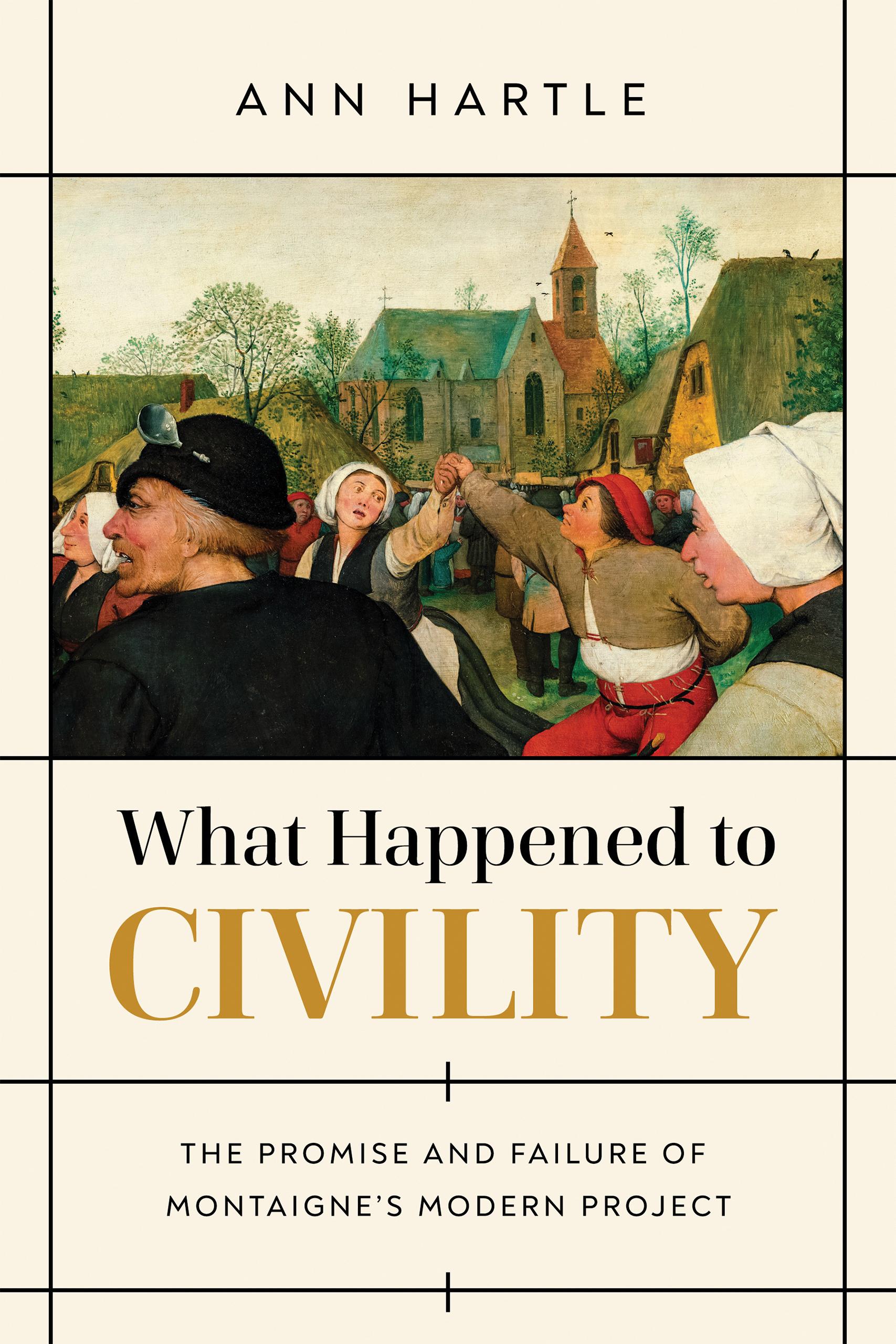
What is civility, and why has it disappeared? Ann Hartle analyzes the origins of the modern project and the Essays of Michel de Montaigne to discuss why civility is failing in our own time.
In this bold book, Ann Hartle, one of the most important interpreters of sixteenth-century French philosopher Michel de Montaigne, explores the modern notion of civility—the social bond that makes it possible for individuals to live in peace in the political and social structures of the Western world—and asks, why has it disappeared? Concerned with the deepening cultural divisions in our postmodern, post-Christian world, she traces their roots back to the Reformation and Montaigne’s Essays. Montaigne’s philosophical project of drawing on ancient philosophy and Christianity to create a new social bond to reform the mores of his culture is perhaps the first act of self-conscious civility. After tracing Montaigne’s thought, Hartle returns to our modern society and argues that this framing of civility is a human, philosophical invention and that civility fails precisely because it is a human, philosophical invention. She concludes with a defense of the central importance of sacred tradition for civility and the need to protect and maintain that social bond by supporting nonpoliticized, nonideological, free institutions, including and especially universities and churches. What Happened to Civility is written for readers concerned about the deterioration of civility in our public life and the defense of freedom of religion. The book will also interest philosophers who seek a deeper understanding of modernity and its meaning, political scientists interested in the meaning of liberalism and the causes of its failure, and scholars working on Montaigne’s Essays.
Before Memmo my notes were scattered across PDFs. Now a workspace pulls everything into one place — I see exactly what's still left to study.
Memmo's summaries are gold before exams. I don't have to re-read 800 pages two weeks before — just the important parts.
The AI chat has saved me the night before an exam more than once. I just keep asking until I get it — no waiting on a study group to reply.
The quizzes hit exactly what I need to know. Memmo tracks what I get stuck on — so I only practice what's worth it.
Flashcards with spaced repetition are magic. Memmo knows when I'm about to forget something and brings it back.
The AI podcasts are my favorite. I listen on my way to school and get a recap without sitting at a computer.

Handbok i kvalitativa metoder
281 kr

Hållbar utveckling: en introduktion för ingenjörer och andra problemlösare
334 kr

Brymans Samhällsvetenskapliga metoder
390 kr

Projektledning
491 kr

Den orättvisa hälsan: om socioekonomiska skillnader i hälsa och livslängd
326 kr

Organizational Leadership
429 kr

Vetenskapsteori för nybörjare
196 kr

På väg mot läraryrket
172 kr

Det sociala livet i skolan: Socialpsykologiska perspektiv
253 kr

Betygsättningens didaktik
151 kr

Personality
402 kr

Studying Leadership
404 kr

Managing Innovation
477 kr

Introduktion till samhällsvetenskaplig metod
347 kr

The Psychology of Sex and Gender
698 kr

Evidens och kunskap för socialt arbete
207 kr

Introduction to Leadership
605 kr