
Before Memmo my notes were scattered across PDFs. Now a workspace pulls everything into one place — I see exactly what's still left to study.
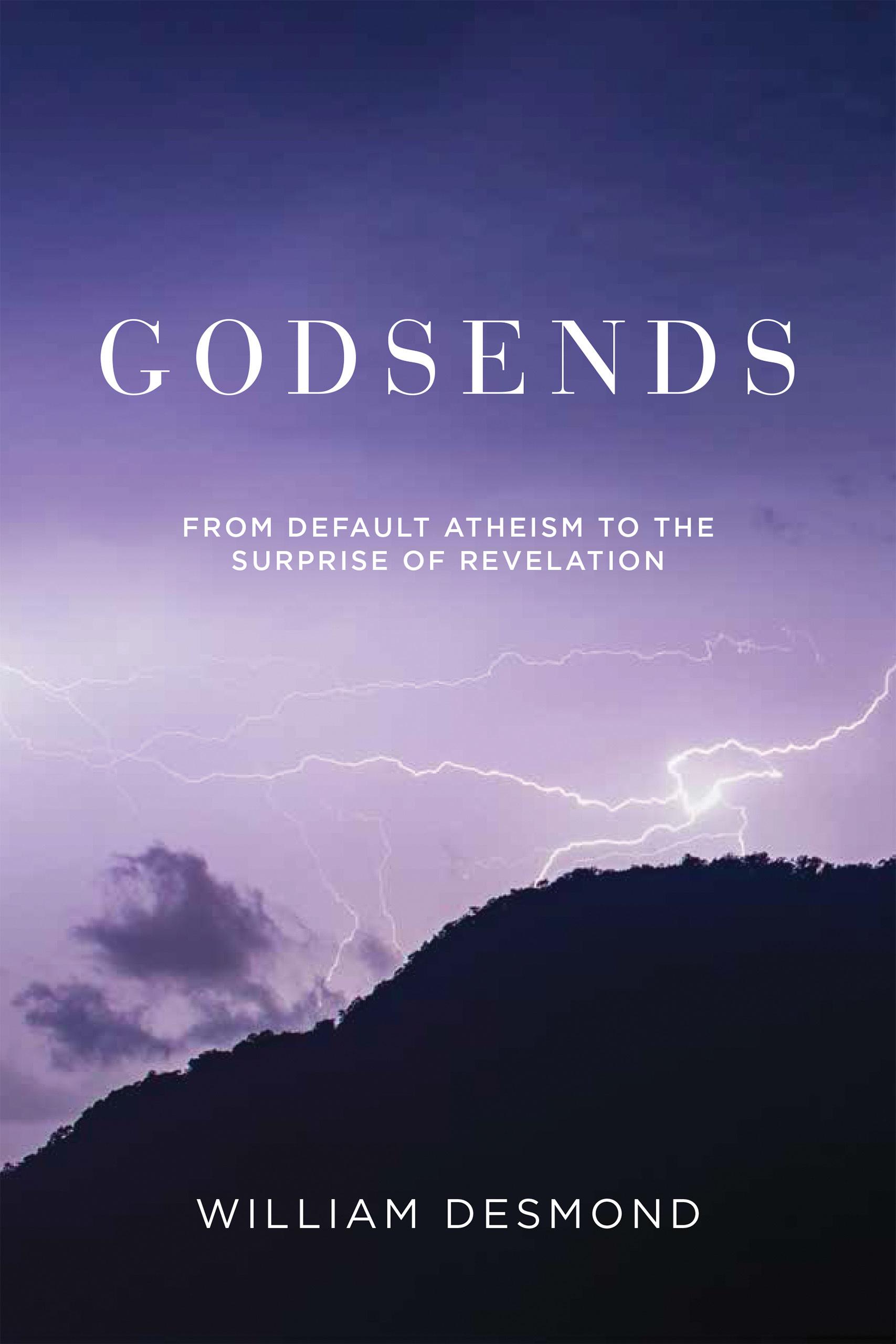
Godsends is William Desmond’s newest addition to his masterwork on the borderlines between philosophy and theology.
For many years, William Desmond has been patiently constructing a philosophical project—replete with its own terminology, idiom, grammar, dialectic, and its metaxological transformation—in an attempt to reopen certain boundaries: between metaphysics and phenomenology, between philosophy of religion and philosophical theology, between the apocalyptic and the speculative, and between religious passion and systematic reasoning. In Godsends, Desmond’s newest addition to his ambitious masterwork, he presents an original reflection on what he calls the “companioning” of philosophy and religion. Throughout the book, he follows an itinerary that has something of an Augustinian likeness: from the exterior to the interior, from the inferior to the superior. The stations along the way include a grappling with the default atheism prevalent in contemporary intellectual culture; an exploration of the middle space, the metaxu between the finite and the infinite; a dwelling with solitudes as thresholds between selving and the sacred; a meditation on idiot wisdom and transcendence in an East-West perspective; an exploration of the different stresses in the mysticisms of Aurobindo and the Arnhem Mystical Sermons; a dream monologue of autonomy, a suite of Kantian and post-Kantian variations on the story of the prodigal son; a meditation on the beatitudes as exceeding virtue, in light of Aquinas’s understanding; and culminating in an exploration of Godsends as telling us something significant about the surprise of revelation in word, idea, and story. Godsends is written for thoughtful persons and scholars perplexed about the place of religion in our time and hopeful for some illuminating companionship from relevant philosophers. It will also interest students of philosophy and religion, especially philosophical theology and philosophical metaphysics.
Before Memmo my notes were scattered across PDFs. Now a workspace pulls everything into one place — I see exactly what's still left to study.
Memmo's summaries are gold before exams. I don't have to re-read 800 pages two weeks before — just the important parts.
The AI chat has saved me the night before an exam more than once. I just keep asking until I get it — no waiting on a study group to reply.
The quizzes hit exactly what I need to know. Memmo tracks what I get stuck on — so I only practice what's worth it.
Flashcards with spaced repetition are magic. Memmo knows when I'm about to forget something and brings it back.
The AI podcasts are my favorite. I listen on my way to school and get a recap without sitting at a computer.

Handbok i kvalitativa metoder
281 kr

Hållbar utveckling: en introduktion för ingenjörer och andra problemlösare
334 kr

Brymans Samhällsvetenskapliga metoder
390 kr

Projektledning
491 kr

Den orättvisa hälsan: om socioekonomiska skillnader i hälsa och livslängd
326 kr

Vetenskapsteori för nybörjare
196 kr

Organizational Leadership
429 kr

På väg mot läraryrket
172 kr

Det sociala livet i skolan: Socialpsykologiska perspektiv
253 kr

Betygsättningens didaktik
151 kr

Personality
402 kr

Studying Leadership
404 kr

Managing Innovation
477 kr

Introduktion till samhällsvetenskaplig metod
347 kr

The Psychology of Sex and Gender
698 kr

Evidens och kunskap för socialt arbete
207 kr

Introduction to Leadership
605 kr