
Before Memmo my notes were scattered across PDFs. Now a workspace pulls everything into one place — I see exactly what's still left to study.
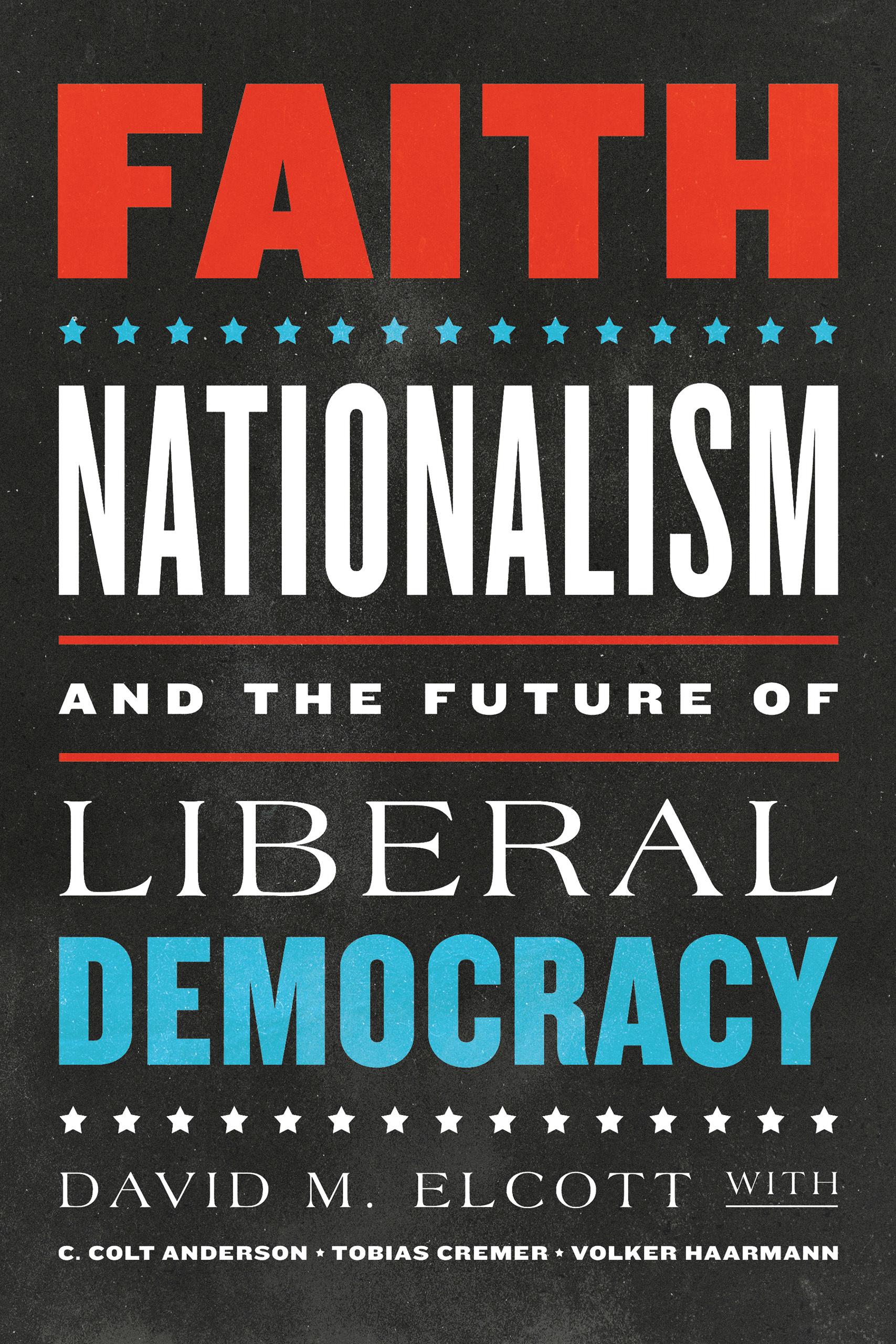
Faith, Nationalism, and the Future of Liberal Democracy highlights the use of religious identity to fuel the rise of illiberal, nationalist, and populist democracy.
In Faith, Nationalism, and the Future of Liberal Democracy, David Elcott, C. Colt Anderson, Tobias Cremer, and Volker Haarmann present a pragmatic and modernist exploration of how religion engages in the public square. Elcott and his co-authors are concerned about the ways religious identity is being used to foster the exclusion of individuals and communities from citizenship, political representation, and a role in determining public policy. They examine the ways religious identity is weaponized to fuel populist revolts against a political, social, and economic order that values democracy in a global and strikingly diverse world. Included is a history and political analysis of religion, politics, and policies in Europe and the United States that foster this illiberal rebellion.
The authors explore what constitutes a constructive religious voice in the political arena, even in nurturing patriotism and democracy, and what undermines and threatens liberal democracies. To lay the groundwork for a religious response, the book offers chapters showing how Catholicism, Protestantism, and Judaism can nourish liberal democracy. The authors encourage people of faith to promote foundational support for the institutions and values of the democratic enterprise from within their own religious traditions and to stand against the hostility and cruelty that historically have resulted when religious zealotry and state power combine.
Faith, Nationalism, and the Future of Liberal Democracy is intended for readers who value democracy and are concerned about growing threats to it, and especially for people of faith and religious leaders, as well as for scholars of political science, religion, and democracy.
Before Memmo my notes were scattered across PDFs. Now a workspace pulls everything into one place — I see exactly what's still left to study.
Memmo's summaries are gold before exams. I don't have to re-read 800 pages two weeks before — just the important parts.
The AI chat has saved me the night before an exam more than once. I just keep asking until I get it — no waiting on a study group to reply.
The quizzes hit exactly what I need to know. Memmo tracks what I get stuck on — so I only practice what's worth it.
Flashcards with spaced repetition are magic. Memmo knows when I'm about to forget something and brings it back.
The AI podcasts are my favorite. I listen on my way to school and get a recap without sitting at a computer.

Handbok i kvalitativa metoder
281 kr

Hållbar utveckling: en introduktion för ingenjörer och andra problemlösare
334 kr

Brymans Samhällsvetenskapliga metoder
390 kr

Projektledning
491 kr

Den orättvisa hälsan: om socioekonomiska skillnader i hälsa och livslängd
326 kr

Vetenskapsteori för nybörjare
196 kr

Organizational Leadership
429 kr

På väg mot läraryrket
172 kr

Det sociala livet i skolan: Socialpsykologiska perspektiv
253 kr

Betygsättningens didaktik
151 kr

Personality
402 kr

Studying Leadership
404 kr

Managing Innovation
477 kr

Introduktion till samhällsvetenskaplig metod
347 kr

The Psychology of Sex and Gender
698 kr

Evidens och kunskap för socialt arbete
207 kr

Introduction to Leadership
605 kr