
Before Memmo my notes were scattered across PDFs. Now a workspace pulls everything into one place — I see exactly what's still left to study.
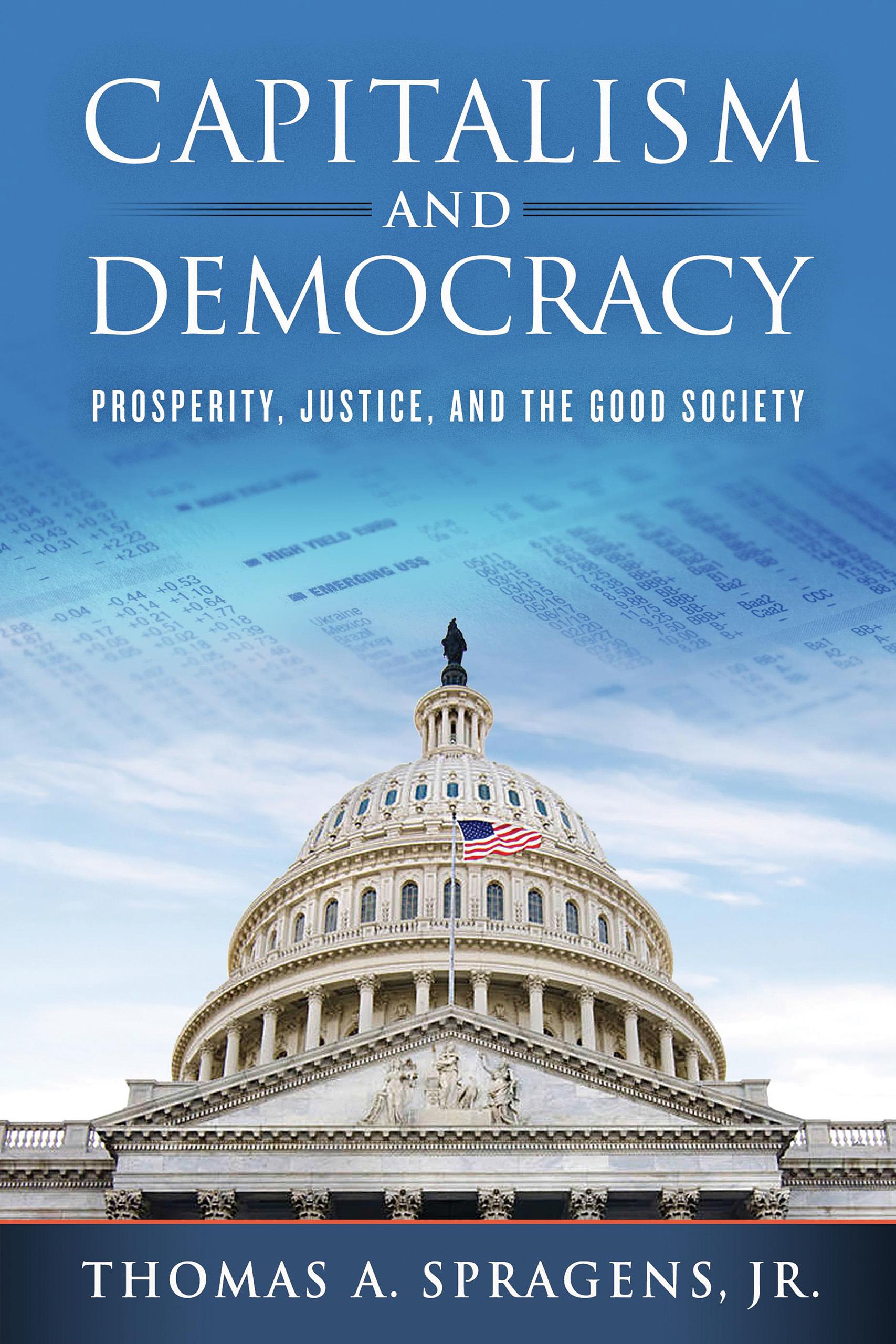
This book serves as an introduction to the ongoing political debate about the relationship of capitalism and democracy.
In recent years, the ideological battles between advocates of free markets and minimal government, on the one hand, and adherents of greater democratic equality and some form of the welfare state, on the other hand, have returned in full force. Anyone who wants to make sense of contemporary American politics and policy battles needs to have some understanding of the divergent beliefs and goals that animate this debate. In Capitalism and Democracy, Thomas A. Spragens, Jr., examines the opposing sides of the free market versus welfare state debate through the lenses of political economy, moral philosophy, and political theory. He asks: Do unchecked markets maximize prosperity, or do they at times produce wasteful and damaging outcomes? Are market distributions morally appropriate, or does fairness require some form of redistribution? Would a society of free markets and minimal government be the best kind of society possible, or would it have serious problems? After leading the reader through a series of thought experiments designed to compare and clarify the thought processes and beliefs held by supporters of each side, Spragens explains why there are no definitive answers to these questions. He concludes, however, that some answers are better than others, and he explains why his own judgement is that a vigorous free marketplace provides great benefits to a democratic society, both economically and politically, but that it also requires regulation and supplementation by collective action for a society to maximize prosperity, to mitigate some of the unfairness of the human condition, and to be faithful to important democratic purposes and ideals. This engaging and accessible book will interest students and scholars of political economy, democratic theory, and theories of social justice. It will also appeal to general readers who are seeking greater clarity and understanding of contemporary debates about government's role in the economy.
Before Memmo my notes were scattered across PDFs. Now a workspace pulls everything into one place — I see exactly what's still left to study.
Memmo's summaries are gold before exams. I don't have to re-read 800 pages two weeks before — just the important parts.
The AI chat has saved me the night before an exam more than once. I just keep asking until I get it — no waiting on a study group to reply.
The quizzes hit exactly what I need to know. Memmo tracks what I get stuck on — so I only practice what's worth it.
Flashcards with spaced repetition are magic. Memmo knows when I'm about to forget something and brings it back.
The AI podcasts are my favorite. I listen on my way to school and get a recap without sitting at a computer.

Handbok i kvalitativa metoder
281 kr

Hållbar utveckling: en introduktion för ingenjörer och andra problemlösare
334 kr

Brymans Samhällsvetenskapliga metoder
390 kr

Projektledning
491 kr

Den orättvisa hälsan: om socioekonomiska skillnader i hälsa och livslängd
326 kr

Vetenskapsteori för nybörjare
196 kr

Organizational Leadership
429 kr

På väg mot läraryrket
172 kr

Det sociala livet i skolan: Socialpsykologiska perspektiv
253 kr

Betygsättningens didaktik
151 kr

Personality
402 kr

Studying Leadership
404 kr

Managing Innovation
477 kr

Introduktion till samhällsvetenskaplig metod
347 kr

The Psychology of Sex and Gender
698 kr

Evidens och kunskap för socialt arbete
207 kr

Introduction to Leadership
605 kr