
Before Memmo my notes were scattered across PDFs. Now a workspace pulls everything into one place — I see exactly what's still left to study.
These essays offer a historically rigorous dismantling of Western claims about the superiority of celibate priests.
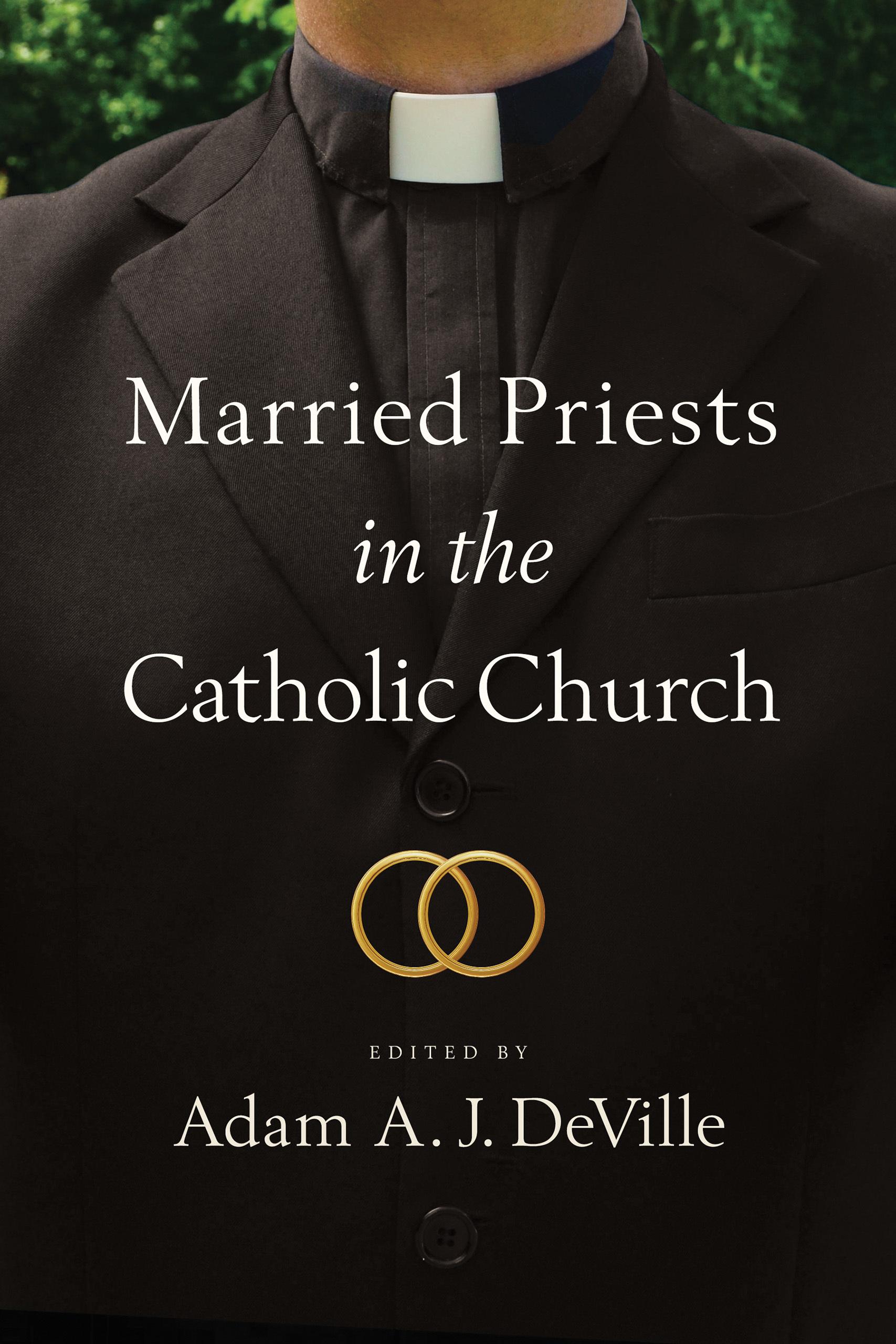
Although celibacy is often seen as a distinctive feature of the Catholic priesthood, both Catholic and Orthodox Churches in fact have rich and diverse traditions of married priests. The essays contained in Married Priests in the Catholic Church offer the most comprehensive treatment of these traditions to date. These essays, written by a wide-ranging group that includes historians, pastors, theologians, canon lawyers, and the wives and children of married Roman Catholic, Eastern Catholic, and Eastern Orthodox priests, offer diverse perspectives from many countries and traditions on the subject, including personal, historical, theological, and canonical accounts. As a collection, these essays push especially against two tendencies in thinking about married priesthood today. Against the idea that a married priesthood would solve every problem in Catholic clerical culture, this collection deromanticizes and demythologizes the notion of married priesthood. At the same time, against distinctively modern theological trends that posit the superiority, apostolicity, and “ontological” necessity of celibate priests, this collection refutes the claim that priestly ordination and celibacy must be so closely linked.
In addressing the topic of married priesthood from both practical and theoretical angles, and by drawing on a variety of perspectives, Married Priests in the Catholic Church will be of interest to a wide audience, including historians, theologians, canon lawyers, and seminary professors and formators, as well as pastors, parish leaders, and laypeople.
Contributors: Adam A. J. DeVille, David G. Hunter, Dellas Oliver Herbel, James S. Dutko, Patrick Viscuso, Alexander M. Laschuk, John Hunwicke, Edwin Barnes, Peter Galadza, David Meinzen, Julian Hayda, Irene Galadza, Nicholas Denysenko, William C. Mills, Andrew Jarmus, Thomas J. Loya, Lawrence Cross, and Basilio Petrà.
Before Memmo my notes were scattered across PDFs. Now a workspace pulls everything into one place — I see exactly what's still left to study.
Memmo's summaries are gold before exams. I don't have to re-read 800 pages two weeks before — just the important parts.
The AI chat has saved me the night before an exam more than once. I just keep asking until I get it — no waiting on a study group to reply.
The quizzes hit exactly what I need to know. Memmo tracks what I get stuck on — so I only practice what's worth it.
Flashcards with spaced repetition are magic. Memmo knows when I'm about to forget something and brings it back.
The AI podcasts are my favorite. I listen on my way to school and get a recap without sitting at a computer.

Handbok i kvalitativa metoder
281 kr

Hållbar utveckling: en introduktion för ingenjörer och andra problemlösare
334 kr

Brymans Samhällsvetenskapliga metoder
390 kr

Projektledning
491 kr

Den orättvisa hälsan: om socioekonomiska skillnader i hälsa och livslängd
326 kr

Vetenskapsteori för nybörjare
196 kr

Organizational Leadership
429 kr

På väg mot läraryrket
172 kr

Det sociala livet i skolan: Socialpsykologiska perspektiv
253 kr

Betygsättningens didaktik
151 kr

Personality
402 kr

Studying Leadership
404 kr

Managing Innovation
477 kr

Introduktion till samhällsvetenskaplig metod
347 kr

The Psychology of Sex and Gender
698 kr

Evidens och kunskap för socialt arbete
207 kr

Introduction to Leadership
605 kr