
Before Memmo my notes were scattered across PDFs. Now a workspace pulls everything into one place — I see exactly what's still left to study.
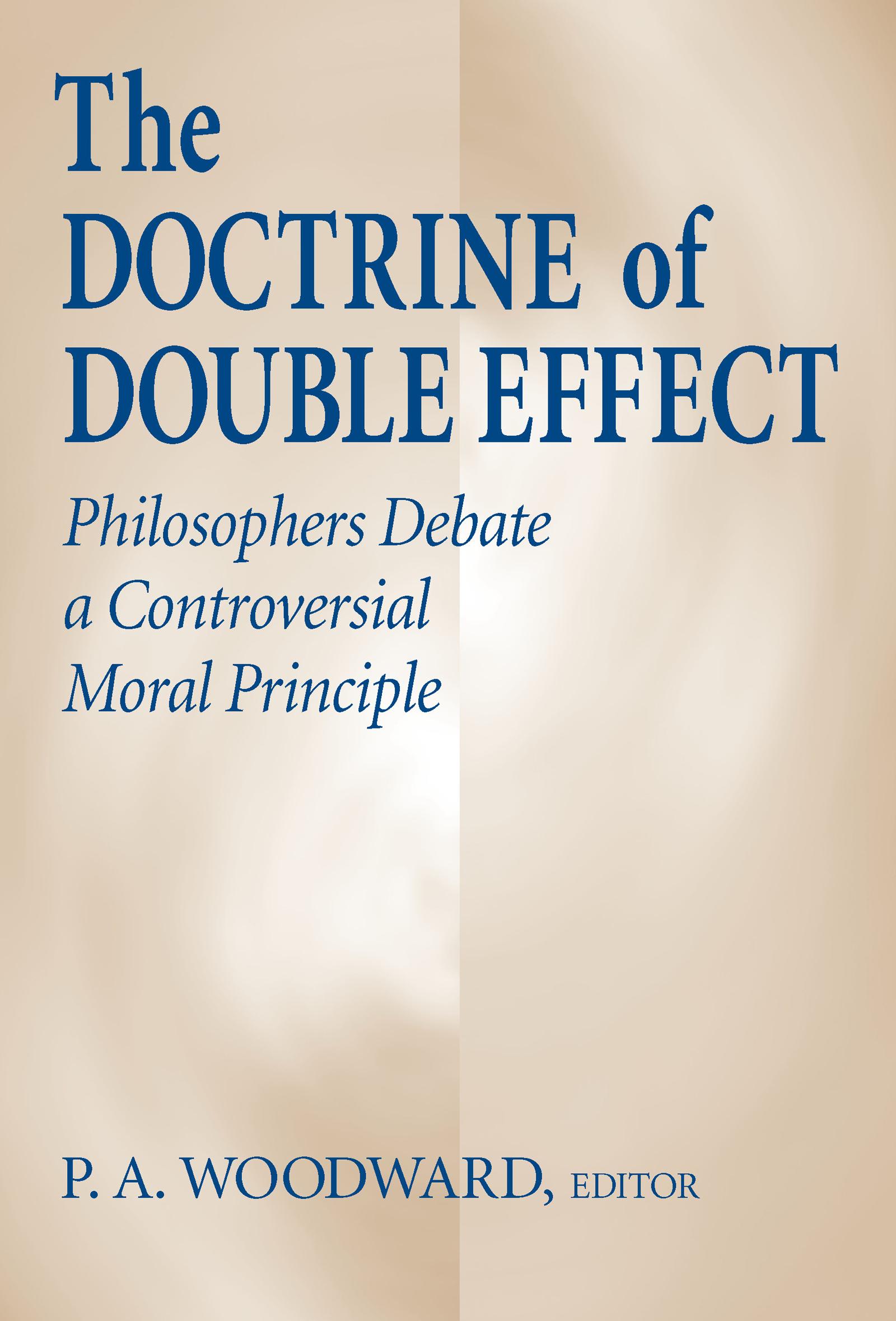
This anthology of philosophical essays, gathered from numerous sources, provides a convenient, in-depth introduction to the Doctrine of Double Effect. A number of important philosophers and intellectual perspectives are represented in what constitutes a debate over the doctrine and the various concerns it raises. Philosophers represented in these readings include Joseph M. Boyle, Jr., Warren Quinn, G. E. M. Anscombe, Thomas Nagel, Phillippa Foot, Jonathan Bennett, Nancy Davis, Donald Marquis, and many others.
The Doctrine of Double Effect is a principle of reasoning well known to moral philosophers. The standard formulation of the doctrine states that it is "licit to posit a cause which is either good or indifferent from which there follows a twofold effect, one good, the other evil, if a proportionally grave reason is present, and if the end of the agent is honorable."
According to this doctrine, an effect that would be considered morally wrong if it were the intentional outcome of an act could be morally permissible if it were the unintended effect of that act, even if it had been foreseen. As a method of drawing moral distinctions between the intentional and unintentional production of evil, the doctrine has had a long history. It has often been employed, for example, in debates about "just war" and the kinds of acts that are permissible in war.
The first section of this collection offers an introduction to the doctrine, its purpose, its claims, and the issues it raises for moral philosophers. Sections two and three take the form of a debate by several influential thinkers about the validity of the doctrine and the many problems surrounding it. The authors in section two defend the doctrine; those in section three oppose it. Sections four and five focus on applications, concrete and theoretical, of the doctrine, showing its possible uses and misuses.
This book will be valuable to teachers and students of philosophy as well as others interested in a clear understanding of this controversial doctrine.
Contributors: G. E. M. Anscombe, Greg Beabout, Jonathan Bennett, Joseph M. Boyle, Jr., William Cooney, David Copp, Nancy Davis, Stanislaus J. Dundon, John Martin Fischer, Philippa Foot, Jeff Jordan, Donald B. Marquis, Robert M. Martin, Thomas Nagel, Warren S. Quinn, Mark Ravizza, Michael Walzer, and P. A. Woodward.
Before Memmo my notes were scattered across PDFs. Now a workspace pulls everything into one place — I see exactly what's still left to study.
Memmo's summaries are gold before exams. I don't have to re-read 800 pages two weeks before — just the important parts.
The AI chat has saved me the night before an exam more than once. I just keep asking until I get it — no waiting on a study group to reply.
The quizzes hit exactly what I need to know. Memmo tracks what I get stuck on — so I only practice what's worth it.
Flashcards with spaced repetition are magic. Memmo knows when I'm about to forget something and brings it back.
The AI podcasts are my favorite. I listen on my way to school and get a recap without sitting at a computer.

Handbok i kvalitativa metoder
281 kr

Hållbar utveckling: en introduktion för ingenjörer och andra problemlösare
334 kr

Brymans Samhällsvetenskapliga metoder
390 kr

Projektledning
491 kr

Den orättvisa hälsan: om socioekonomiska skillnader i hälsa och livslängd
326 kr

Vetenskapsteori för nybörjare
196 kr

Organizational Leadership
429 kr

På väg mot läraryrket
172 kr

Det sociala livet i skolan: Socialpsykologiska perspektiv
253 kr

Betygsättningens didaktik
151 kr

Personality
402 kr

Studying Leadership
404 kr

Managing Innovation
477 kr

Introduktion till samhällsvetenskaplig metod
347 kr

The Psychology of Sex and Gender
698 kr

Evidens och kunskap för socialt arbete
207 kr

Introduction to Leadership
605 kr