
Before Memmo my notes were scattered across PDFs. Now a workspace pulls everything into one place — I see exactly what's still left to study.
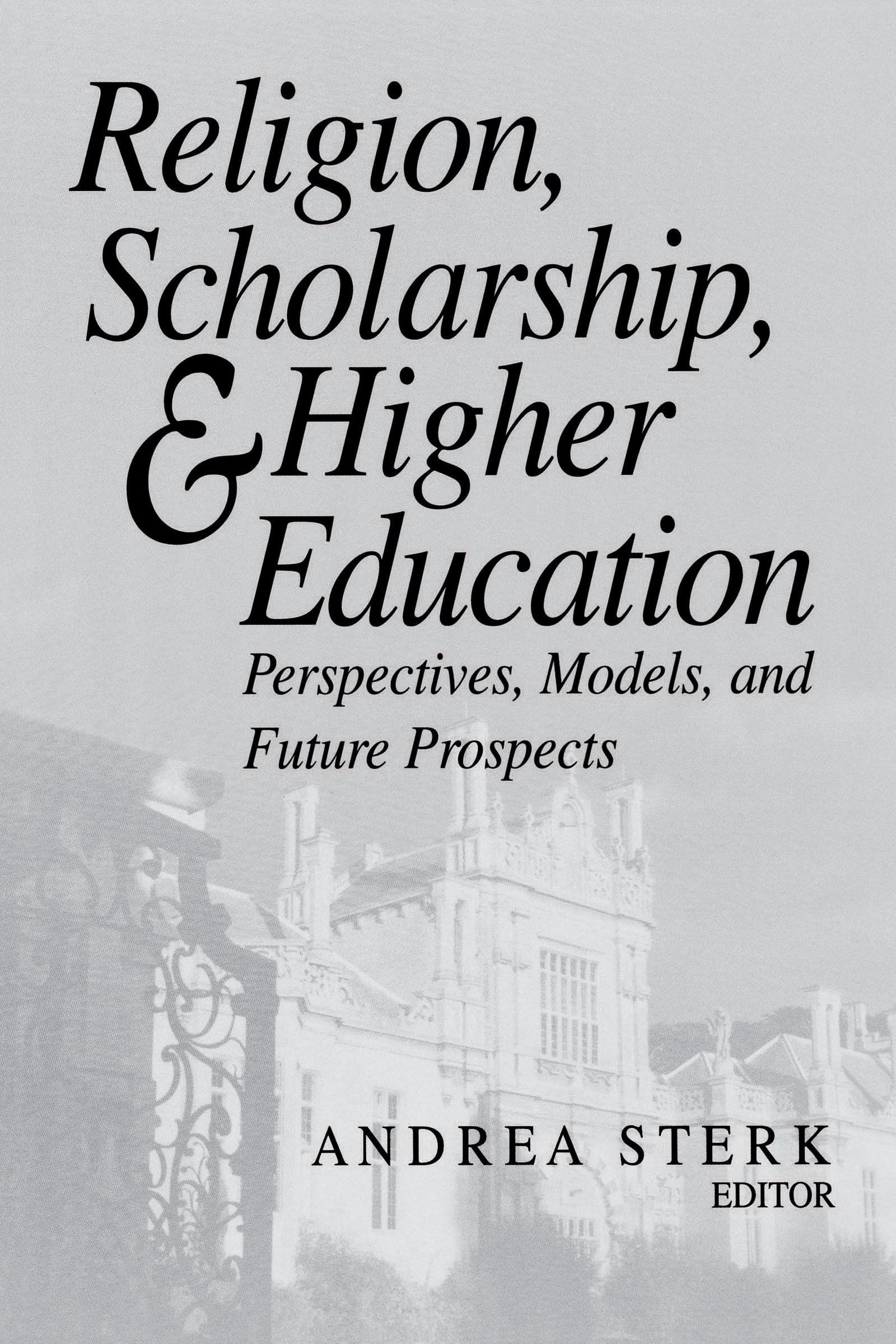
Religion, Scholarship, and Higher Education explores foundational issues surrounding the interaction of religion and the academy in the twenty-first century. Featuring the work of eighteen scholars from diverse institutional, disciplinary, and religious backgrounds, this outstanding collection of essays issues from a three-year Lilly Seminar on Religion and Higher Education. Reflecting the diversity of the seminar participants, this insightful volume presents a wide variety of viewpoints on the role of religion in higher education and different approaches to religiously informed scholarship and teaching.
Religion, Scholarship, and Higher Education is distinct in its orientation toward the personal and the practical. Contributors use personal examples to demonstrate how individual religious beliefs and backgrounds shape the way an educator approaches research and teaching.
The first part of the book addresses foundational issues, offering a range of perspectives on the current state of affairs and future prospects for the interrelation of religion and academic endeavor. Part II treats specific academic disciplines as they relate to religion and research and provides several models of scholarship grounded in or informed by religious traditions. The final section of the volume presents five different approaches to teaching. Contributors reflect on how religious perspectives or commitments influence the way in which they understand their role as university or college teachers and carry out their responsibilities in the classroom.
Sure to capture the interest of scholars, teachers, and administrators alike, this volume features essays from Nicholas Wolterstorff, James Turner, Alan Wolfe, David A. Hollinger, Mark R. Schwehn, John McGreevy, Nancy T. Ammerman, Roger Lundin, Brian E.Daley, S.J., Clarke E. Cochran, Serene Jones, Richard J. Bernstein, Mark A. Noll, Denis Donoghue, Robert Wuthnow, Jean Bethke Elshtain, Susan Handelman, and Francis Oakley.
Before Memmo my notes were scattered across PDFs. Now a workspace pulls everything into one place — I see exactly what's still left to study.
Memmo's summaries are gold before exams. I don't have to re-read 800 pages two weeks before — just the important parts.
The AI chat has saved me the night before an exam more than once. I just keep asking until I get it — no waiting on a study group to reply.
The quizzes hit exactly what I need to know. Memmo tracks what I get stuck on — so I only practice what's worth it.
Flashcards with spaced repetition are magic. Memmo knows when I'm about to forget something and brings it back.
The AI podcasts are my favorite. I listen on my way to school and get a recap without sitting at a computer.

Handbok i kvalitativa metoder
281 kr

Hållbar utveckling: en introduktion för ingenjörer och andra problemlösare
334 kr

Brymans Samhällsvetenskapliga metoder
390 kr

Projektledning
491 kr

Den orättvisa hälsan: om socioekonomiska skillnader i hälsa och livslängd
326 kr

Vetenskapsteori för nybörjare
196 kr

Organizational Leadership
429 kr

På väg mot läraryrket
172 kr

Det sociala livet i skolan: Socialpsykologiska perspektiv
253 kr

Betygsättningens didaktik
151 kr

Personality
402 kr

Studying Leadership
404 kr

Managing Innovation
477 kr

Introduktion till samhällsvetenskaplig metod
347 kr

The Psychology of Sex and Gender
698 kr

Evidens och kunskap för socialt arbete
207 kr

Introduction to Leadership
605 kr