
Before Memmo my notes were scattered across PDFs. Now a workspace pulls everything into one place — I see exactly what's still left to study.
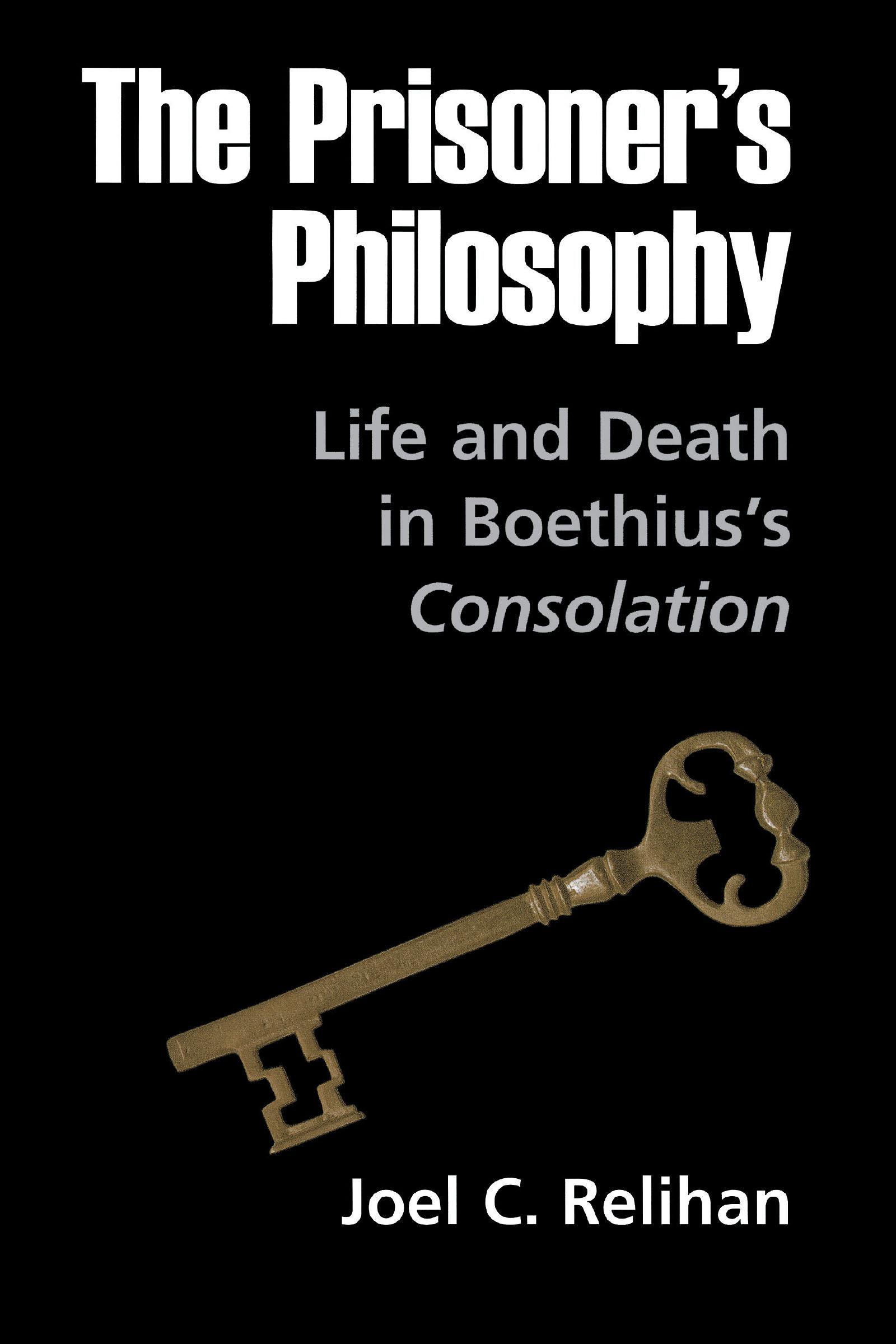
The Roman philosopher Boethius (c. 480-524) is best known for the Consolation of Philosophy, one of the most frequently cited texts in medieval literature. In the Consolation, an unnamed Boethius sits in prison awaiting execution when his muse Philosophy appears to him. Her offer to teach him who he truly is and to lead him to his heavenly home becomes a debate about how to come to terms with evil, freedom, and providence. The conventional reading of the Consolation is that it is a defense of pagan philosophy; nevertheless, many readers who accept this basic argument find that the ending is ambiguous and that Philosophy has not, finally, given the prisoner the comfort she had promised.
In The Prisoner's Philosophy, Joel C. Relihan delivers a genuinely new reading of the Consolation. He argues that it is a Christian work dramatizing not the truths of philosophy as a whole, but the limits of pagan philosophy in particular. He views it as one of a number of literary experiments of late antiquity, taking its place alongside Augustine's Confessions and Soliloquies as a spiritual meditation, as an attempt by Boethius to speak objectively about the life of the mind and its relation to God.
Relihan discerns three fundamental stories intertwined in the Consolation: an ironic retelling of Plato's Crito, an adaptation of Lucian's Jupiter Confutatus, and a sober reduction of Job to a quiet dialogue in which the wounded innocent ultimately learns wisdom in silence. Relihan's claim that Boethius's text was written as a Menippean satire does not rest merely on identifying a mixture of disparate literary influences on the text, or on the combination of verse and prose or of fantasy and morality. More important, Relihan argues, Boethius deliberately dramatizes the act of writing about systematic knowledge in a way that calls into question the value of that knowledge. Philosophy's attempt to lead an exile to God's heaven is rejected; the exile comes to accept the value of the phenomenal world, and theology replaces philosophy to explain the place of human beings in the order of the world. Boethius Christianizes the genre of Menippean satire, and his Consolation is a work about humility and prayer.
Before Memmo my notes were scattered across PDFs. Now a workspace pulls everything into one place — I see exactly what's still left to study.
Memmo's summaries are gold before exams. I don't have to re-read 800 pages two weeks before — just the important parts.
The AI chat has saved me the night before an exam more than once. I just keep asking until I get it — no waiting on a study group to reply.
The quizzes hit exactly what I need to know. Memmo tracks what I get stuck on — so I only practice what's worth it.
Flashcards with spaced repetition are magic. Memmo knows when I'm about to forget something and brings it back.
The AI podcasts are my favorite. I listen on my way to school and get a recap without sitting at a computer.

Handbok i kvalitativa metoder
281 kr

Hållbar utveckling: en introduktion för ingenjörer och andra problemlösare
334 kr

Brymans Samhällsvetenskapliga metoder
390 kr

Projektledning
491 kr

Den orättvisa hälsan: om socioekonomiska skillnader i hälsa och livslängd
326 kr

Vetenskapsteori för nybörjare
196 kr

Organizational Leadership
429 kr

På väg mot läraryrket
172 kr

Det sociala livet i skolan: Socialpsykologiska perspektiv
253 kr

Betygsättningens didaktik
151 kr

Personality
402 kr

Studying Leadership
404 kr

Managing Innovation
477 kr

Introduktion till samhällsvetenskaplig metod
347 kr

The Psychology of Sex and Gender
698 kr

Evidens och kunskap för socialt arbete
207 kr

Introduction to Leadership
605 kr