
Before Memmo my notes were scattered across PDFs. Now a workspace pulls everything into one place — I see exactly what's still left to study.
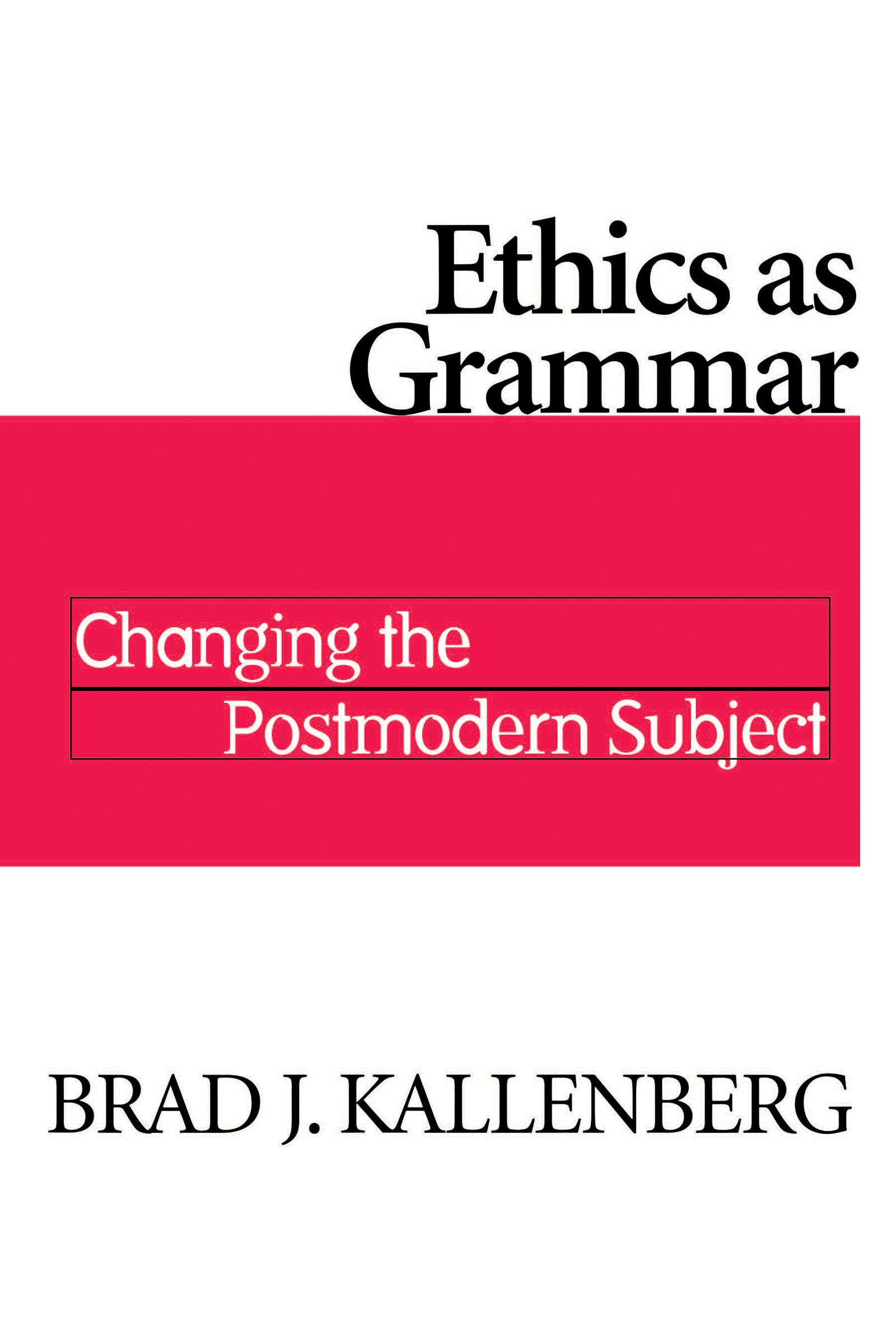
Wittgenstein, one of the most influential, and yet widely misunderstood, philosophers of our age, confronted his readers with aporias—linguistic puzzles—as a means of countering modern philosophical confusions over the nature of language without replicating the same confusions in his own writings. In Ethics as Grammar, Brad Kallenberg uses the writings of theological ethicist Stanley Hauerwas as a foil for demonstrating how Wittgenstein’s method can become concrete within the Christian tradition. Kallenberg shows that the aesthetic, political, and grammatical strands epitomizing Hauerwas’s thought are the result of his learning to do Christian ethics by thinking through Wittgenstein.
Kallenberg argues that Wittgenstein’s pedagogical strategy cultivates certain skills of judgment in his readers by making them struggle to move past the aporias and acquire the fluency of language’s deeper grammar. Theologians, says Kallenberg, are well suited to this task of "going on" because the gift of Christianity supplies them with the requisite resources for reading Wittgenstein. Kallenberg uses Hauerwas to make this case—showing that Wittgenstein’s aporetic philosophy has engaged Hauerwas in a lifelong conversation that has cured him of many philosophical confusions. Yet, because Hauerwas comes to the conversation as a Christian believer, he is able to surmount Wittgenstein’s aporias with the assistance of theological convictions that he possesses through grace.
Ethics as Grammar reveals that Wittgenstein’s intention to cultivate concrete skill in real people was akin to Aristotle’s emphasis on the close relationship of practical reason and ethics. In this thought-provoking book, Kallenberg demonstrates that Wittgenstein does more than simply offer a vantage point for reassessing Aristotle, he paves the way for ethics to become a distinctively Christian discipline, as exemplified by Stanley Hauerwas.
Before Memmo my notes were scattered across PDFs. Now a workspace pulls everything into one place — I see exactly what's still left to study.
Memmo's summaries are gold before exams. I don't have to re-read 800 pages two weeks before — just the important parts.
The AI chat has saved me the night before an exam more than once. I just keep asking until I get it — no waiting on a study group to reply.
The quizzes hit exactly what I need to know. Memmo tracks what I get stuck on — so I only practice what's worth it.
Flashcards with spaced repetition are magic. Memmo knows when I'm about to forget something and brings it back.
The AI podcasts are my favorite. I listen on my way to school and get a recap without sitting at a computer.

Handbok i kvalitativa metoder
281 kr

Hållbar utveckling: en introduktion för ingenjörer och andra problemlösare
334 kr

Brymans Samhällsvetenskapliga metoder
390 kr

Projektledning
491 kr

Den orättvisa hälsan: om socioekonomiska skillnader i hälsa och livslängd
326 kr

Organizational Leadership
429 kr

Vetenskapsteori för nybörjare
196 kr

På väg mot läraryrket
172 kr

Det sociala livet i skolan: Socialpsykologiska perspektiv
253 kr

Betygsättningens didaktik
151 kr

Personality
402 kr

Studying Leadership
404 kr

Managing Innovation
477 kr

Introduktion till samhällsvetenskaplig metod
347 kr

The Psychology of Sex and Gender
698 kr

Evidens och kunskap för socialt arbete
207 kr

Introduction to Leadership
605 kr