
Before Memmo my notes were scattered across PDFs. Now a workspace pulls everything into one place — I see exactly what's still left to study.
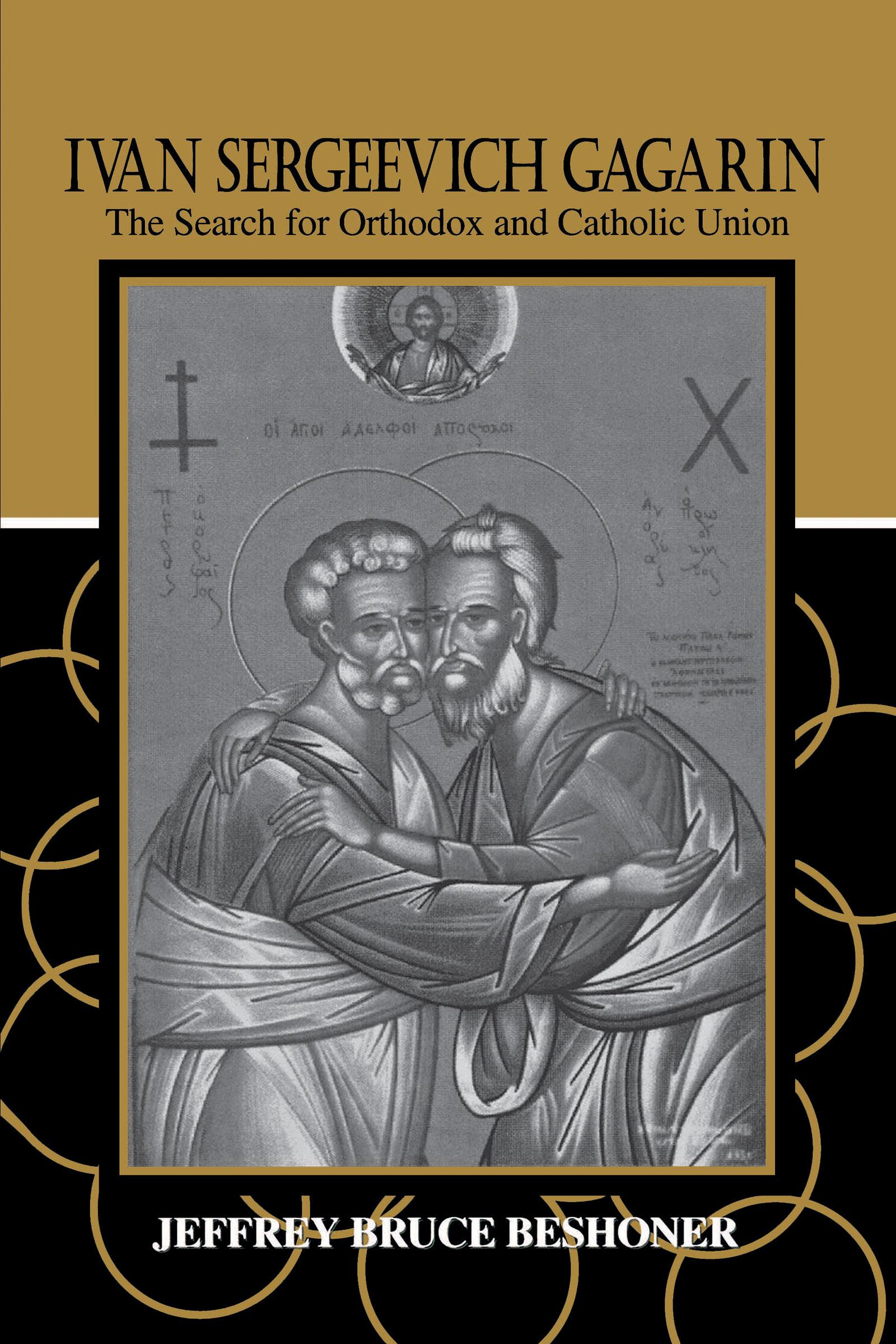
Ivan Sergeevich Gagarin analyzes questions of nationality and religious identity in nineteenth-century Russian history as reflected in the life of Jesuit priest Ivan Gagarin. A descendent of one of Russia’s most ancient and politically powerful families, Father Ivan Gagarin, S.J. (1814–1882) dedicated his life to creating a union between the Orthodox and Catholic churches that would preserve the dogmatic and traditional beliefs of both.
Traditional understandings of Russian identity have emanated from the perspective of the dominant Orthodox religion; this captivating study uses the unionist work of Gagarin to illumine Russia's national identity from the perspective of Roman Catholicism. Seeing his unionist proposals as necessary for the preservation of Russian stability, Gagarin found himself in frequent opposition to the Orthodox Church. While Gagarin believed that Church union would preserve Russia from the threats of communism and revolution, the Russian Orthodox Church believed that union would mean the sacrifice of religious truth, ecclesial independence and religious orthodoxy.
Jeffrey Beshoner’s even-handed analysis reveals that the Roman Catholic Church presented its own share of barriers to attempts at church union. Ivan Sergeevich Gagarin examines Roman Catholic attitudes of superiority vis-à-vis the Orthodox Church and argues that the nineteenth-century Roman Catholic Church simply did not possess the humility or respect for Eastern beliefs that church union required.
Despite the failure of his unionist activity, Gagarin exerted important influence on such contemporary and later Roman Catholic and Russian thinkers as Pope Pius IX, Alexei Khomiakov and Vladimir Solovev. As the collapse of communism has permitted Russia to again seek its national identity in Russian Orthodoxy, Gagarin's ideas and perspectives on the relationship between national and religious identity continue to prove relevant.
Before Memmo my notes were scattered across PDFs. Now a workspace pulls everything into one place — I see exactly what's still left to study.
Memmo's summaries are gold before exams. I don't have to re-read 800 pages two weeks before — just the important parts.
The AI chat has saved me the night before an exam more than once. I just keep asking until I get it — no waiting on a study group to reply.
The quizzes hit exactly what I need to know. Memmo tracks what I get stuck on — so I only practice what's worth it.
Flashcards with spaced repetition are magic. Memmo knows when I'm about to forget something and brings it back.
The AI podcasts are my favorite. I listen on my way to school and get a recap without sitting at a computer.

Handbok i kvalitativa metoder
281 kr

Hållbar utveckling: en introduktion för ingenjörer och andra problemlösare
334 kr

Brymans Samhällsvetenskapliga metoder
390 kr

Projektledning
491 kr

Den orättvisa hälsan: om socioekonomiska skillnader i hälsa och livslängd
326 kr

Organizational Leadership
429 kr

Vetenskapsteori för nybörjare
196 kr

På väg mot läraryrket
172 kr

Det sociala livet i skolan: Socialpsykologiska perspektiv
253 kr

Betygsättningens didaktik
151 kr

Personality
402 kr

Studying Leadership
404 kr

Managing Innovation
477 kr

Introduktion till samhällsvetenskaplig metod
347 kr

The Psychology of Sex and Gender
698 kr

Evidens och kunskap för socialt arbete
207 kr

Introduction to Leadership
605 kr