
Before Memmo my notes were scattered across PDFs. Now a workspace pulls everything into one place — I see exactly what's still left to study.
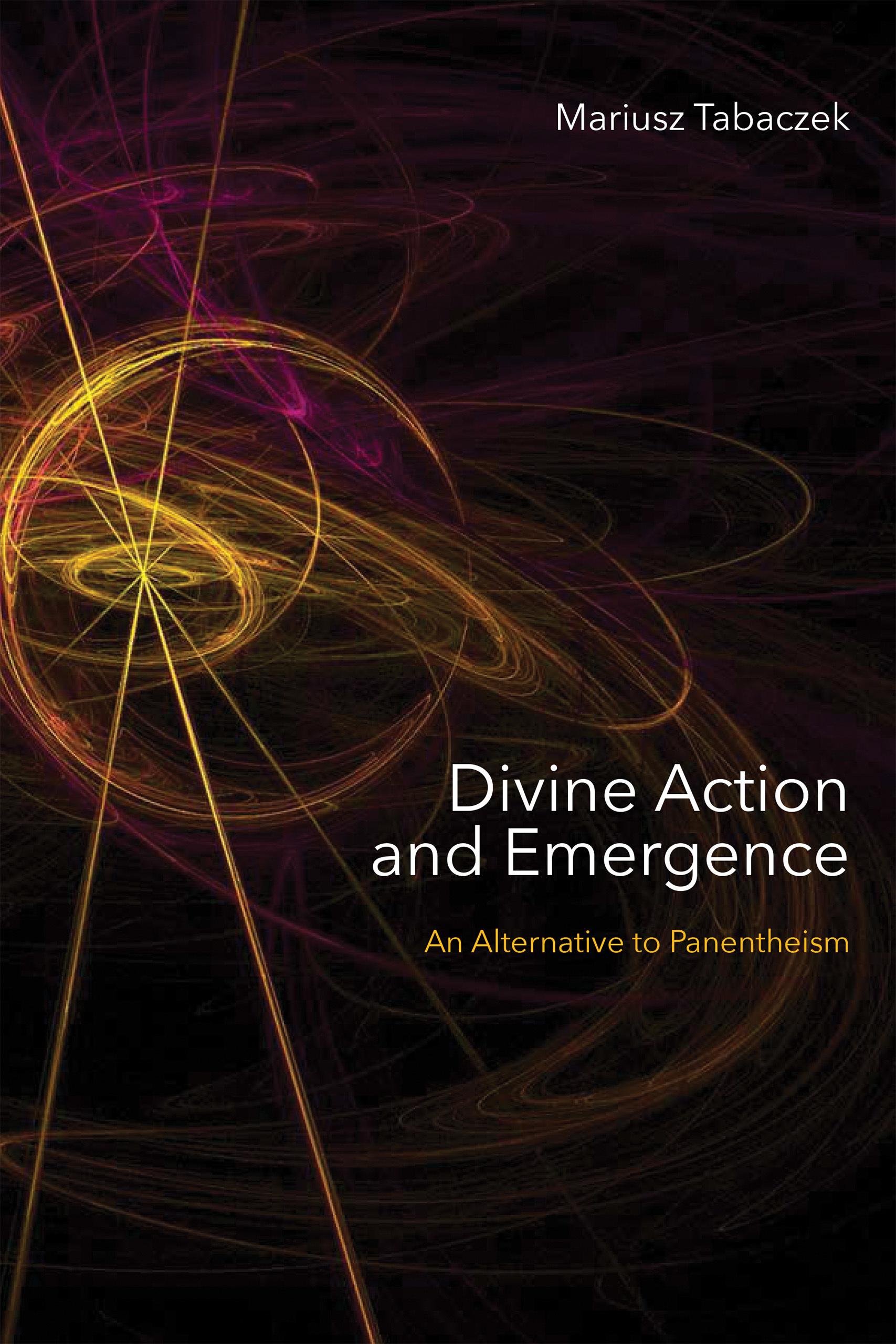
Divine Action and Emergence puts the classical Aristotelian-Thomistic tradition in conversation with current philosophy and theology.
As a middle path between classical theism and pantheism, the panentheistic turn in the twentieth century has been described as a “quiet revolution.” Today, in fact, many theologians hold that the world is “in” God (who, at the same time, is more than the world). Panentheism has been especially influential in the dialogue between theology and the natural sciences. Many have seen panentheism as compatible with emergentism, and thus have brought the two together in developing models of divine action that do not abrogate the regularities of processes of the natural world. In Divine Action and Emergence, Mariusz Tabaczek argues that, as inspiring and intriguing as emergentist panentheism is, it requires deeper examination. He begins by looking at the wonder of emergence (which calls into question the overly reductionist attitude in natural science) and by reflecting philosophically on emergence theory in light of classical and new Aristotelianism. Moving in a theological direction, Tabaczek then offers a critical evaluation of emergentist panentheism and a constructive proposal for how to reinterpret the idea of divine action as inspired by the theory of emergence with reference to the classical Aristotelian-Thomistic understanding of God’s action in the universe.
Through a unique interdisciplinary approach that puts theology and the natural sciences into a dialogue through philosophy, Divine Action and Emergence offers a comprehensive evaluation of panentheism. It then puts forward an original reinterpretation of emergence theory, thus setting forth a constructive proposal for reinterpreting the concept of divine action that is currently espoused by emergence theory. It will appeal to scholars of theology and philosophy, those who work in the area of theology and science, those interested in emergence theory or panentheism, and finally those who are interested in the dialogue between the classical Aristotelian-Thomistic tradition and contemporary philosophy and theology.
Before Memmo my notes were scattered across PDFs. Now a workspace pulls everything into one place — I see exactly what's still left to study.
Memmo's summaries are gold before exams. I don't have to re-read 800 pages two weeks before — just the important parts.
The AI chat has saved me the night before an exam more than once. I just keep asking until I get it — no waiting on a study group to reply.
The quizzes hit exactly what I need to know. Memmo tracks what I get stuck on — so I only practice what's worth it.
Flashcards with spaced repetition are magic. Memmo knows when I'm about to forget something and brings it back.
The AI podcasts are my favorite. I listen on my way to school and get a recap without sitting at a computer.

Handbok i kvalitativa metoder
281 kr

Hållbar utveckling: en introduktion för ingenjörer och andra problemlösare
334 kr

Brymans Samhällsvetenskapliga metoder
390 kr

Projektledning
491 kr

Den orättvisa hälsan: om socioekonomiska skillnader i hälsa och livslängd
326 kr

Vetenskapsteori för nybörjare
196 kr

Organizational Leadership
429 kr

På väg mot läraryrket
172 kr

Det sociala livet i skolan: Socialpsykologiska perspektiv
253 kr

Betygsättningens didaktik
151 kr

Personality
402 kr

Studying Leadership
404 kr

Managing Innovation
477 kr

Introduktion till samhällsvetenskaplig metod
347 kr

The Psychology of Sex and Gender
698 kr

Evidens och kunskap för socialt arbete
207 kr

Introduction to Leadership
605 kr