
Before Memmo my notes were scattered across PDFs. Now a workspace pulls everything into one place — I see exactly what's still left to study.
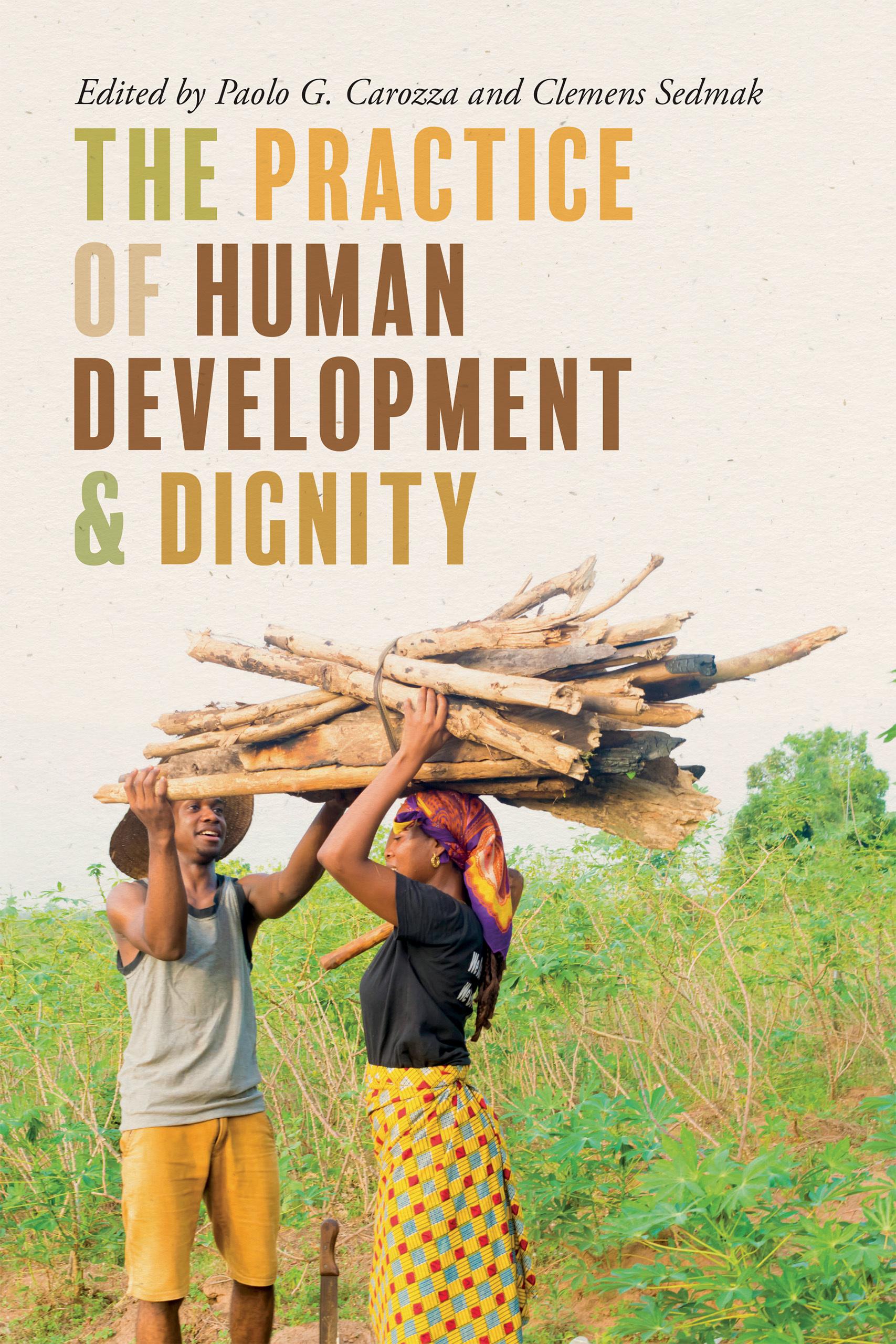
Although deeply contested in many ways, the concept of human dignity has emerged as a key idea in fields such as bioethics and human rights. It has been largely absent, however, from literature on development studies. The essays contained in The Practice of Human Development and Dignity fill this gap by showing the implications of human dignity for international development theory, policy, and practice. Pushing against ideas of development that privilege the efficiency of systems that accelerate economic growth at the expense of human persons and their agency, the essays in this volume show how development work that lacks sensitivity to human dignity is blind. Instead, genuine development must advance human flourishing and not merely promote economic betterment. At the same time, the essays in this book also demonstrate that human dignity must be assessed in the context of real human experiences and practices. This volume therefore considers the meaning of human dignity inductively in light of development practice, rather than simply providing a theory or philosophy of human dignity in the abstract. It asks not only “what is dignity” but also “how can dignity be done?”
Through a unique multidisciplinary dialogue, The Practice of Human Development and Dignity offers a dialectical and systematic examination of human dignity that moves beyond the current impasse in thinking about the theory and practice of human dignity. It will appeal to scholars in the social sciences, philosophy, and legal and development theory, and also to those who work in development around the globe.
Contributors: Paolo G. Carozza, Clemens Sedmak, Séverine Deneulin, Simona Beretta, Dominic Burbidge, Matt Bloom, Deirdre Guthrie, Robert A. Dowd, Bruce Wydick, Travis J. Lybbert, Paul Perrin, Martin Schlag, Luigino Bruni, Lorenza Violini, Giada Ragone, Steve Reifenberg, Elizabeth Hlabse, Catherine E. Bolten, Ilaria Schnyder von Wartensee, Tania Groppi, Maria Sophia Aguirre, and Martha Cruz-Zuniga
Before Memmo my notes were scattered across PDFs. Now a workspace pulls everything into one place — I see exactly what's still left to study.
Memmo's summaries are gold before exams. I don't have to re-read 800 pages two weeks before — just the important parts.
The AI chat has saved me the night before an exam more than once. I just keep asking until I get it — no waiting on a study group to reply.
The quizzes hit exactly what I need to know. Memmo tracks what I get stuck on — so I only practice what's worth it.
Flashcards with spaced repetition are magic. Memmo knows when I'm about to forget something and brings it back.
The AI podcasts are my favorite. I listen on my way to school and get a recap without sitting at a computer.

Handbok i kvalitativa metoder
281 kr

Hållbar utveckling: en introduktion för ingenjörer och andra problemlösare
334 kr

Brymans Samhällsvetenskapliga metoder
390 kr

Projektledning
491 kr

Den orättvisa hälsan: om socioekonomiska skillnader i hälsa och livslängd
326 kr

Organizational Leadership
429 kr

Vetenskapsteori för nybörjare
196 kr

På väg mot läraryrket
172 kr

Det sociala livet i skolan: Socialpsykologiska perspektiv
253 kr

Betygsättningens didaktik
151 kr

Personality
402 kr

Studying Leadership
404 kr

Managing Innovation
477 kr

Introduktion till samhällsvetenskaplig metod
347 kr

The Psychology of Sex and Gender
698 kr

Evidens och kunskap för socialt arbete
207 kr

Introduction to Leadership
605 kr