
Before Memmo my notes were scattered across PDFs. Now a workspace pulls everything into one place — I see exactly what's still left to study.
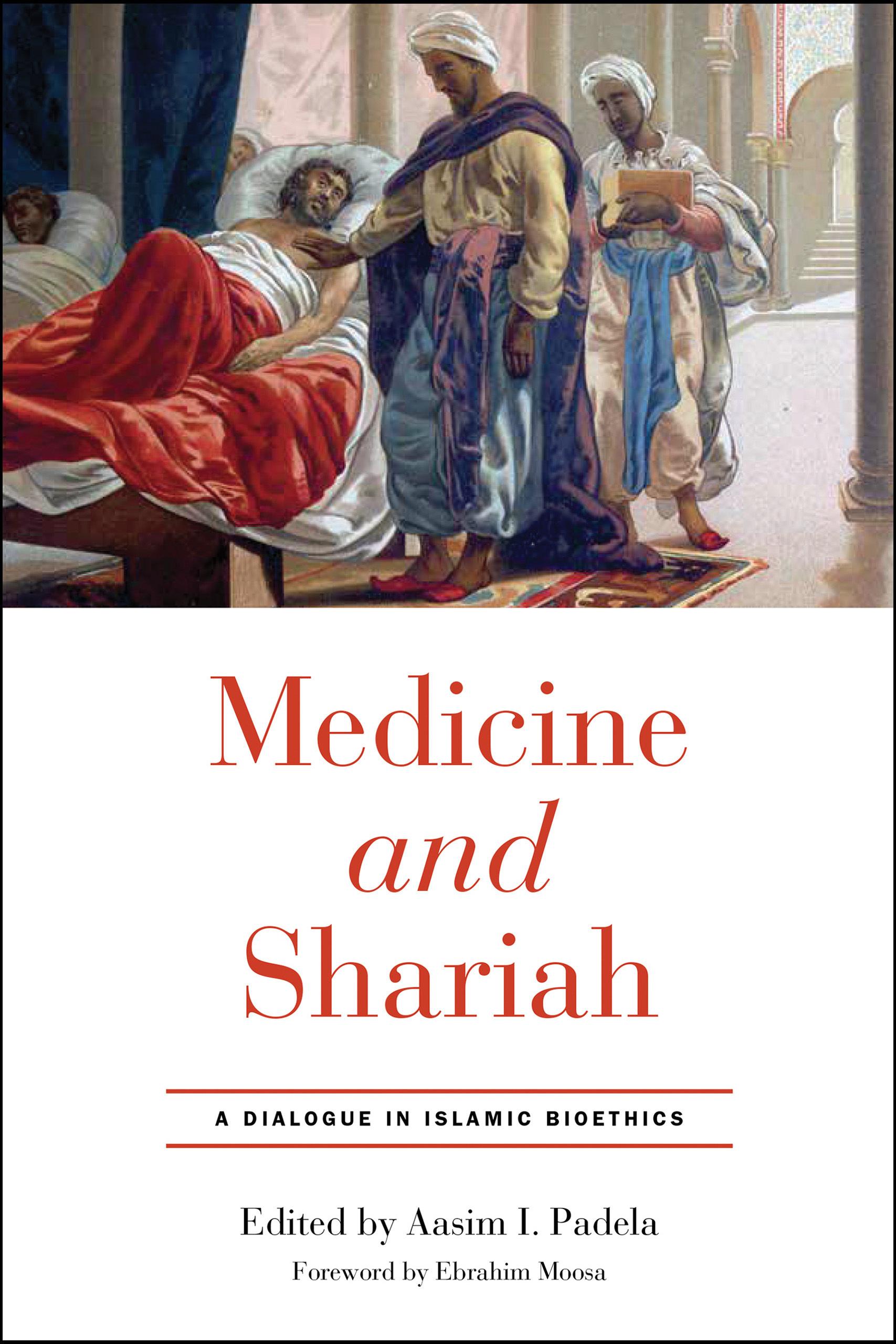
Medicine and Shariah brings together experts from various fields, including clinicians, Islamic studies experts, and Muslim theologians, to analyze the interaction of the doctors and jurists who are forging the field of Islamic bioethics.
Although much ink has been spilled in generating Islamic responses to bioethical questions and in analyzing fatwas, Islamic bioethics still remains an emerging field. How are Islamic bioethical norms to be generated? Are Islamic bioethical writings to be considered as part of the broader academic discourse in bioethics? What even is the scope of Islamic bioethics? Taking up these and related questions, the essays in Medicine and Shariah provide the groundwork for a more robust field. The volume begins by furnishing concepts and terms needed to map out the discourse. It concludes by offering a multidisciplinary model for ethical deliberation that accounts for the various disciplines needed to derive Islamic moral norms and to understand biomedical contexts. In between these bookends, contributors apply various analytic, empirical, and normative lenses to examine the interaction between biomedical knowledge (represented by physicians) and Islamic law (represented by jurists) in Islamic bioethical deliberation.
By providing a multidisciplinary model for generating Islamic bioethics rulings, Medicine and Shariah provides the critical foundations for an Islamic bioethics that better attends to specific biomedical contexts and also accurately reflects the moral vision of Islam. The volume will be essential reading for bioethicists and scholars of Islam; for those interested in the dialectics of tradition, modernity, science, and religion; and more broadly for scholarly and professional communities that work at the intersection of the Islamic tradition and contemporary healthcare.
Contributors: Ebrahim Moosa, Aasim I. Padela, Vardit Rispler-Chaim, Abul Fadl Mohsin Ebrahim, Muhammed Volkan Yildiran Stodolsky, Mohammed Amin Kholwadia, Hooman Keshavarzi, and Bilal Ali.
Before Memmo my notes were scattered across PDFs. Now a workspace pulls everything into one place — I see exactly what's still left to study.
Memmo's summaries are gold before exams. I don't have to re-read 800 pages two weeks before — just the important parts.
The AI chat has saved me the night before an exam more than once. I just keep asking until I get it — no waiting on a study group to reply.
The quizzes hit exactly what I need to know. Memmo tracks what I get stuck on — so I only practice what's worth it.
Flashcards with spaced repetition are magic. Memmo knows when I'm about to forget something and brings it back.
The AI podcasts are my favorite. I listen on my way to school and get a recap without sitting at a computer.

Handbok i kvalitativa metoder
281 kr

Hållbar utveckling: en introduktion för ingenjörer och andra problemlösare
334 kr

Brymans Samhällsvetenskapliga metoder
390 kr

Projektledning
491 kr

Den orättvisa hälsan: om socioekonomiska skillnader i hälsa och livslängd
326 kr

Organizational Leadership
429 kr

Vetenskapsteori för nybörjare
196 kr

På väg mot läraryrket
172 kr

Det sociala livet i skolan: Socialpsykologiska perspektiv
253 kr

Betygsättningens didaktik
151 kr

Personality
402 kr

Studying Leadership
404 kr

Managing Innovation
477 kr

Introduktion till samhällsvetenskaplig metod
347 kr

The Psychology of Sex and Gender
698 kr

Evidens och kunskap för socialt arbete
207 kr

Introduction to Leadership
605 kr