
Before Memmo my notes were scattered across PDFs. Now a workspace pulls everything into one place — I see exactly what's still left to study.
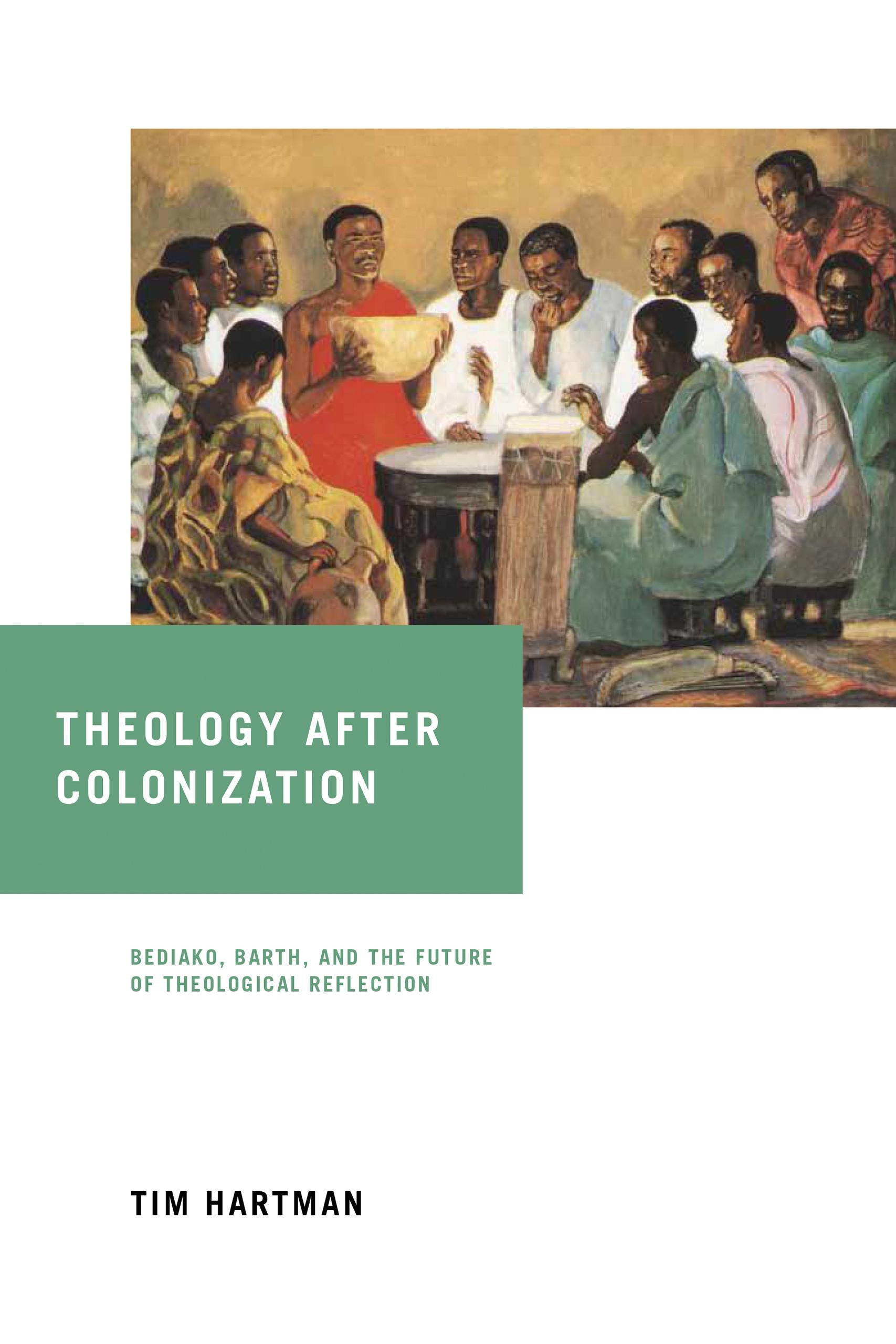
Tim Hartman's Theology after Colonization uses a comparative approach to examine two theologians, one from Europe and one from Africa, to gain insight into our contemporary theological situation. Hartman examines how the loss of cultural hegemony through rising pluralism and secularization has undermined the interconnection of the Christian faith with political power and how globalization undermined the expansive (and expanding) mindset of colonialization. Hartman engages Swiss-German theologian Karl Barth (1886–1968), whose work responded to the challenges of Christendom and the increasing secularization of Europe by articulating an early post-Christendom theology based on God's self-revelation in Jesus Christ, not on official institutional structures (including the church) or societal consensus. In a similar way, Ghanaian theologian Kwame Bediako (1945–2008) offered a post-colonial theology. He wrote from the perspective of the global South while the Christian faith was growing exponentially following the departure of Western missionaries from Africa. For Bediako, the infinite translatability of the gospel of Jesus Christ leads to the renewal of Christianity as a non-Western religion, not a product of colonialization.
Many Western theologies find themselves unable to respond to increasing secularization and intensifying globalization because they are based on the very assumptions of uniformity and parochialism (sometimes called "orthodoxy") that are being challenged. Hartman claims Bediako and Barth can serve as helpful guides for contemporary theological reflection as the consensus surrounding this theological complex disintegrates further. Collectively, their work points the way toward contemporary theological reflection that is Christological, contextual, cultural, constructive, and collaborative. As one of the first books to examine the work of Bediako, this study will interest students and scholars of Christian theology, African studies, and postcolonial studies.
Before Memmo my notes were scattered across PDFs. Now a workspace pulls everything into one place — I see exactly what's still left to study.
Memmo's summaries are gold before exams. I don't have to re-read 800 pages two weeks before — just the important parts.
The AI chat has saved me the night before an exam more than once. I just keep asking until I get it — no waiting on a study group to reply.
The quizzes hit exactly what I need to know. Memmo tracks what I get stuck on — so I only practice what's worth it.
Flashcards with spaced repetition are magic. Memmo knows when I'm about to forget something and brings it back.
The AI podcasts are my favorite. I listen on my way to school and get a recap without sitting at a computer.

Handbok i kvalitativa metoder
281 kr

Hållbar utveckling: en introduktion för ingenjörer och andra problemlösare
334 kr

Brymans Samhällsvetenskapliga metoder
390 kr

Projektledning
491 kr

Den orättvisa hälsan: om socioekonomiska skillnader i hälsa och livslängd
326 kr

Organizational Leadership
429 kr

Vetenskapsteori för nybörjare
196 kr

På väg mot läraryrket
172 kr

Det sociala livet i skolan: Socialpsykologiska perspektiv
253 kr

Betygsättningens didaktik
151 kr

Personality
402 kr

Studying Leadership
404 kr

Managing Innovation
477 kr

Introduktion till samhällsvetenskaplig metod
347 kr

The Psychology of Sex and Gender
698 kr

Evidens och kunskap för socialt arbete
207 kr

Introduction to Leadership
605 kr