
Before Memmo my notes were scattered across PDFs. Now a workspace pulls everything into one place — I see exactly what's still left to study.
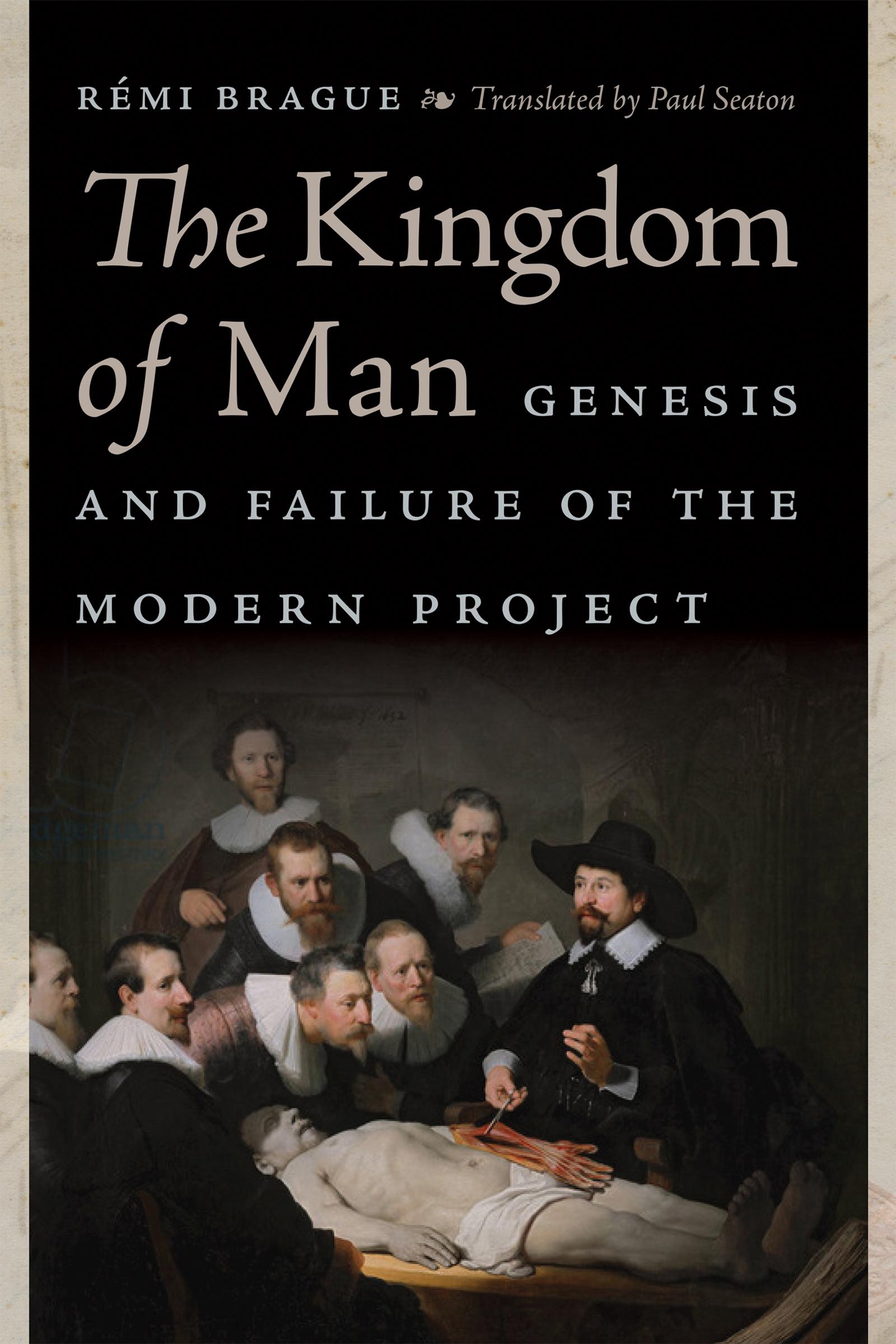
Was humanity created, or do humans create themselves? In this eagerly awaited English translation of Le Règne de l’homme, the last volume of Rémi Brague's trilogy on the philosophical development of anthropology in the West, Brague argues that, with the dawn of the Enlightenment, Western societies rejected the transcendence of the past and looked instead to the progress fostered by the early modern present and the future. As scientific advances drained the cosmos of literal mystery, humanity increasingly devalued the theophilosophical mystery of being in favor of omniscience over one’s own existence. Brague narrates the intellectual disappearance of the natural order, replaced by a universal chaos upon which only humanity can impose order; he cites the vivid histories of the nation-state, economic evolution into capitalism, and technology as the tools of this new dominion, taken up voluntarily by humans for their own ends rather than accepted from the deity for a divine purpose.
Brague’s tour de force begins with the ancient and medieval confidence in humanity as the superior creation of Nature or of God, epitomized in the biblical wish of the Creator for humans to exert stewardship over the earth. He sees the Enlightenment as a transition period, taking as a given that humankind should be masters of the world but rejecting the imposition of that duty by a deity. Before the Enlightenment, who the creator was and whom the creator dominated were clear. With the advance of modernity and banishment of the Creator, who was to be dominated? Today, Brague argues, “our humanism . . . is an anti-antihumanism, rather than a direct affirmation of the goodness of the human.” He ends with a sobering question: does humankind still have the will to survive in an era of intellectual self-destruction? The Kingdom of Man will appeal to all readers interested in the history of ideas, but will be especially important to political philosophers, historical anthropologists, and theologians.
Before Memmo my notes were scattered across PDFs. Now a workspace pulls everything into one place — I see exactly what's still left to study.
Memmo's summaries are gold before exams. I don't have to re-read 800 pages two weeks before — just the important parts.
The AI chat has saved me the night before an exam more than once. I just keep asking until I get it — no waiting on a study group to reply.
The quizzes hit exactly what I need to know. Memmo tracks what I get stuck on — so I only practice what's worth it.
Flashcards with spaced repetition are magic. Memmo knows when I'm about to forget something and brings it back.
The AI podcasts are my favorite. I listen on my way to school and get a recap without sitting at a computer.

Handbok i kvalitativa metoder
281 kr

Hållbar utveckling: en introduktion för ingenjörer och andra problemlösare
334 kr

Brymans Samhällsvetenskapliga metoder
390 kr

Projektledning
491 kr

Den orättvisa hälsan: om socioekonomiska skillnader i hälsa och livslängd
326 kr

Vetenskapsteori för nybörjare
196 kr

Organizational Leadership
429 kr

På väg mot läraryrket
172 kr

Det sociala livet i skolan: Socialpsykologiska perspektiv
253 kr

Betygsättningens didaktik
151 kr

Personality
402 kr

Studying Leadership
404 kr

Managing Innovation
477 kr

Introduktion till samhällsvetenskaplig metod
347 kr

The Psychology of Sex and Gender
698 kr

Evidens och kunskap för socialt arbete
207 kr

Introduction to Leadership
605 kr