
Before Memmo my notes were scattered across PDFs. Now a workspace pulls everything into one place — I see exactly what's still left to study.
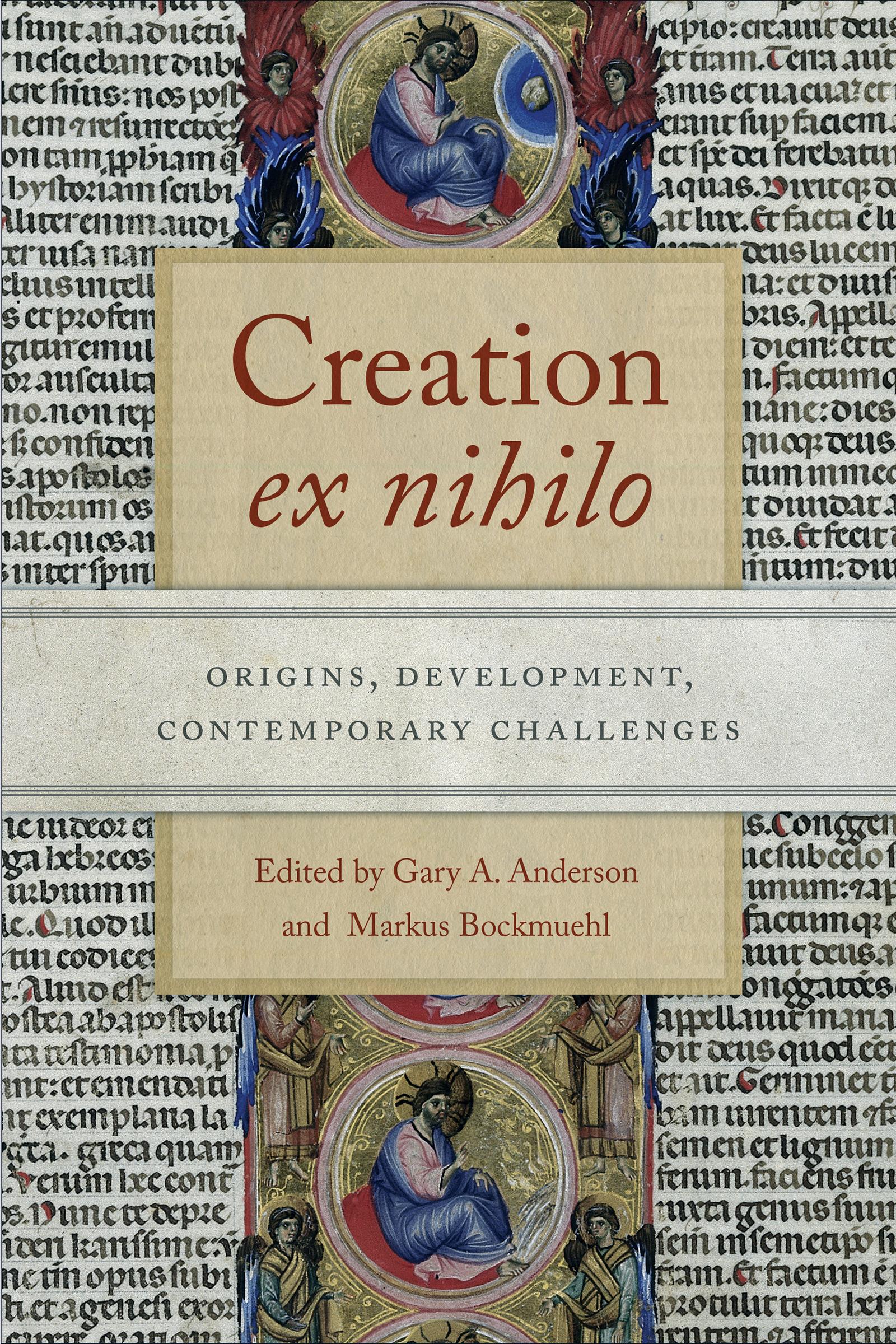
The phrase "creation ex nihilo" refers to the primarily Christian notion of God’s creation of everything from nothing. Creation ex nihilo: Origins, Development, Contemporary Challenges presents the findings of a joint research project at Oxford University and the University of Notre Dame in 2014–2015. The doctrine of creation ex nihilo has met with criticism and revisionary theories in recent years from the worlds of science, theology, and philosophy. This volume concentrates on several key areas: the relationship of the doctrine to its purported biblical sources, how the doctrine emerged in the first several centuries of the Common Era, why the doctrine came under heavy criticism in the modern era, how some theologians have responded to the objections, and the relationship of the doctrine to claims of modern science—for example, the fundamental law of physics that matter cannot be created from nothing.
Although the Bible never expressly states that God made everything from nothing, various texts are taken to imply that the universe came into existence by divine command and was not assembled from preexisting matter or energy. The contributors to this volume approach this topic from a range of perspectives, from exposition to defense of the doctrine itself.
This is a unique and fascinating work whose aim is to present the reader with a compelling set of arguments for why the doctrine should remain central to the grammar of contemporary Christian theology. As such, the book will appeal to theologians as well as those interested in the relationship between theology and science.
Contributors: Gary A. Anderson, Markus Bockmuehl, Janet Soskice, Richard J. Clifford, S.J., Sean M. McDonough, Gregory E. Sterling, Khaled Anatolios, John C. Cavadini, Joseph Wawrykow, Tzvi Novick, Daniel Davies, Cyril O’Regan, Ruth Jackson, David Bentley Hart, Adam D. Hincks, S.J., Andrew Pinsent, and Andrew Davison.
Before Memmo my notes were scattered across PDFs. Now a workspace pulls everything into one place — I see exactly what's still left to study.
Memmo's summaries are gold before exams. I don't have to re-read 800 pages two weeks before — just the important parts.
The AI chat has saved me the night before an exam more than once. I just keep asking until I get it — no waiting on a study group to reply.
The quizzes hit exactly what I need to know. Memmo tracks what I get stuck on — so I only practice what's worth it.
Flashcards with spaced repetition are magic. Memmo knows when I'm about to forget something and brings it back.
The AI podcasts are my favorite. I listen on my way to school and get a recap without sitting at a computer.

Handbok i kvalitativa metoder
281 kr

Hållbar utveckling: en introduktion för ingenjörer och andra problemlösare
334 kr

Brymans Samhällsvetenskapliga metoder
390 kr

Projektledning
491 kr

Den orättvisa hälsan: om socioekonomiska skillnader i hälsa och livslängd
326 kr

Organizational Leadership
429 kr

Vetenskapsteori för nybörjare
196 kr

På väg mot läraryrket
172 kr

Det sociala livet i skolan: Socialpsykologiska perspektiv
253 kr

Betygsättningens didaktik
151 kr

Personality
402 kr

Studying Leadership
404 kr

Managing Innovation
477 kr

Introduktion till samhällsvetenskaplig metod
347 kr

The Psychology of Sex and Gender
698 kr

Evidens och kunskap för socialt arbete
207 kr

Introduction to Leadership
605 kr