
Before Memmo my notes were scattered across PDFs. Now a workspace pulls everything into one place — I see exactly what's still left to study.
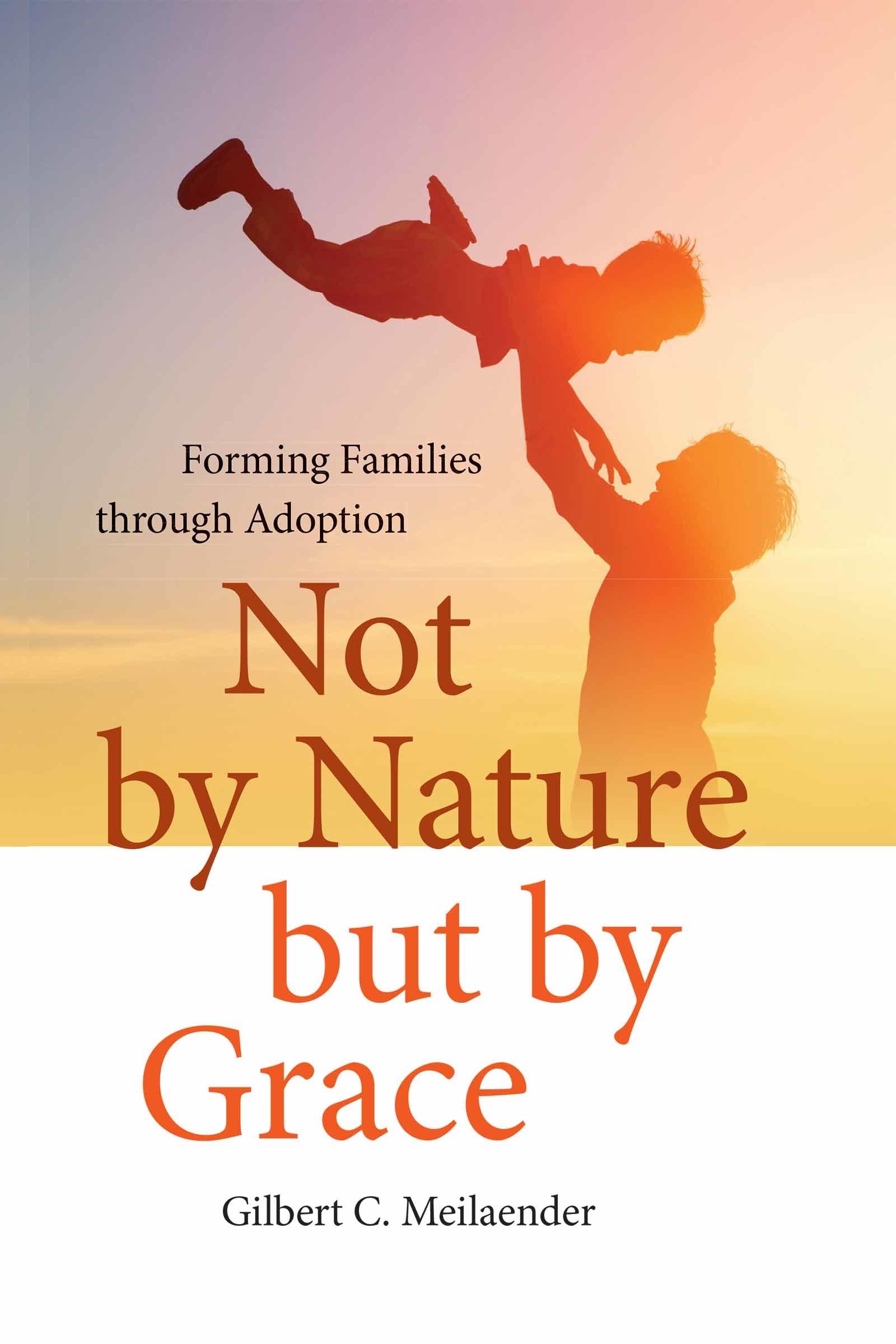
Working from within the contours of Christian faith, this book examines the relation between two ways of forming families—through nature (by procreation) and through history (by adoption). Christians honor the biological tie between parents and children, for it is the work of God in creation. Yet Christians cannot forget that it is adoption, and not simply natural descent, that is at the center of the New Testament’s depiction of God’s grace. Gilbert Meilaender takes up a range of issues raised by the practice of adoption, always seeking to do justice to both nature and history in the formation of families, while keeping at the center of our vision the truth that it is not by nature but by grace that we can become adopted children of the one whom Jesus called his Father.
Meilaender begins with reflection on the puzzling relation of nature and history in forming families and proceeds to unpack the meaning of huiothesia, the word used in the New Testament to name the grace by which a follower of Jesus becomes an adopted child of God. That perspective is applied to a range of questions that regularly arise in Christian theological discussions of adoption: Is adoption only for the infertile? Should single persons adopt? Is it wise for adoption to take place across racial or national boundaries? Special attention is paid to the relation between adoption and new reproductive technologies and to what is called “embryo adoption.” Interspersed between the chapters are letters written by the author to his own son by adoption. But if the argument of the book is taken seriously, these letters are written not to one who falls within a special category of “adopted son or daughter,” but to one who is, simply and entirely, a son or daughter.
Before Memmo my notes were scattered across PDFs. Now a workspace pulls everything into one place — I see exactly what's still left to study.
Memmo's summaries are gold before exams. I don't have to re-read 800 pages two weeks before — just the important parts.
The AI chat has saved me the night before an exam more than once. I just keep asking until I get it — no waiting on a study group to reply.
The quizzes hit exactly what I need to know. Memmo tracks what I get stuck on — so I only practice what's worth it.
Flashcards with spaced repetition are magic. Memmo knows when I'm about to forget something and brings it back.
The AI podcasts are my favorite. I listen on my way to school and get a recap without sitting at a computer.

Handbok i kvalitativa metoder
281 kr

Hållbar utveckling: en introduktion för ingenjörer och andra problemlösare
334 kr

Brymans Samhällsvetenskapliga metoder
390 kr

Projektledning
491 kr

Den orättvisa hälsan: om socioekonomiska skillnader i hälsa och livslängd
326 kr

Vetenskapsteori för nybörjare
196 kr

Organizational Leadership
429 kr

På väg mot läraryrket
172 kr

Det sociala livet i skolan: Socialpsykologiska perspektiv
253 kr

Betygsättningens didaktik
151 kr

Personality
402 kr

Studying Leadership
404 kr

Managing Innovation
477 kr

Introduktion till samhällsvetenskaplig metod
347 kr

The Psychology of Sex and Gender
698 kr

Evidens och kunskap för socialt arbete
207 kr

Introduction to Leadership
605 kr